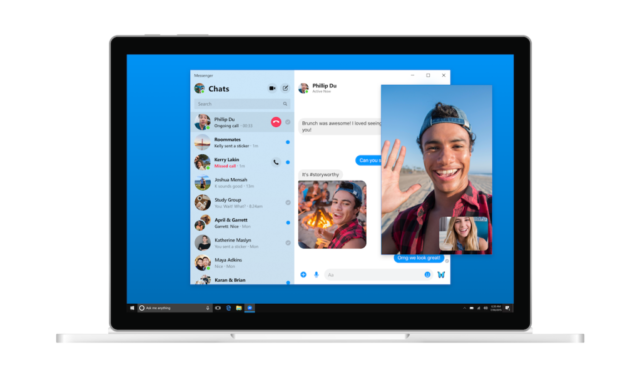
Meta is phasing out messenger.com, further dissolving Facebook Messenger as a standalone desktop entity. After discontinuing the native Windows and macOS desktop apps, the company has now confirmed that the browser-accessible Messenger domain will also be retired starting April 2026. From that point forward, users will no longer be able to access Messenger directly via messenger.com, and will instead be redirected to facebook.com/messages.
This move signals another structural shift in Meta’s messaging ecosystem and raises broader questions about platform consolidation, web app strategy, and the future of cross-service integration between Messenger, WhatsApp, and Instagram Direct.
The End of Messenger.com as a Standalone Web Platform
For years, messenger.com functioned as a lightweight, focused web interface for users who preferred direct access to chat without navigating the broader Facebook interface. It offered a cleaner UI, faster load times compared to the full Facebook platform, and practical usability in office environments.
As of April 2026:
messenger.com will no longer be accessible
Users will be automatically redirected to facebook.com/messages
Direct browser-based access without Facebook integration will no longer be possible
Meta has already begun notifying users inside the Messenger interface about the upcoming change.
Native Desktop Apps Were Already Removed
Meta previously discontinued the native Messenger desktop applications for Windows and macOS in October 2025.
These applications were originally launched in 2020 during the peak of the COVID-19 pandemic, when remote work dramatically increased demand for stable desktop messaging and video calling solutions. The apps supported:
Voice calls
Video conferencing
Desktop notifications
Screen sharing
Their removal already indicated a strategic shift toward browser-based or fully integrated platform solutions.
Why Is Meta Consolidating Messenger?
The shutdown of both the standalone desktop apps and the messenger.com domain suggests several possible strategic drivers.
1. Infrastructure Simplification
Maintaining multiple access points—native apps, dedicated web domains, and integrated Facebook messaging—creates overhead in:
Front-end maintenance
Security patching
Backend API synchronization
Feature parity management
Consolidation under facebook.com/messages reduces fragmentation and streamlines deployment pipelines.
2. Engagement Metrics and Platform Retention
From a product analytics perspective, redirecting users into the main Facebook environment increases:
Session duration
Cross-feature exposure
Ad inventory opportunities
Behavioral tracking consistency
Messenger as a separate entry point reduced these engagement loops.
3. Abandoning the “Unified Messaging Backend” Vision?
Meta previously outlined an ambitious plan to unify Messenger, WhatsApp, and Instagram Direct under a shared encrypted backend infrastructure.
The goal was interoperability across platforms—allowing communication between services without switching apps. While partial backend encryption alignment occurred, full cross-platform user-level interoperability never fully materialized.
The retirement of messenger.com suggests Meta may be deprioritizing that universal messaging hub model in favor of tighter ecosystem silos.
Impact on Desktop Users
For most users, the impact will be operational rather than functional. Messaging will remain available via:
facebook.com/messages (browser)
The Facebook mobile app
The Messenger mobile app
The mobile Messenger app is not affected by this change. In fact, the majority of Messenger traffic already originates from mobile platforms, making desktop usage statistically secondary.
However, power users who preferred:
Minimalist UI
Direct tab access
Reduced Facebook distraction
may find the shift inconvenient.
Technical Implications: Web App Architecture vs Native Clients
The evolution reflects a broader industry trend:
Progressive Web Apps (PWAs) increasingly replace native desktop clients
Cloud-synchronized platforms prioritize browser-first design
Standalone web domains become redundant under ecosystem consolidation
Messenger.com functioned effectively as a specialized web shell for the same backend services. Removing it does not alter core messaging APIs, but it eliminates a presentation layer.
Timeline of Messenger Desktop Evolution
2020 – Native desktop Messenger apps released (pandemic demand surge)
2025 (October) – Windows and macOS desktop apps discontinued
2026 (April) – messenger.com domain retired
This represents a full reversal of the pandemic-era expansion strategy.
Strategic Interpretation: Cost Optimization or Platform Centralization?
Two interpretations dominate:
Cost reduction and engineering simplification
Strategic centralization under Facebook core infrastructure
Both align with Meta’s broader efficiency-focused restructuring efforts in recent years.
Does This Signal Messenger Losing Independence?
Symbolically, yes.
Operationally, Messenger remains active—but increasingly as a feature within Facebook rather than a standalone brand entity on desktop.
The messaging market landscape has also shifted significantly. Competitors like WhatsApp, Telegram, and Signal continue to emphasize platform independence and cross-device functionality.
Messenger’s trajectory suggests tighter integration rather than broader independence.
What Users Should Expect Next
Users should prepare for:
Automatic redirection from messenger.com
Possible UI convergence between Facebook Messages and Messenger
Continued emphasis on mobile-first experience
No major change to core messaging features
There is currently no indication that the Messenger mobile app will be discontinued.
Broader Industry Context
Messaging platforms are increasingly evaluated based on:
End-to-end encryption robustness
Cross-platform synchronization
Ecosystem lock-in strength
Infrastructure scalability
Meta’s consolidation aligns with a strategy of ecosystem gravity rather than decentralized service nodes.
Messenger.com will officially shut down in April 2026, ending direct browser-based access to Messenger outside the Facebook domain. Following the earlier removal of native desktop apps, this marks the completion of Messenger’s transformation from a semi-independent platform into a fully integrated Facebook messaging layer.
For most users, functionality remains unchanged. Strategically, however, this reflects a shift away from distributed access points and toward tighter platform consolidation under Meta’s core infrastructure.
Image(s) used in this article are either AI-generated or sourced from royalty-free platforms like Pixabay or Pexels.
This article may contain affiliate links. If you purchase through these links, we may earn a commission at no extra cost to you.
Get the weekly RF & IT briefing
Radio guides, RF calculators, AI, Windows, Linux and satellite communication explainers. One useful email per week. No spam.