


Modern sport is faster, louder and more technically demanding than ever before. Football, rugby, basketball, handball, volleyball, ice hockey and American football are no longer controlled by a single referee acting alone with a whistle and a notebook. Today’s officiating is a coordinated team operation. The main referee, assistant referees, fourth official, video assistant referee, timekeeper, match delegate and technical staff often need to exchange information instantly, clearly and without interrupting the flow of the game.
This is where professional referee communication systems became essential. Among the most recognized names in this field is Vokkero, the intercom technology associated with the French sports technology company VOGO. Vokkero systems are designed for full-duplex, hands-free, real-time audio communication in demanding environments. In practical terms, they allow referees and officiating teams to speak and listen at the same time, just like in a natural conversation, while running, observing play and making high-pressure decisions.
For spectators, this technology is almost invisible. The referee still blows the whistle, signals with hand gestures and makes the final decision on the field. But behind that decision there may be a short voice message from an assistant referee, a warning from the fourth official, a clarification from a video review team or a quick confirmation from another member of the officiating crew.
That is why systems like Vokkero have quietly changed modern sport. They do not replace the referee. They make the referee team faster, more connected and better informed.
What Vokkero is
Vokkero is a professional wireless intercom system brand used in sport, industry, broadcast production and field operations. In the sports world, it is best known for referee communication systems used by professional and semi-professional officiating teams.
The core idea is simple: every member of the referee team carries a compact wireless terminal connected to a headset and microphone. The devices create a secure audio group where participants can talk to one another in real time. Unlike a standard walkie-talkie, the referee does not need to press a push-to-talk button before speaking. The system is open, continuous and designed for hands-free operation.
This is crucial in sport. A referee cannot stop sprinting, look down at a radio and press a button while following a counterattack, watching an offside line or managing a heated confrontation between players. Communication must happen naturally, in the background, without distracting from the match.
Vokkero systems are therefore not just “radios for referees”. They are specialized full-duplex intercom systems built for movement, noise, pressure and real-time decision-making.
Why referee communication changed
For decades, referees relied almost entirely on visual signals, whistles and pre-match instructions. Assistant referees used flags. The fourth official managed substitutions and benches from the sideline. Any serious discussion usually required a stoppage in play.
That model worked in slower, less scrutinized sport environments. But modern sport has changed in several ways.
The pace of play is much faster. Players are stronger, tactical systems are more complex, and decisions must often be made within fractions of a second. A referee may have one viewing angle, while an assistant referee or video official may have another. A communication system allows those perspectives to be combined quickly.
Broadcast technology has also changed expectations. Viewers can see slow-motion replays, multiple camera angles and close-up footage within seconds. This puts enormous pressure on officials. A decision that once passed unnoticed can now be analyzed frame by frame by commentators, fans and social media users.
Professional sport has also become more commercially sensitive. A wrong decision can affect tournament progress, sponsorship value, club revenue, player reputation and league credibility. This does not mean technology can eliminate mistakes, but it can reduce avoidable communication failures.
Referee intercom systems became important because they solve one specific problem: they allow the officiating team to behave as a connected unit rather than separate individuals.
Full-duplex communication explained
The most important technical feature of a professional referee intercom system is full duplex.
In a normal two-way radio, communication is usually half duplex. One person presses a button and talks. The others listen. When the speaker releases the button, someone else can reply. This is the classic push-to-talk model used in many walkie-talkies, security radios and construction-site communication systems.
That approach is not ideal for referees. It creates delays, blocks simultaneous comments and requires manual operation. In a match situation, even a one-second delay can matter.
A full-duplex system works more like a telephone conference. Several users can speak and listen at the same time. The main referee can hear the assistant referee while still talking. The fourth official can warn the crew about bench behavior. A video official can say “check complete” or “delay restart” without needing to wait for a radio channel to become free.
This is one of the defining strengths of Vokkero referee systems. The audio link behaves like a live conversation between members of the officiating team.
For referees, full duplex means no push-to-talk button during active play, faster information exchange, fewer missed messages, more natural communication, better coordination during controversial decisions and less need for visible referee conferences on the field.
In practical use, full-duplex communication can make the difference between reacting late and acting immediately.
How Vokkero works during a match
A typical Vokkero referee setup includes several belt-worn or body-worn terminals, earpieces, microphones, chargers and configuration accessories. Each official wears a terminal connected to a headset. The headset is usually designed to stay secure during movement and remain usable in noisy stadium environments.
Before the match, the devices are paired or configured into the same communication group. Once activated, the referee team can communicate continuously. The central referee normally has a microphone and earpiece, while assistant referees and the fourth official use similar audio accessories.
During the game, communication is usually short and disciplined. A professional referee intercom is not meant for long conversations. It is used for brief, precise information:
“Advantage.”
“Number eight, holding.”
“Ball out.”
“Possible offside.”
“Wait, checking.”
“Goal confirmed.”
“Bench warning.”
“Substitution ready.”
“Check complete.”
These small messages can have a large impact. The main referee may not see everything, especially when play is fast or bodies block the line of sight. Assistant referees can provide context. The fourth official can monitor technical areas. Video officials can support review procedures where applicable.
The system does not make decisions by itself. It provides the referee team with better information at the moment when that information is needed.
Why ordinary walkie-talkies are not enough
At first glance, one might ask why referees cannot simply use standard two-way radios. The answer is that ordinary radios are not optimized for the demands of officiating.
A basic walkie-talkie is usually half-duplex. It needs push-to-talk operation. It may have noticeable latency, limited audio processing, poor noise reduction, bulky accessories and insufficient comfort for running. It may also lack the required privacy, encryption or professional interference management.
Referees need a system that works while they are sprinting, turning, shouting, breathing heavily and moving through a noisy venue. They need audio that remains intelligible in a stadium full of spectators. They need stable communication even when many wireless systems are operating nearby.
A professional referee intercom system must also be discreet. It cannot interfere with movement, uniform, body mechanics or visual appearance. The referee should not look like a security guard carrying a large portable radio. The system must be small, lightweight and reliable enough to become almost invisible during the match.
Vokkero systems are designed specifically for that professional use case.
Key technical features of Vokkero referee systems
Although exact specifications depend on model, market version, regional frequency plan and kit configuration, Vokkero referee systems are generally built around several important technical characteristics.
The first is full-duplex audio. This is the core of the system and the feature that separates it from conventional radio communication.
The second is hands-free operation. Referees must be able to communicate without pressing buttons. The microphone and earpiece must work while the user is moving naturally.
The third is wide operational range. Professional Vokkero systems are typically designed for ranges that exceed the size of a standard football pitch or indoor arena. This gives useful margin in stadium environments and allows the system to operate reliably even when officials move away from one another.
The fourth is long battery life. A referee system must last through pre-match preparation, warm-up, the match itself, extra time, penalties, post-match administration and possible delays. A battery that only lasts for the match duration is not enough in professional use.
The fifth is audio clarity. Referees need intelligible speech, not hi-fi music quality. The system must preserve speech information under difficult acoustic conditions. Noise reduction, microphone placement and headset design are therefore just as important as radio performance.
The sixth is compact size and low weight. A referee terminal must be light enough to wear throughout the match without affecting movement.
The seventh is secure group communication. Referee conversations may include sensitive decisions, disciplinary discussions and procedural coordination. The system must prevent unwanted listening and reduce the risk of accidental interference.
The eighth is robustness. Rain, sweat, body movement, impact, outdoor conditions and repeated transport all place stress on equipment. Professional referee systems need to survive this usage pattern.
Vokkero Elite and Vokkero Elite Plus
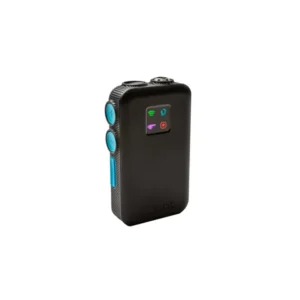
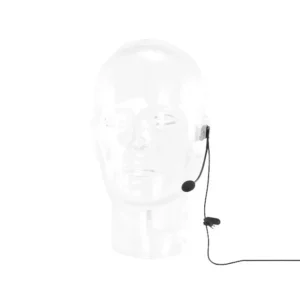
The Vokkero Elite and Vokkero Elite Plus product lines are among the most relevant solutions for high-level sports officiating. They are designed for professional referee teams that require stable, full-duplex communication in demanding competition environments.
The Vokkero Elite platform is typically associated with compact terminals, HD-quality voice transmission, long operating time and a range suitable for large sports fields and venues. The system is made for referees who need to communicate throughout the match without push-to-talk operation.
The Vokkero Elite Plus version adds capabilities aimed at more complex RF environments. This is important because modern stadiums are crowded with radio-frequency activity. Mobile networks, 4G, 5G, Wi-Fi, wireless cameras, broadcast equipment, security radios, microphones and telemetry systems may all be active at the same time.
A referee intercom must not collapse simply because the venue is full of wireless devices. Enhanced resistance to interference and better coexistence with modern mobile networks are therefore major practical advantages.
In top-level sport, reliability is often more important than headline specifications. It is not enough for the system to work in a quiet test environment. It must work in a packed stadium, during a final, under rain, with broadcast crews nearby and thousands of mobile phones in use.
This is where professional systems separate themselves from consumer-grade audio devices.
Vokkero Unity for wider referee use
Not every match is a Champions League final, a professional rugby test match or a televised national championship. Many referee teams need professional-style communication at a lower budget and in less demanding environments.
This is where products such as Vokkero Unity become relevant. Vokkero Unity is aimed at professional and amateur referees who need full-duplex team communication but may not require the same level of infrastructure or integration as elite competitions.
For regional leagues, training academies, referee associations and clubs, this type of system can be attractive because it brings the principles of professional officiating into a more accessible package. Referees can practice communication discipline, assistant coordination and faster decision-making without relying on expensive broadcast-level systems.
The broader trend is clear: referee communication is moving down the pyramid. What was once reserved for elite televised competitions is becoming increasingly relevant in semi-professional and even amateur environments.
Vokkero Staff and sports operations
Vokkero technology is not limited to the referee crew. In sports environments, communication is also important for medical teams, event staff, technical staff and security-adjacent operations.
A medical team may need fast communication when a player is injured. A match operations team may need to coordinate substitutions, field access, timing, ceremonies or emergency response. Coaching and technical staff may also use dedicated communication tools depending on the sport and regulations.
Vokkero Staff is positioned for sports staff communication, while other Vokkero product lines serve industry, field teams and event production. This reflects a broader reality: modern sport is not only a game on the field. It is an operational system involving referees, athletes, medical professionals, broadcasters, venue managers and safety personnel.
Good communication does not only improve decisions. It improves the entire event workflow.
The role of VOGO
VOGO is a French sports technology company known for video and audio solutions for professional sport. Its acquisition of Vokkero brought referee and team communication technology into a wider ecosystem that also includes video replay and sports performance tools.
This matters because audio and video are increasingly connected in modern officiating. In football, VAR depends on communication between the video room and the on-field referee. In rugby, TMO procedures require structured audio between officials. In many sports, replay systems and referee communication now work side by side.
A company that works across both audio communication and video review can address the complete officiating chain: seeing, discussing, confirming and communicating decisions.
Vokkero therefore fits into a larger direction in sports technology. The future is not just better whistles, better cameras or better headsets. The future is integrated match-control infrastructure.
Success stories in professional sport
Vokkero systems have become strongly associated with professional sport because they solve real problems in real match environments. Their success is not based only on technical specifications but on the way they fit into the daily work of referees.
In football, referee communication systems help the main referee, assistant referees and fourth official remain aligned. Offside decisions, penalty-area incidents, substitutions, bench behavior and disciplinary management all benefit from fast voice coordination.
In rugby, communication is even more central because the sport has complex breakdown situations, frequent physical contact and structured video review through TMO procedures. A referee may need input on foul play, grounding, touchline events or player conduct while maintaining control of a highly physical match.
In handball and basketball, the playing area is smaller but the game speed is intense. Officials need rapid communication about contact, timing, substitutions, player numbers and unsporting behavior.
In ice hockey, audio communication is challenged by helmets, boards, crowd noise, speed and constant line changes. Reliable intercom can help officiating teams coordinate in a difficult acoustic environment.
In American football, officiating crews are large and field coverage is distributed across different zones. While the communication model differs from European football or rugby, the underlying need is the same: officials must share information quickly and accurately.
The success story of Vokkero is therefore not tied to one sport only. It reflects a broader shift in officiating: decision-making is becoming more collaborative, more technical and more connected.
How communication improves decision-making
A referee intercom does not magically make every decision correct. Human judgment remains central. But it improves the quality and timing of information available to the referee.
Consider a fast attacking move in football. The central referee follows the ball carrier. The assistant referee watches the defensive line. A foul may occur behind the referee’s main field of view. The assistant can immediately provide input: “No foul,” “possible holding,” “wait for offside,” or “defender played it.”
Without intercom, the main referee may have to rely only on what was visible from one angle. With intercom, another official can provide context instantly.
The same applies to disciplinary decisions. A referee may see contact but not intensity. An assistant may see whether the action was careless, reckless or violent. A short audio cue can help the main referee choose the correct sanction.
In video-assisted environments, communication becomes even more important. The referee may need to delay a restart while the video team checks an incident. The message must be short and clear. “Delay,” “checking penalty,” “check complete,” or “recommend review” are operational phrases that can change the flow of the match.
The key benefit is not constant talking. It is the ability to transmit the right message at the right moment.
Communication discipline matters
A professional referee intercom system is only as effective as the team using it. If everyone talks too much, the system becomes distracting. If messages are vague, the system creates confusion. If officials speak emotionally, it may increase pressure rather than reduce it.
This is why referee teams need communication discipline. Messages should be short, neutral and operational. The main referee must know when to listen and when to decide. Assistant referees must provide useful information without taking over the match.
Common principles include using short phrases, avoiding unnecessary commentary, speaking only when the information adds value, confirming critical decisions clearly, using agreed pre-match terminology, keeping emotional language out of the channel, avoiding overlapping speech during critical incidents and prioritizing safety and match control.
The best referee communication is often almost invisible even to the officials themselves. It supports the decision without dominating the process.
Audio quality in a stadium environment
A football stadium or indoor arena is a difficult audio environment. Crowd noise, public address systems, whistles, player shouting, coach instructions and broadcast activity all create acoustic pressure. The referee may also be breathing heavily while running.
In this environment, microphone design and audio processing are critical. A system with technically strong radio performance can still fail if the microphone picks up too much noise or the earpiece is uncomfortable.
Professional referee headsets usually focus on speech intelligibility. The audio does not need to sound natural in a musical sense. It needs to make words understandable under stress.
This is why headset selection matters. Some users prefer in-ear solutions. Others need a boom microphone. Some sports require more secure fitting due to movement and contact risk. Outdoor sports may need better wind protection. Indoor sports may need better handling of echo and crowd noise.
Vokkero systems are often supplied as kits because the terminal alone is only part of the solution. The headset, microphone, charger, carrying case and accessories all contribute to real-world performance.
Range and coverage
Range figures in wireless communication should always be interpreted carefully. A manufacturer’s maximum range is usually measured under favorable conditions. Real-world performance depends on stadium structure, body shielding, antenna position, RF noise, nearby transmitters, terrain and building materials.
For refereeing, however, the required range is usually moderate. A football pitch is roughly 100 to 110 meters long. Even allowing for sideline areas, dressing-room corridors and technical zones, a professional system with a much larger theoretical range has significant operating margin.
The challenge is not merely distance. The challenge is maintaining stable audio while bodies move, officials turn, antennas are blocked by clothing, and RF reflections occur inside the venue.
A good referee system must provide consistent coverage across the entire playing area. Dropouts at critical moments are unacceptable. This is why professional kits are designed with more performance margin than the bare minimum.
Battery life and match-day reliability
Battery life is one of the most practical issues in referee communication. A system that works technically but dies before the end of an event is useless.
Professional referee teams may switch on communication well before kickoff. They may test the system in the dressing room, use it during warm-up, keep it active during pre-match ceremonies, use it for the full match, extra time, penalties and post-match procedures. Tournament days may include multiple matches or long standby periods.
A long battery life is therefore not a convenience. It is a reliability requirement.
Charging procedures are also important. Terminals should be charged in a predictable way. Teams need to know the battery status before the match. Spare batteries or backup terminals may be necessary in higher-level competitions. Equipment managers must treat intercom charging like any other critical match preparation step.
The best communication system is the one nobody notices because it simply works from start to finish.
Frequencies and interference
Vokkero systems typically operate on license-free or royalty-free radio bands, depending on the region and product version. This can make deployment simpler because users do not always need a dedicated radio license in the way they might for professional land mobile radio systems. However, frequency rules vary by country and region, so buyers should always choose the correct regional version.
The practical issue in modern stadiums is interference. Wireless spectrum is crowded. Professional venues may include mobile phone networks, private 4G or 5G systems, Wi-Fi networks, broadcast wireless cameras, wireless microphones, in-ear monitors, security radios, telemetry systems, event production intercoms and emergency communication systems.
A referee intercom must coexist with all of this. That is why interference resistance, channel management and RF planning are becoming more important.
In lower-level matches, interference may be less severe, but other problems can occur: cheap wireless devices nearby, poor accessory quality, low battery voltage, incorrect configuration or physical obstruction.
For professional sport, pre-event RF checks can be valuable. The referee communication system should be tested in the actual venue, not only in an office or changing room.
Security and privacy
Referee communication should not be casually accessible to outsiders. During a match, officials may discuss disciplinary decisions, video checks, player behavior, procedural warnings and operational instructions. If that audio were intercepted, it could create sporting, legal and reputational problems.
Professional communication systems therefore need secure pairing, controlled group access and protection against unwanted listening. In some sports or competitions, referee audio may be recorded or integrated into broadcast workflows under strict rules, but that is different from uncontrolled public access.
Security is not only about encryption. It is also about equipment management. Terminals must be assigned correctly. Lost devices must be handled properly. Groups must be configured carefully. Accessories must be checked before use.
A referee intercom is part of match integrity infrastructure. It should be treated accordingly.
Integration with VAR and video review
The rise of video-assisted officiating has made audio communication even more important. In football, VAR procedures depend heavily on structured voice communication. The video assistant referee must be able to contact the on-field referee quickly and clearly. The referee must know whether play can restart or whether a check is still in progress.
In rugby, TMO communication is a visible part of high-level officiating. The referee may discuss grounding, foul play, touchline incidents and technical details with the video official.
In both cases, communication must be controlled. Too much audio creates confusion. Too little audio creates delay. The ideal system supports a defined workflow: check, review, confirm, communicate.
Vokkero’s relevance in this context is clear. A full-duplex intercom can link on-field officials with support personnel and video-related workflows, depending on the specific competition setup. In complex environments, integration with other systems becomes as important as the headset itself.
The human factor
Technology can improve officiating, but it cannot remove human judgment. A referee still needs positioning, fitness, rule knowledge, authority, emotional control and game understanding. Communication systems do not replace these skills.
In fact, intercom systems can expose weak communication habits. If a referee team lacks discipline, a full-duplex channel can become noisy and distracting. If assistants are passive, the system adds little. If the main referee ignores input, the technology becomes symbolic rather than functional.
The best results come when the referee team trains with the system. Communication should be practiced, not improvised. Officials should agree on terminology before the match. They should know who speaks, when they speak and how critical messages are phrased.
For example, “I think maybe there was something” is weak communication. “Possible penalty, hold restart” is operational communication.
Professional technology works best with professional habits.
Training benefits for referee associations
Referee communication systems are not useful only during official matches. They can also be powerful training tools.
In referee development, instructors can listen to the communication between officials and analyze decision-making after the match. Did the assistant provide information at the right time? Did the referee acknowledge it? Was the language clear? Was there unnecessary talk? Did the team manage a controversial incident calmly?
This kind of analysis can improve referee education significantly. Communication is a skill, and like any skill, it can be coached.
For young referees moving toward higher levels, learning intercom discipline early can be valuable. Many officials are technically strong in rule knowledge but inexperienced in team communication. Practicing with a Vokkero-style system can prepare them for professional environments where connected officiating is standard.
Practical examples of match situations
To understand why intercom systems matter, it helps to look at realistic match situations.
In football, an attacker goes down in the penalty area. The referee has a partial angle and sees contact but not whether the defender played the ball. The assistant referee has a clearer view and immediately says, “Defender first, no penalty.” The referee can allow play to continue with more confidence.
In rugby, a breakdown becomes chaotic. The referee sees bodies on the ground but misses a late off-the-ball action. An assistant referee says, “Foul play, blue six, after whistle.” The referee can stop play and manage the disciplinary process.
In handball, substitutions happen quickly and illegally entering players can affect defensive shape. A table official or supporting official can alert the referee crew immediately.
In basketball, contact under the basket may be screened from one official’s view. Another official can provide a quick confirmation or warning.
In football with VAR, the ball enters the net after a tight offside situation. The assistant keeps the flag down as instructed under modern protocols, and the communication channel supports the sequence: “Possible offside, check required,” then “check complete, goal confirmed” or “delay restart.”
These are not science-fiction scenarios. They represent the daily reality of modern officiating.
Advantages for players and coaches
Although referee intercom systems primarily serve officials, players and coaches also benefit indirectly.
Better communication can reduce confusion. When officials coordinate properly, decisions are more consistent. Delays can be managed more clearly. The referee team can identify misconduct away from the ball more effectively. Substitutions and technical-area issues can be handled with less visible conflict.
Players often become frustrated when referees appear uncertain or disconnected from one another. A well-coordinated team projects authority. Even when a decision is unpopular, the process appears more controlled.
For coaches, improved communication can reduce procedural disputes. If the fourth official can quickly communicate with the referee, bench management becomes smoother. If video review instructions are clear, restarts can be handled more accurately.
The best officiating technology does not make the game feel more technological. It makes the game feel better controlled.
Advantages for leagues and federations
For leagues and federations, referee communication systems offer several strategic benefits.
They support higher officiating standards. They help referees manage complex decisions. They can reduce avoidable errors caused by poor communication. They improve the professional appearance of competitions. They also support integration with video review and broadcast operations.
At the development level, they can help train referees more effectively. At the elite level, they support consistency and match integrity. At the broadcast level, they can contribute to better workflows and, in some cases, controlled access to referee audio for production purposes.
Investing in referee communication may seem expensive at first, but the cost should be compared with the value of match credibility. In professional sport, one controversial communication failure can become a major public issue. Reliable systems reduce that risk.
Limitations of referee intercom systems
No technology is perfect. Vokkero and similar systems have limitations that users should understand.
First, they require training. A team that does not know how to communicate will not become professional simply by wearing headsets.
Second, they require maintenance. Batteries must be charged. Accessories must be checked. Microphones must be positioned correctly. Firmware and configuration may need attention.
Third, they can be affected by RF conditions. Professional systems are designed to handle difficult environments, but no wireless system is immune to all interference.
Fourth, they can create overreliance. Referees must still make decisions. The intercom should support judgment, not replace it.
Fifth, they add cost. For amateur clubs or small associations, a full professional kit may be a significant investment.
Sixth, comfort matters. A poorly fitted headset can distract the referee. Sweat, rain, movement and personal preference all affect usability.
These limitations do not reduce the value of the technology. They simply show that referee communication systems must be selected, configured and used properly.
What to consider before buying
A referee association, league or club considering a Vokkero system should define its use case carefully.
The first question is the number of users. A small football referee crew may need three or four terminals. A more complex setup may need additional officials, video support or staff communication.
The second question is the sport. Football, rugby, handball, basketball and ice hockey have different movement patterns, acoustic environments and accessory requirements.
The third question is venue type. Outdoor stadiums, indoor arenas, small pitches and large professional venues all create different RF and audio challenges.
The fourth question is required integration. Does the system need to connect with VAR, broadcast equipment, recording systems or other intercom infrastructure?
The fifth question is budget. A professional elite system may be justified for top-level competitions, while a more accessible system may be better for training or amateur use.
The sixth question is support. Professional sport users should consider dealer support, spare parts, accessories, warranty, training and long-term availability.
The seventh question is regional compliance. Frequency bands and radio regulations vary by market. Buying the correct regional version is important.
A good purchasing decision is not based only on the device. It is based on the complete communication workflow.
Vokkero compared with consumer headsets
Consumer Bluetooth headsets, motorcycle intercoms or gaming headsets may look tempting as cheaper alternatives. However, they usually lack the reliability, range, group architecture, RF robustness and sports-specific design required for professional refereeing.
Bluetooth is generally short-range and not designed for a full football pitch with multiple moving officials. Consumer intercoms may suffer from pairing issues, limited battery performance, poor noise handling or insufficient security. Gaming headsets are not designed for rain, sprinting or professional match environments.
Professional referee systems cost more because they solve a more difficult problem. They are not only transmitting audio. They are maintaining mission-critical communication in a high-pressure environment where failure is visible and consequential.
For training or casual use, cheaper systems may be acceptable. For serious officiating, professional systems are usually the safer choice.
Why the system is almost invisible to fans
One reason referee communication systems are interesting is that most fans barely notice them. They may see a small earpiece or a microphone, but they do not hear the actual communication. The visible decision still appears to come from the referee.
This invisibility is part of the success. The technology works best when it does not interrupt the spectacle. It should not slow the game, distract players or dominate the broadcast. It should simply help officials arrive at better decisions faster.
In this sense, Vokkero is similar to many important sports technologies. Goal-line systems, timing systems, medical communication tools and broadcast synchronization equipment all operate behind the scenes. They are critical, but not always visible.
The referee intercom is one of those quiet technologies that changed how modern sport is managed without becoming the main story.
The psychology of connected officiating
Communication technology also changes the psychology of refereeing. A referee with a trusted team in the ear is not alone. This can improve confidence, especially in difficult matches.
However, it can also increase cognitive load if not managed properly. Too much information can be distracting. Conflicting messages can create uncertainty. Poorly timed comments can interrupt concentration.
This is why the best referee teams use structured communication. The assistant does not narrate the entire match. The fourth official does not constantly comment on benches. The video official does not interrupt unless procedure requires it.
When used correctly, the intercom reduces stress. When used badly, it adds noise. The difference is training.
Referee communication and public trust
Public trust in refereeing is a major issue in modern sport. Fans, players and coaches often disagree with decisions, but they are more likely to accept them when the process appears professional and consistent.
Communication systems contribute to that process. They help officials consult quickly. They reduce the chance that one official misses important information known to another. They support video-review procedures and match-control coordination.
This does not eliminate controversy. Sport will always include interpretation, emotion and disagreement. But better communication can reduce avoidable mistakes and make the decision process more robust.
In high-level competitions, that matters. The credibility of the match depends not only on the rules but on the quality of the officiating system behind those rules.
Future of referee intercom technology
Referee communication systems will continue to evolve. Several trends are likely.
First, integration with video systems will become deeper. Audio, replay, timing and decision-support tools will be connected more tightly.
Second, wireless performance will become more important because venues are becoming more crowded with 5G, Wi-Fi and broadcast systems.
Third, referee audio may become more selectively available to broadcasters or viewers in controlled formats. Some sports already experiment with referee announcements or limited audio transparency.
Fourth, systems may become smaller and more comfortable. Wearable technology will continue to improve.
Fifth, AI-assisted workflows may eventually appear, not as decision-makers but as support systems for event tagging, audio indexing, training analysis or communication review.
Sixth, amateur and semi-professional use will grow. As costs fall and expectations rise, more leagues may adopt referee intercoms for training and match control.
The long-term direction is clear: refereeing will become more connected, not less.
Why Vokkero remains relevant
Vokkero remains relevant because it addresses a practical need rather than a fashionable technology trend. Referees need to hear one another. They need to speak instantly. They need the system to work while moving. They need reliable communication in noisy venues.
This is not a speculative use case. It is a real operational requirement in modern sport.
The strength of Vokkero is that it sits at the intersection of wireless technology, audio engineering, sports operations and officiating practice. It is not simply a headset. It is a communication layer for the referee team.
For professional leagues, that layer can support decision quality. For referee associations, it can support training. For broadcasters and video-review workflows, it can support smoother match operations. For players and coaches, it can contribute to more consistent control.
That is why Vokkero-style systems have become part of the hidden infrastructure of modern sport.
Practical match-day checklist
For teams using a referee communication system, the following match-day checklist is useful.
Charge every terminal fully before the event. Check battery status before leaving the dressing room. Test each headset and microphone individually. Confirm that every terminal is in the correct communication group. Test range in the actual venue, not only indoors. Check audio clarity while moving. Confirm spare equipment availability. Agree on communication terminology before the match. Decide who speaks during critical incidents. Keep messages short. Avoid unnecessary conversation. Recheck equipment at halftime if needed.
These steps may sound simple, but they prevent many common failures. Most communication problems are not caused by the concept of the system. They are caused by poor preparation.
Typical referee phrases
A referee team using a full-duplex intercom should agree on short phrases. Examples include:
“Play on.”
“Advantage.”
“No foul.”
“Careless only.”
“Reckless, yellow.”
“Serious foul play.”
“Possible penalty.”
“Hold restart.”
“Check in progress.”
“Check complete.”
“Goal confirmed.”
“No goal.”
“Offside delayed.”
“Ball out.”
“Substitution ready.”
“Bench warning.”
“Medical needed.”
“Mass confrontation.”
“Number five.”
“Wait.”
“Restart clear.”
The purpose is not to create robotic communication. The purpose is to reduce ambiguity under pressure.
Vokkero referee communication systems are professional full-duplex intercom solutions designed to help officials communicate during live sports events. Unlike standard walkie-talkies, Vokkero systems allow hands-free, simultaneous talking and listening, which is essential for referees who must run, observe and decide at the same time.
In football, rugby, handball, basketball, volleyball, ice hockey and other sports, referee intercom systems improve coordination between the main referee, assistant referees, fourth official and video-review teams. They support faster decision-making, clearer match control, better teamwork and more professional officiating.
The most important features include full-duplex audio, reliable wireless range, long battery life, compact terminals, secure communication, headset compatibility and resistance to interference in demanding stadium environments. Products such as Vokkero Elite, Vokkero Elite Plus and Vokkero Unity serve different levels of sport, from elite professional competitions to broader referee training and amateur use.
The real success of Vokkero is not that it makes referees more visible. It does the opposite. It works quietly in the background, helping the referee team communicate better while the game remains the focus.
Modern sport is faster, louder and more scrutinized than ever. In that environment, the referee communication system has become one of the most important technologies fans rarely notice.
Image(s) used in this article are either AI-generated or sourced from royalty-free platforms like Pixabay or Pexels.
This article may contain affiliate links. If you purchase through these links, we may earn a commission at no extra cost to you.
Get the weekly RF & IT briefing
Radio guides, RF calculators, AI, Windows, Linux and satellite communication explainers. One useful email per week. No spam.


