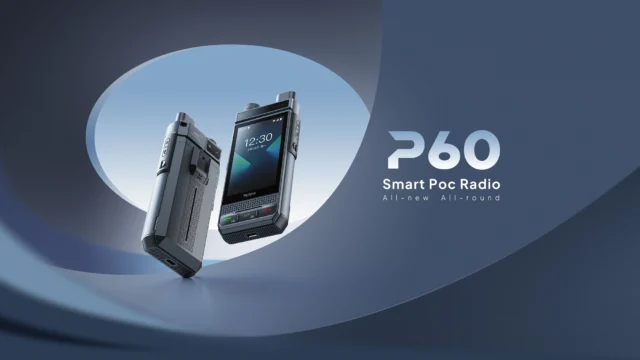
Mission-Critical LTE Systems: The Future of Public Safety Communications
Thanks to the rapid advancement of digital telecommunications technologies, next-generation communication systems are playing an increasingly pivotal role in meeting the special demands of security, availability, and response time. Among these, Mission-Critical LTE (MC-LTE) stands out as a modern mobile communication platform designed specifically for public safety, emergency response, healthcare, transportation, and critical infrastructure sectors.
MC-LTE integrates the high-speed data transmission capabilities of 4G/LTE networks with the specialized features required by first responders and critical operations. Unlike consumer-grade LTE services, MC-LTE networks prioritize resilience, interoperability, secure access, and ultra-low latency voice and data communication. This makes it a viable replacement for aging TETRA and P25 systems, as well as a foundational element for next-generation public safety networks.
Understanding Mission-Critical LTE
MC-LTE is built upon the 3GPP standard enhancements introduced with Release 13 and beyond. These enhancements introduce capabilities such as Mission-Critical Push-to-Talk (MCPTT), Mission-Critical Video (MCVideo), and Mission-Critical Data (MCData). These services ensure real-time, prioritized communication across multiple agencies and jurisdictions.
Unlike traditional commercial LTE, MC-LTE services operate with priority and preemption capabilities, ensuring that public safety communications are not delayed or blocked during network congestion. This is critical during natural disasters, large public events, or coordinated emergency response operations.
Key Features of MC-LTE Networks
- Priority and Preemption: Ensures first responders get immediate access even during network overload.
- Group and One-to-One Communication: Enables fast and efficient coordination.
- End-to-End Encryption: Ensures secure voice and data transmission.
- Interoperability: Supports communication across different agencies, systems, and geographies.
- Low Latency: Critical for real-time decision-making.
- Quality of Service (QoS) Control: Guarantees service quality according to user roles and application needs.
MCPTT: The Core Component
MCPTT (Mission-Critical Push-to-Talk) is one of the most crucial elements of an MC-LTE system. It allows instant voice communication similar to traditional two-way radios, but with the extended range, clarity, and multimedia support of LTE.
Unlike over-the-top PTT solutions, MCPTT is natively integrated into the LTE infrastructure and adheres to standardized QoS and security policies. Features include emergency calls, late join, private and group calls, and ambient listening for officer safety.
Comparison with Legacy Systems
Traditional systems like TETRA and P25 have served public safety agencies for decades. However, their limitations in data throughput, multimedia capabilities, and spectrum efficiency have prompted the shift toward broadband solutions like MC-LTE.
| Feature | TETRA/P25 | MC-LTE |
|---|---|---|
| Voice Quality | Good | Superior (HD voice) |
| Data Transmission | Limited | High-speed broadband |
| Multimedia Support | None or minimal | Full support (video, GIS) |
| Scalability | Moderate | High |
| Interoperability | Limited | Extensive (IP-based) |
Implementation Models
Public safety agencies can deploy MC-LTE in several ways:
- Dedicated Networks: Fully owned and operated by government agencies.
- Commercial Networks with Priority Access: Leveraging commercial carriers with SLAs.
- Hybrid Models: Combining dedicated core components with commercial RANs.
Each model has trade-offs in cost, control, and coverage. The choice often depends on national policies, funding availability, and existing infrastructure.
Global Deployments and Use Cases
Countries across the globe are embracing MC-LTE:
- United States: FirstNet, a nationwide broadband network dedicated to public safety, uses AT&T’s LTE infrastructure with dedicated cores and MCPTT support.
- United Kingdom: The Emergency Services Network (ESN) replaces Airwave with an MC-LTE-based solution using EE’s commercial network.
- South Korea: Safe-Net offers nationwide MC-LTE services for police, fire, and rescue.
Challenges in MC-LTE Adoption
Despite its advantages, several challenges remain:
- Spectrum Allocation: Ensuring dedicated or prioritized spectrum for public safety.
- Network Resilience: Maintaining uptime during disasters and cyberattacks.
- Device Compatibility: Ensuring rugged, certified devices that meet MCPTT and security standards.
- Training and Change Management: Transitioning from legacy systems requires organizational change.
Integration with 5G
5G offers even greater capabilities for mission-critical applications:
- Ultra-Reliable Low Latency Communication (URLLC)
- Network Slicing for Custom QoS
- Massive Machine-Type Communication (mMTC)
MC-LTE acts as the stepping stone to 5G MCX (Mission Critical Services), ensuring a smooth transition.
Future Outlook
The future of MC-LTE lies in integration, standardization, and resilience. Key trends include:
- Artificial Intelligence: For dynamic QoS management and predictive analytics.
- Satellite Backup: For coverage in remote or disaster-hit areas.
- Cross-Border Interoperability: Especially for EU Schengen regions or disaster collaboration efforts.
- Private LTE and 5G Networks: For secure, isolated deployments in critical sectors.
As public safety operations become more data-driven and interconnected, Mission-Critical LTE systems represent not just an upgrade in technology, but a fundamental shift in how emergency services communicate. Through standardization, secure broadband access, and seamless integration with future 5G infrastructures, MC-LTE is poised to redefine the standards of reliability and efficiency in mission-critical communications worldwide.
Image(s) used in this article are either AI-generated or sourced from royalty-free platforms like Pixabay or Pexels.
This article may contain affiliate links. If you purchase through these links, we may earn a commission at no extra cost to you. This helps support our independent testing and content creation.