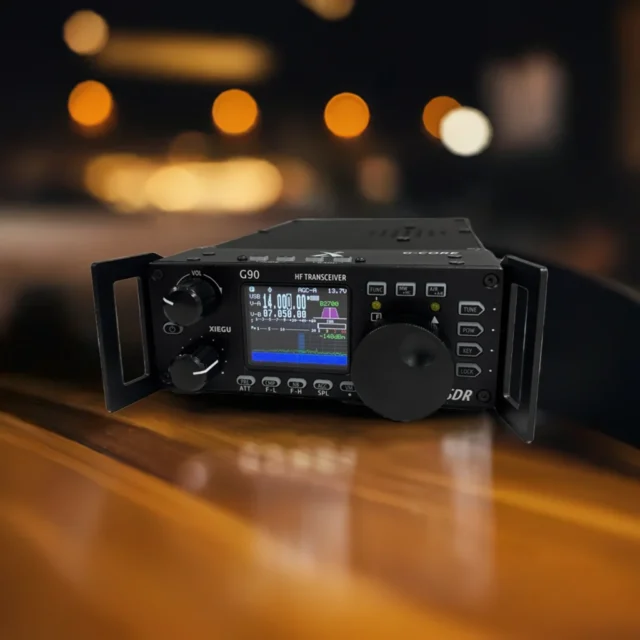
CB Radio DX Contacts: Myth or Reality?
For many, CB (Citizens Band) radio is a tool for local and short-range communication—favored by truckers, off-road enthusiasts, and hobby operators. But from time to time, the question arises: is it really possible to establish genuine long-distance, or DX, contacts via CB radio? Can you actually reach across continents using the 27 MHz band, or is it merely a nostalgic dream? In this comprehensive article, we explore the DX potential of CB radios, examining the technical and atmospheric factors, real-life examples, and practical advice for beginners and seasoned users alike.
Technical Foundation of CB Radio
CB radios operate on the 27 MHz frequency band, typically with 40 channels using AM or FM modulation. Regulations in most parts of the world limit the output power to 4 watts for AM/FM modes and up to 12 watts for SSB (single side band) where permitted. Given this modest power and relatively simple antennas, CB radios may seem ill-suited for multi-thousand-mile communications.
Understanding DX Communication
DXing is the art and science of establishing radio contacts over long distances, often hundreds or even thousands of miles, using natural propagation phenomena like ionospheric reflection. The 27 MHz band falls into the lower portion of the HF (high frequency) spectrum, where 10 and 11 meters are known for occasional but impressive propagation behavior—especially during peak solar activity.
Solar Cycles and the Role of the Ionosphere
The key to successful long-distance radio propagation lies in the condition of the ionosphere. Solar activity, particularly during the 11-year solar maximum, boosts ionization in the D, E, and F layers, allowing HF radio waves to bounce back to Earth. The CB band (26.965 – 27.405 MHz) sits just below the 10-meter amateur radio band and shares similar propagation characteristics, especially during F2-layer skip conditions.
When Is CB DX Possible?
The best opportunities for CB DX arise during solar maximum periods, which occur roughly every 11 years. During these peaks, it is not uncommon to make transcontinental contacts via CB radio—especially when using SSB mode, which offers more efficient bandwidth and signal clarity than AM or FM.
In past peaks—such as 2011 to 2014—operators across Europe made regular contacts with South America, North America, and even Australia using CB radio. The current solar cycle (2024–2025) is entering another peak, bringing exciting new DX prospects for CB enthusiasts worldwide.
SSB Mode: The Key to DX
SSB, especially upper sideband (USB), is critical to successful DXing. Unlike AM/FM, which splits power between carrier and sidebands, SSB concentrates all power into a single channel—significantly improving range and signal-to-noise ratio. Most high-performance CB DX operations rely on SSB-capable radios, many of which are designed with amateur-level performance in mind.
While legal regulations for SSB vary by country, in practice, many DX operators worldwide use SSB-capable CB equipment responsibly and with minimal interference, especially during active skip conditions.
Antenna Selection and Setup for Maximum DX
Achieving reliable DX isn’t just about the radio or propagation—it’s also about the antenna. Proper antenna choice, height, placement, and tuning play crucial roles in success. Popular antennas for CB DX include:
- 1/2 wave verticals (e.g., Solarcon A99 or Antron 99)
- Ground plane antennas
- Directional Yagi beams
- Homebrew dipoles
A well-tuned antenna at a sufficient height can outperform doubled transmit power. Grounding, low-loss coax, and minimal obstructions are also essential for optimal performance.
Advanced Antenna Strategies for Serious DX
Experienced CB DXers often build custom directional antennas, like 3-element Yagis or quad arrays, capable of providing 7–9 dBi gain in a focused direction. Mounted on rotatable towers, these antennas can track propagation shifts and significantly enhance signal strength.
In suburban or rural setups, such antenna systems are more feasible. Long-wire dipoles mounted 30–40 feet high, with proper baluns and feed systems, can also deliver solid DX performance, particularly during favorable ionospheric conditions.
Compact Antenna Options for Urban Environments
For those with limited space, there are still viable options. End-fed long wires, mobile verticals, and tuned magnetic loop antennas can yield surprising results when properly matched and grounded. While not as effective as full-size Yagis, these setups are often the only option in apartments or small lots.
Real-World CB DX Contact Examples
Thousands of verified DX contacts have been documented online through forums and digital logbooks. Examples include:
- Europe – USA (SSB, ~4,000+ miles)
- Europe – Brazil (AM & SSB, ~5,500+ miles)
- Spain – Australia (SSB, ~10,500+ miles)
- Poland – Japan (SSB, ~5,900+ miles)
- Italy – South Africa (SSB, ~5,300+ miles)
- France – New Zealand (SSB, ~11,800+ miles)
Most of these were achieved during solar peaks using high-gain antennas and SSB radios.
Operating Etiquette and QSL Practices
CB DXing has its own operating culture. Operators typically use unofficial call signs (e.g., “14AT123”), follow standardized calling formats, and log their contacts diligently. QSL cards—whether printed or electronic—are still popular for confirming contacts and collecting awards.
In pile-up situations (many stations calling one rare DX), patience and discipline are critical. Transmitting clearly, identifying properly, and waiting your turn are all part of the DX code of conduct.
Tips for Getting Started with CB DX
- Monitor propagation forecasts and solar data (SFI, K-index, MUF)
- Use an SSB-capable CB radio for maximum range and clarity
- Prioritize your antenna system—a great antenna beats more watts
- Be patient and listen often—propagation can change rapidly
- Log every contact to track performance and build your record
- Experiment with antennas and locations to find the best setup
- Minimize local interference and electrical noise sources
- Engage with DX clubs or online groups for guidance and support
Digital Modes and the Future of CB DX
While CB is traditionally analog, experimentation with narrowband digital modes like PSK and ROS is underway. These modes can transmit intelligible signals with extremely low signal strength, making them ideal for weak-signal DX work.
Software Defined Radio (SDR) technology is also making its way into CB experimentation. Real-time spectrum monitoring, noise filtering, and even digital QSL automation are now within reach for tech-savvy CBers.
So, is CB DX a myth? Absolutely not. With the right gear, timing, and skills, establishing long-distance CB contacts is not only possible—it’s one of the most rewarding challenges in radio communication, even without a license.
Image(s) used in this article are either AI-generated or sourced from royalty-free platforms like Pixabay or Pexels.
This article may contain affiliate links. If you purchase through these links, we may earn a commission at no extra cost to you. This helps support our independent testing and content creation.