Hidden Antennas: Practical Solutions for Suburban and Restricted Environments
One of the biggest challenges for amateur radio operators arises when they live in environments where visible antenna installations are not feasible. Whether it’s an apartment complex, a tightly regulated residential neighborhood, or a historical district, antenna visibility often clashes with aesthetic expectations, legal restrictions, or community regulations. Hidden antennas offer creative and functional solutions to these challenges, allowing operators to stay active in the hobby without compromising their surroundings.
This article explores in detail how to set up efficient hidden antenna systems in limited environments, including the theoretical foundations, practical implementation strategies, and performance trade-offs. The goal is not only to preserve aesthetics but also to achieve optimal radio performance through cleverly concealed setups.
Why Use Hidden Antennas?
Visible amateur radio antennas are not always welcome. In many cases, local regulations, building codes, or homeowner association (HOA) rules outright prohibit or heavily restrict outdoor antennas. Typical restricted environments include:
-
Apartments and condos, where roof or yard access is unavailable
-
Historic districts, where preserving visual character is mandatory
-
Gated communities, where HOA bylaws ban external structures
-
Tightly spaced neighborhoods, where large antennas may upset neighbors
-
Private homes with aesthetic concerns, where even household members may dislike visible antenna setups
To overcome these limitations, several hidden antenna options exist—many of which, if properly implemented, can perform surprisingly well.
Types of Hidden Antennas and Installation Possibilities
Indoor Wire Antennas
Among the most accessible solutions, particularly for apartment dwellers. A thin wire can be routed discreetly around the perimeter of a room, behind furniture, or along window frames. These can provide decent performance, especially for digital modes like FT8.
-
Pros: Easy to install, completely invisible from the outside
-
Cons: High losses due to nearby metal structures and wall materials
Window-Frame Loops and Glass-Mounted Antennas
Small loop antennas can be mounted in or around a window using suction cups or magnets. These setups require no permanent installation.
-
Pros: Removable, discreet
-
Cons: Narrow bandwidth, frequent retuning required
Using Gutters and Downspouts
Gutters, downspouts, or any existing conductive metal structures can sometimes be adapted as radiator elements or part of a ground plane.
-
Pros: External installation without visible antennas
-
Cons: High losses, grounding challenges
Attic-Mounted Antennas
If the building’s structure allows, attics can be ideal locations for stealthy antennas like shortened dipoles or loops.
-
Pros: Elevated placement, hidden from view
-
Cons: Metal roofs or HVAC systems may interfere; limited space
Hidden Vertical Antennas
Balcony railings, flagpoles, chimneys, or vertical architectural elements can be disguised as antennas using camouflaged or painted wire.
-
Pros: Efficient vertical performance, stealthy appearance
-
Cons: Requires a good RF ground, often via radials
Disguised Outdoor Antennas
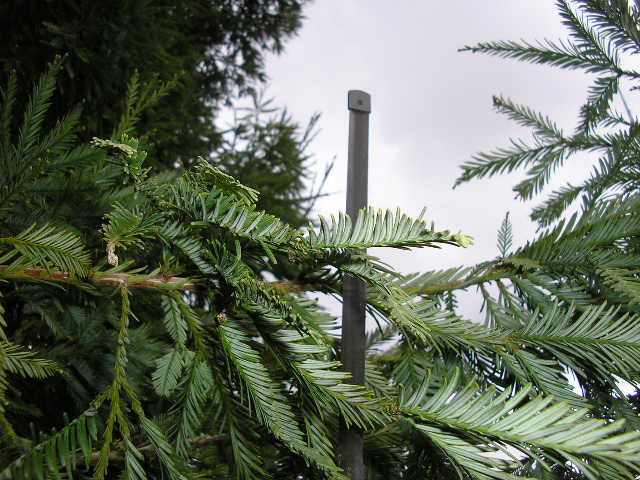
Designed to look like ordinary outdoor objects—flagpoles, clotheslines, fences, bird feeders—these antennas blend into the environment.
-
Pros: Full outdoor performance, visually undetectable
-
Cons: Requires careful planning and DIY skills
Tuning and Loss Management in Hidden Antennas
One of the main challenges of hidden antennas is proper tuning. Because many of these antennas are not naturally resonant on the desired bands, using an antenna tuner (ATU) is often essential. For indoor antennas, the tuner is best placed inside the shack, whereas attic or disguised outdoor antennas benefit from a tuner located as close to the antenna feedpoint as possible.
RF losses can be significant, especially when surrounded by metal structures or low-conductivity materials. It’s crucial to regularly measure SWR, and in some cases, reduce power output to avoid damaging the transmitter.
Amateur Radio Experiences and Real-World Examples
Example 1: Apartment FT8 Operation
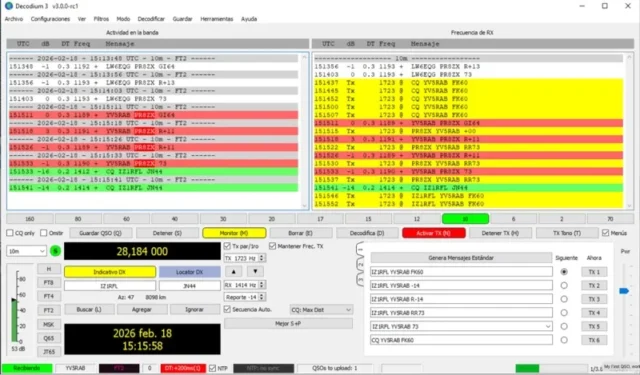
A radio operator on the 10th floor of a high-rise apartment ran a thin wire along the ceiling perimeter, paired with an LDG Z-817 automatic tuner. With just 5 watts QRP, they consistently made contacts throughout Europe using FT8 mode.
Example 2: Hidden Attic Dipole
A ham living in a single-family home installed a bent 40/20-meter dipole in the attic. The ends were curved due to space constraints. An internal tuner allowed proper matching, enabling reliable regional QSOs.
Example 3: Flagpole Vertical in the Backyard
A 20-foot aluminum flagpole was repurposed as a vertical antenna by hiding a wire inside its hollow structure. The ground system consisted of multiple radials laid under the lawn. This setup remained completely invisible yet performed very well on 20 meters.
Tips for Optimizing Hidden Antenna Performance
-
Use dark-colored wire for better visual blending
-
Choose flexible, stranded copper wire to avoid breakage when bent
-
Prioritize digital modes, which perform well even with low signal levels
-
Consider using a balun, especially in asymmetrical setups
-
Monitor for RF feedback and EMI, especially indoors
Legal and Community Considerations
In the U.S., the FCC’s PRB-1 policy offers some protection for amateur radio antennas, but it does not override local zoning or HOA rules. In practice, this means you may need landlord or HOA approval—even for less-visible installations.
Hidden antennas often avoid legal conflict by being non-obtrusive. However, maintaining good neighbor relations is still important. When possible, communicate that amateur radio is a safe, non-interfering activity that provides public benefits—especially in emergencies.
Future Trends in Hidden Antennas
As technology progresses, exciting innovations in stealth antenna design are emerging:
-
Smart materials and architectural-integrated structures
-
Nano-scale loops for receive-only or SDR applications
-
Digitally tunable compact antennas, ideal for confined spaces
-
MIMO-like configurations with efficient multi-band operation
These developments can help bring amateur radio to more operators in constrained environments, expanding the reach and accessibility of the hobby.
Image(s) used in this article are either AI-generated or sourced from royalty-free platforms like Pixabay or Pexels.
This article may contain affiliate links. If you purchase through these links, we may earn a commission at no extra cost to you. This helps support our independent testing and content creation.