Ugly Balun (Coax Choke) Designer
An Ugly Balun, also known as a coax choke, is one of the simplest and most effective ways to suppress unwanted common-mode currents on an antenna feed line. By winding coaxial cable into a properly sized air-core coil, radio operators can reduce RF interference, stabilize antenna performance, and improve overall station efficiency. The Ugly Balun (Coax Choke) Designer below helps you determine the ideal number of turns, coil diameter, and length needed for your target frequency range. Simply enter your values to generate an optimized choke configuration for reliable, well-balanced operation.
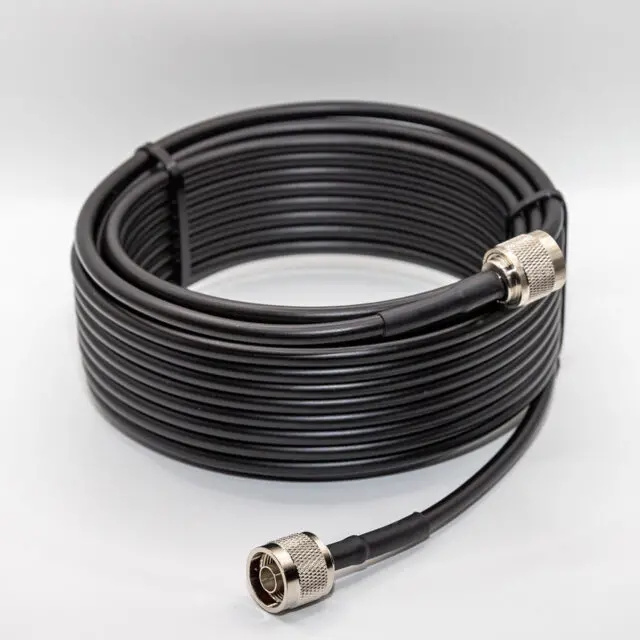
You can purchase ready-built current choke baluns online, for example via AliExpress, if you want a plug-and-play solution without winding your own.
Ugly Balun (Coax Choke) Designer
Select your coax, a common form (PVC pipe, soda can, etc.), and the target frequency. The tool sizes an air-core, single-layer choke to reach about 5 kΩ common-mode impedance (editable) at your frequency, then estimates performance across the HF bands (80–6 m).
Calculation details
- Effective coil diameter Deff ≈ Dform + Dcoax.
- Coil length l ≈ N × Dcoax (tight, single layer).
- Wheeler (air-core, single layer; r, l in inches): L(µH) ≈ (r²·N²)/(9r + 10l), r = Deff/2.
- Reactance: XL = 2π f L (L in henry).
- We approximate Zcm ≈ |XL| (lossless estimate).
Comprehensive Guide to Designing and Using an Ugly Balun (Coax Choke)
A detailed RF engineering explanation for ham radio operators, antenna builders, and EMC enthusiasts.
An Ugly Balun, often referred to as a coax choke, is one of the most practical and effective solutions for controlling common-mode currents on an amateur radio antenna system. Unlike ferrite-core baluns, an Ugly Balun is built by simply coiling coaxial cable into a controlled air-core helix. This straightforward construction makes it extremely popular among HF radio operators, field deployers, portable QRP users, and antenna experimenters who need a reliable choking solution without specialized materials.
The Ugly Balun (Coax Choke) Designer above calculates the recommended number of turns, coil diameter, coax length, and approximate choking impedance for your target frequency or band. The following in-depth article explains how and why these chokes work, how they improve antenna performance, and what factors influence their effectiveness.
What Is an Ugly Balun and Why Is It Used?
An Ugly Balun is essentially a 1:1 choke balun created by winding coaxial cable into an air-core coil. Its primary purpose is not impedance transformation but common-mode current suppression. In antenna systems, common-mode currents typically appear on the outer surface of the coax shield, where they can cause:
-
RF feedback into equipment
-
distorted radiation patterns
-
noise pickup
-
pattern instability in multi-band antennas
-
unintended RF exposure or interference
-
poor SWR performance due to feedline acting as part of the antenna
By forcing the unwanted shield current through a large inductive reactance, the coax choke reduces these effects and stabilizes the antenna system.
Because the Ugly Balun is made from the same coax feedline used for the antenna, it offers excellent power handling, wideband performance on HF, and minimal risk of overheating compared to ferrite chokes used above their rated limits.
How Common-Mode Currents Form on a Feedline
Common-mode currents arise when the antenna system becomes unbalanced or when the feedline appears as part of the radiating structure. Several conditions promote this:
-
Using unbalanced feedlines with unbalanced antennas
Examples include end-fed half-wave antennas or off-center-fed dipoles, which often drive current onto the coax shield. -
Improper grounding
Poor station grounding or lack of a proper RF ground path encourages current to travel on the coax shield instead of returning through the antenna. -
Asymmetrical environments
Metal structures, uneven terrain, buildings, and other nearby conductive objects can create imbalanced conditions. -
High SWR or multi-band operation
On some frequencies, the coax feedline may resonate, becoming part of the antenna system.
A properly designed Ugly Balun provides the inductive reactance required to block or dramatically reduce these unwanted currents.
How an Ugly Balun Works
The Ugly Balun behaves as an air-core choke, adding inductive impedance to the outside surface of the coax shield. Its effectiveness increases as:
-
the number of turns increases
-
the coil diameter increases
-
the frequency increases (to a limit)
The choke provides maximal suppression when its inductive reactance is significantly larger than the impedance of the unwanted common-mode current path. Engineers often target a choking impedance of at least:
-
500 ohms for basic reduction
-
1000 ohms for good suppression
-
1500–3000 ohms for excellent suppression (common in contest or low-noise setups)
The calculator above estimates a practical configuration for reaching these values within typical HF operating ranges.
Factors That Influence Ugly Balun Performance
Although the Ugly Balun is simple, its behavior depends on several physical and electrical parameters.
1. Coil Diameter
Larger diameter coils generally improve choking impedance at lower frequencies. Common diameters are:
-
4–6 inches for mid-HF
-
7–10 inches for lower HF / 80m band
-
3–4 inches for upper HF or portable QRP use
2. Number of Turns
More turns increase the inductance. Typical values:
-
6–8 turns for higher HF bands
-
10–12 turns for 20–40m
-
12–16 turns for 30–80m
3. Coax Type and Velocity Factor
Different coax types (RG-58, RG-213, LMR-240, LMR-400) vary in flexibility, diameter, and velocity factor, all of which influence the choke’s characteristics.
4. Frequency of Operation
Ugly Baluns work best on a limited portion of the HF spectrum. At higher frequencies, the distributed capacitance between adjacent coax layers reduces effectiveness.
This is why the calculator outputs optimized values for the intended frequency range instead of a one-size-fits-all solution.
Typical Ugly Balun Designs for Ham Radio Bands
Below is a practical reference table for HF amateur radio:
(Values vary depending on coax type and winding spacing.)
Advantages of Using an Ugly Balun
Extremely high power handling
Coax can manage far more power than ferrite rings of similar size — perfect for HF contesting.
Low cost and easy to build
Requires nothing more than coax and a cylindrical form.
Resistant to overheating
No ferrite materials to saturate or overheat during long-duty transmissions.
Great for portable and field operations
A coil of coax works well as part of a lightweight portable antenna system.
Effective on HF, especially 3–30 MHz
Ideal for dipoles, verticals, OCF antennas, end-fed antennas, and random wires.
Limitations of the Ugly Balun
While effective, the air-core coax choke has some limitations:
-
Not ideal for VHF or UHF
-
Bulky compared to ferrite chokes
-
Performance depends heavily on frequency
-
Not as efficient as ferrite cores at suppressing very low-frequency common-mode currents
-
Can be difficult to mount neatly without proper strain relief
For HF use, however, the Ugly Balun remains an outstanding low-cost solution.
Placement of the Ugly Balun in an Antenna System
Correct placement is key for maximum effectiveness. Best practice locations include:
1. At the antenna feedpoint
This is the most common placement, reducing current at the source.
2. At the station entry point
Helps prevent RF from coming down the coax and entering the shack.
3. Near grounding or lightning protection devices
Limits noise transfer between grounding points and coax shield.
4. In portable or field setups
Reduces instability caused by uneven ground or temporary supports.
Common Mistakes When Building an Ugly Balun
Many performance issues come from construction errors:
-
Coil wound too tightly → excess capacitance
-
Coil wound too loosely → reduced inductance
-
Using the wrong coax type
-
Incorrect diameter or turn count
-
Coil not secured, leading to spacing changes
-
Using a plastic bucket that softens in the sun
The Designer Calculator helps avoid these problems by providing tested dimensions.
Testing and Measuring Your Coax Choke
For operators who want to verify performance, several options exist:
-
Antenna analyzers (RigExpert, NanoVNA)
-
Current clamps designed for RF
-
SWR pattern comparisons with and without the choke
-
Noise floor measurement on various bands
-
On-air pattern testing or directionality tests
An effective Ugly Balun will noticeably reduce feedline noise, RF feedback, and pattern skew.
Materials Suitable for Ugly Balun Construction
Popular winding forms include:
-
PVC sewer pipe
-
Heavy-duty plastic bottles or barrels
-
Paint buckets
-
Large ABS tubing
-
Non-metallic antenna mast sections
Avoid metal cores, as they change the inductance unpredictably and reduce efficiency.
The Ugly Balun remains one of the simplest and most reliable ways to control common-mode currents in amateur radio antenna systems. It requires no ferrite materials, handles high RF power, and delivers solid performance across the HF spectrum. The Coax Choke Designer Calculator above provides an optimized starting point for determining coil dimensions, turn count, and expected choking impedance.
Whether you are fine-tuning a dipole, quieting down a noisy end-fed antenna, or building a rugged portable system, a properly designed Ugly Balun can significantly improve performance, reduce interference, and create a more stable operating environment.
Image(s) used in this article are either AI-generated or sourced from royalty-free platforms like Pixabay or Pexels.
This article may contain affiliate links. If you purchase through these links, we may earn a commission at no extra cost to you. This helps support our independent testing and content creation.