VSWR to Return Loss & Power Calculator
Understanding how efficiently your RF system transfers power is essential for optimizing antenna performance, minimizing losses and protecting your transmitter. This free VSWR to Return Loss & Power Calculator instantly converts Voltage Standing Wave Ratio into key RF metrics, including return loss in dB and reflected power percentage. Whether you’re tuning an antenna, testing a feed line, troubleshooting high SWR issues or designing RF components, this tool gives you fast, accurate insights into how much power is being delivered versus reflected back. Adjust the VSWR value to see how even small changes influence system efficiency and signal quality, then explore the detailed guide below to learn how these parameters interact in practical RF engineering.
VSWR to Return Loss & Power Calculator
Rf system efficiency and why vswr matters
Voltage Standing Wave Ratio is one of the most widely used diagnostic parameters in RF engineering because it directly indicates how well power is transferred from the transmitter into the transmission line and finally into the antenna. When the impedance of these elements is not properly matched, a portion of the energy reflects back toward the transmitter, increasing losses, reducing coverage and—at higher power levels—potentially damaging sensitive PA stages. Even small impedance deviations can cause noticeable changes in system behavior, which is why accurate VSWR evaluation is critical for amateur radio operators, professional RF technicians, broadcast engineers and wireless system designers.
How return loss explains reflected energy
Return loss expresses the quality of impedance matching in decibels. A higher return loss value means less reflected power and a more efficient system. Unlike VSWR, which is a ratio, return loss is logarithmic and allows fine-grained comparison of antenna adjustments, connector quality, coaxial cable performance and filter alignment. Because return loss is always expressed as a positive value when referencing power delivered to a load, engineers can instantly understand how “quiet” or “lossy” the reflection is. The calculator converts VSWR into return loss automatically, making it possible to evaluate tiny improvements that may not be obvious when looking only at VSWR numbers.
Understanding reflected power percentage
Reflected power percentage quantifies exactly how much energy is bouncing back toward the transmitter. While a VSWR of 1.5:1 may appear harmless, it still represents measurable wasted energy. A poorly tuned system with 3:1 or higher VSWR can cause severe mismatch loss, distort the radiation pattern and trigger protective circuits in modern radios. By checking the reflected power percentage, users gain an intuitive measure of system inefficiency. Even hobby-grade antenna analyzers often display return loss rather than VSWR because it gives a clearer picture of the true power relationship within the RF chain.
Why accurate impedance matching is essential
Impedance matching ensures maximum power transfer according to classic transmission line theory. A seemingly small mismatch at the antenna terminals can cascade into large losses, unpredictable standing wave patterns on the cable and increased attenuation. High-performance systems—including satellite uplinks, cellular base stations, microwave links and HF contest stations—are designed with meticulous attention to matching. Poorly matched components cause heating in connectors, distort modulation, and limit the effective radiated power. The calculator helps identify these inefficiencies early, so users can adjust antennas, stubs, baluns, matching networks or tuner settings before deploying equipment in the field.
Antenna tuning and field optimization
When tuning an antenna, the goal is to achieve low VSWR and high return loss at the operating frequency. Technicians typically sweep the frequency range with an antenna analyzer, locate the minimum VSWR point and then trim or adjust the structure to align resonance with the target frequency. Environmental factors—such as mounting height, proximity to metal, feed line length, ground conductivity and weather conditions—can shift the resonant frequency. A real-time VSWR to return loss conversion is extremely useful when fine-tuning mobile whip antennas, HF wire antennas, Yagi arrays, log-periodic antennas or broadband verticals. Understanding exactly how much improvement each adjustment provides allows faster and more precise optimization.
Transmission line considerations and loss mechanisms
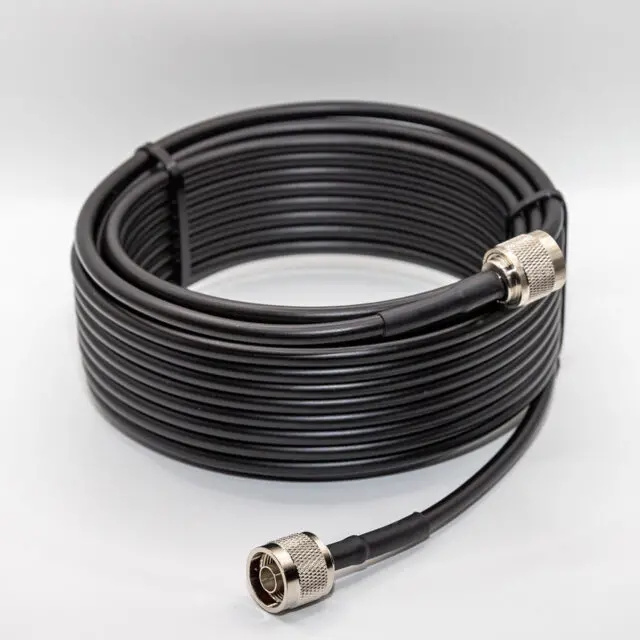
Coaxial cables introduce complex behavior in RF systems. Even high-quality lines like LMR-400 or Ecoflex 10 exhibit attenuation, dielectric losses and impedance variations over long runs. A poor connector installation, water ingress or mechanical damage can raise VSWR dramatically. When return loss degrades, a significant portion of the transmitted signal never reaches the antenna. The calculator enables quick evaluation of suspected cable issues: for example, if measured VSWR rises from 1.1 to 1.7 after a storm, the reflected power percentage gives a clearer indication of the severity of the problem. Identifying these issues early prevents long-term degradation and unnecessary transmitter stress.
High-power operation and transmitter protection
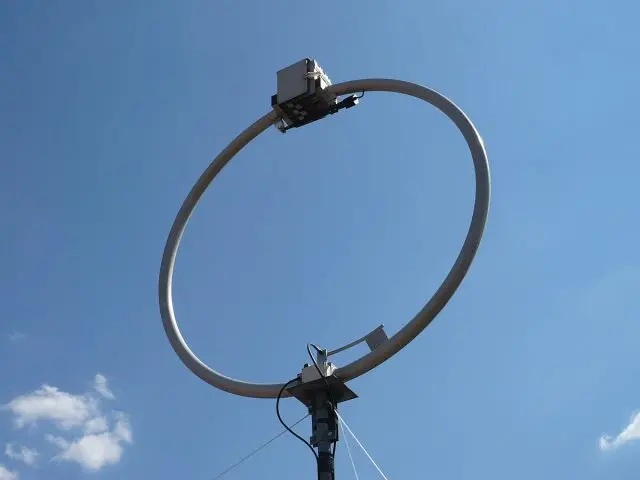
Modern RF amplifiers include protection circuits designed to reduce output power when VSWR exceeds a defined threshold. High reflected power can overheat the PA transistors, distort output waveforms and cause nonlinear behavior. Broadcast facilities and professional RF sites carefully monitor return loss to prevent costly hardware failures. Even amateur radio equipment benefits from keeping mismatch low, especially when using linear amplifiers, end-fed wire antennas, magnetic loops or compact multiband systems with inherent impedance challenges. Using the calculator ensures that operators understand the real power reflection levels and adjust the system before dangerous conditions arise.
Impact on signal quality and communication range
Mismatch not only reduces power transfer but can degrade the quality of the transmitted waveform. Increased reflected energy alters the standing wave pattern on the cable, which in turn affects the impedance seen by the transmitter. This can cause phase distortion, reduced modulation fidelity, and even unintended frequency shifts in extreme cases. In communication systems where reliability and clarity matter—such as emergency services, aviation bands, marine radio, amateur radio contests, satellite communication and IoT deployments—optimizing VSWR directly contributes to improved range, stronger SNR and fewer retransmissions. The return loss calculation helps engineers quantify improvements and track long-term system health.
Troubleshooting common rf issues using vswr and return loss
Many RF problems can be traced back to mismatch or reflection-related issues. Common examples include corroded connectors, dirt or oxidation on contact surfaces, improperly crimped connectors, coax shield damage, loose antenna mounting hardware, impedance anomalies in matching networks, or manufacturing tolerances in commercial antennas. Monitoring return loss across frequency ranges helps pinpoint where the mismatch occurs. A dip or peak in the return loss curve often reveals whether the fault is at the antenna, feed system, or a specific component. The calculator provides numerical insight that complements analyzer measurements, enabling faster and more accurate troubleshooting.
Using the calculator for system design and simulation
RF designers routinely convert between VSWR, return loss and reflected power when modeling circuits, filters and antenna systems. These values serve as key parameters when simulating microstrip structures, designing low-noise amplifiers, specifying transmission line interfaces or evaluating connector quality. The calculator simplifies these conversions and helps engineers validate performance targets such as –20 dB return loss or <1% reflected power. When combined with S-parameter data and network analyzer measurements, the output becomes a powerful tool in predicting system behavior before physical prototypes are manufactured.
Why continuous monitoring improves reliability
In long-term installations—such as repeater sites, broadcast towers, remote telemetry stations and industrial RF control systems—environmental changes gradually affect impedance. Temperature cycles, humidity, UV exposure, wind load and mechanical stress all contribute to degradation. Monitoring VSWR and return loss trends allows operators to detect early warning signs. A slow reduction in return loss might indicate cable aging, connector corrosion or antenna detuning. With the calculator, technicians can quantify the severity of these trends and schedule maintenance at the optimal time, reducing downtime and preventing catastrophic failures.
Best practices for achieving optimal vswr
Achieving and maintaining low VSWR requires attention to both design and installation quality. Use high-grade coaxial cables with proper shielding, ensure connectors are professionally installed, minimize unnecessary adapters, maintain proper grounding, and avoid sharp bends or crushing forces on cables. Antenna placement should consider surrounding structures, soil conditions, polarization and expected radiation patterns. Matching networks or tuners can compensate for non-ideal antenna behavior, but the underlying goal should always be a naturally resonant antenna with stable impedance. The calculator supports these best practices by providing accurate metrics for evaluating progress during adjustments.
When high vswr is acceptable
Although low VSWR is ideal in most scenarios, there are cases where mismatch is tolerable or even expected. Broadband receiving antennas may exhibit higher VSWR without affecting performance because only a small amount of noise power needs to be transferred. Some commercial multiband antennas rely on controlled mismatch to achieve wide frequency coverage. Portable field operations, QRP setups and emergency deployments may accept higher mismatch levels in exchange for convenience or versatility. The calculator helps users assess whether the mismatch is within a reasonable threshold for their specific application.
Integrating the calculator into rf learning and training
For students, hobbyists and new RF technicians, understanding the relationship between VSWR, return loss and reflected power is fundamental. The calculator provides an interactive learning experience, allowing newcomers to experiment with values and see how small variations influence system performance. This hands-on approach reinforces theoretical transmission line concepts and supports deeper comprehension of impedance, reflection coefficients and power relationships. Training programs, amateur radio clubs and educational institutions can use this tool to demonstrate real-world consequences of mismatch in a visual and intuitive way.
A well-matched RF system operates more efficiently, produces cleaner signals and ensures longer equipment lifespan. By using the VSWR to Return Loss & Power Calculator, engineers, hobbyists and technicians gain a reliable method to quantify mismatch, diagnose issues and optimize overall system performance.
Image(s) used in this article are either AI-generated or sourced from royalty-free platforms like Pixabay or Pexels.
This article may contain affiliate links. If you purchase through these links, we may earn a commission at no extra cost to you. This helps support our independent testing and content creation.