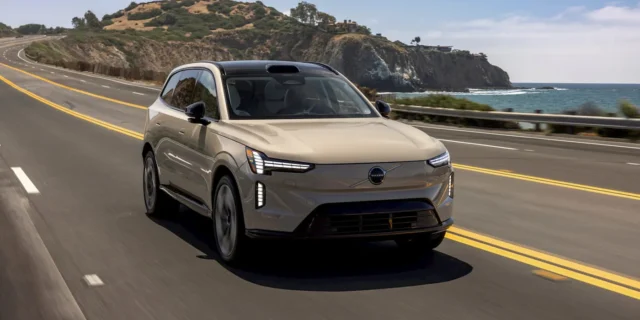
31 electric cars driven to zero in winter: real-world highway range test results
In February 2026, a large-scale real-world winter electric vehicle range test was conducted in Hungary, on open-access European motorways. A total of 31 electric cars were driven from 100% state of charge all the way down to zero, measuring actual highway range, energy consumption, power limiting behavior, and battery performance until complete depletion.
The location matters, but not in the way many readers might assume. Hungary offers long, uninterrupted motorway sections, sustained cruising speeds, and true winter conditions. From a physics and energy-consumption standpoint, this environment closely mirrors U.S. interstate driving in cold weather. Aerodynamic drag, rolling resistance, battery chemistry, and heating load behave the same regardless of continent.
This was not a simulation, not an EPA extrapolation, and not a marketing exercise. Every vehicle was physically driven until it could no longer continue at highway speed. The resulting dataset provides a rare, unfiltered look at what electric vehicles actually deliver in winter when driven to empty.
Why “driven to zero” matters in winter highway testing
Most published EV range figures avoid the lowest part of the battery. EPA ratings, onboard navigation estimates, and manufacturer claims typically stop at conservative buffers, especially in cold weather. That approach hides the most critical phase of EV operation.
Driving vehicles all the way to zero reveals real-world behavior that partial tests cannot show:
-
how much usable energy exists below 10% state of charge
-
how range prediction accuracy degrades near depletion
-
how aggressively power is limited in cold conditions
-
how battery aging affects stability at low charge
-
how realistic winter highway trip planning actually is
For drivers who rely on long highway trips, winter conditions represent the most demanding EV use case, making full-drain testing especially valuable.
Test conditions and driving methodology
All 31 vehicles began the test with fully charged batteries and were driven primarily on motorways at steady cruising speeds comparable to normal U.S. interstate travel.
Key test parameters:
-
Ambient temperature: 28–37°F (–2°C to +3°C)
-
Cruising speed: sustained 70–80 mph equivalent
-
Cabin heating: active throughout the entire drive
-
Tires: winter-rated tires on all vehicles
-
Driving style: normal traffic flow, no hypermiling
-
End condition: 0% state of charge or enforced power limitation
No vehicle was stopped early for convenience. Each car was driven until it could no longer reasonably maintain highway speed, providing true end-of-range data.
Vehicle lineup and scope of the dataset
The test fleet represented a broad cross-section of modern and older EV design:
-
Battery sizes from approximately 28 kWh to 108 kWh usable
-
Rated ranges (new) from roughly 155 to 480 miles
-
Vehicle age from brand new to over 200,000 miles driven
-
Body styles including compact hatchbacks, sedans, fastbacks, SUVs, and luxury flagships
Both new vehicles and high-mileage daily drivers were included, allowing direct observation of battery degradation effects under winter highway load, not just ideal conditions.
Headline results: how far EVs actually went before stopping
Longest winter highway range results
These vehicles achieved the greatest total distance before reaching zero:
| Vehicle | Usable battery | Highway distance | Total distance to zero | Avg. consumption |
|---|---|---|---|---|
| Mercedes-Benz EQS 450+ | ~108 kWh | ~258 miles | ~301 miles | ~21.0 kWh / 100 mi |
| Mercedes-Benz CLA 250+ | ~85 kWh | ~232 miles | ~288 miles | ~20.4 kWh / 100 mi |
| Kia EV4 Fastback | ~78 kWh | ~214 miles | ~247 miles | ~21.1 kWh / 100 mi |
These results clearly show that aerodynamics and drivetrain efficiency can rival battery size when it comes to winter highway range.
Mainstream EV results under winter highway load
Tesla Model Y winter highway performance
Two Tesla Model Y variants with similar battery capacities participated in the test:
| Model | Usable battery | Highway distance | Total distance | Avg. consumption |
|---|---|---|---|---|
| Model Y RWD | ~62.5 kWh | ~157 miles | ~190 miles | ~21.7 kWh / 100 mi |
| Model Y Standard | ~62.5 kWh | ~154 miles | ~181 miles | ~22.0 kWh / 100 mi |
Despite moderate battery size, efficient drivetrains allowed these vehicles to deliver practical winter highway range.
Typical mid-range EV winter performance
Across mainstream family EVs and compact SUVs, results clustered as follows:
| Battery size | Typical winter highway range |
|---|---|
| 60–65 kWh | 170–190 miles |
| 70–75 kWh | 190–215 miles |
Energy consumption for this group generally ranged between 21 and 24 kWh per 100 miles, depending largely on aerodynamics.
Small battery and early-generation EVs: winter limitations exposed
Vehicles with smaller batteries or early EV platforms experienced the strongest winter penalties:
| Vehicle type | Usable battery | Total winter range |
|---|---|---|
| Škoda Citigo e-iV | ~32 kWh | 118–130 miles |
| Early Hyundai Ioniq Electric | ~28 kWh | 100–112 miles |
| Early compact EVs | 30–36 kWh | 105–135 miles |
In these vehicles, cabin heating and cold-induced voltage drop consumed a disproportionate share of usable energy, leaving little margin at highway speed.
Energy consumption statistics across the entire fleet
Across all 31 vehicles tested:
-
Lowest recorded average: ~20.4 kWh / 100 miles
-
Fleet-wide average: ~22.5 kWh / 100 miles
-
Highest observed values: 26–28 kWh / 100 miles, primarily in larger SUVs and older platforms
Consumption by vehicle category
| Body style | Typical winter highway consumption |
|---|---|
| Aerodynamic sedans / fastbacks | 20–21.5 kWh / 100 mi |
| Compact hatchbacks | 21–23 kWh / 100 mi |
| SUVs / crossovers | 23–27 kWh / 100 mi |
At sustained highway speeds, aerodynamic drag dominated energy use far more than vehicle weight.
Rated range versus real winter highway reality
A major takeaway from the test was the gap between official rated range figures and real winter highway results:
| Vehicle category | Real winter range loss |
|---|---|
| Efficient sedans | –35% to –40% |
| Mainstream EVs | –40% to –45% |
| Small or older EVs | –45% to –55% |
For winter highway travel, planning around 60–70% of rated range proved realistic.
Battery aging revealed by full-drain testing
High-mileage vehicles showed clear winter-specific aging effects:
-
10–20% reduction in usable capacity
-
Earlier voltage sag under sustained load
-
Stronger and earlier power limiting below ~10% state of charge
In practical terms, some older EVs lost 20–30 miles of winter highway range compared to low-mileage examples of the same model.
Importantly, degradation effects varied widely between vehicles, highlighting the role of battery chemistry, cooling design, and long-term thermal management, not just mileage.
Speed sensitivity and winter highway physics
Measured data showed strong speed sensitivity:
-
Increasing cruising speed by 6 mph raised energy consumption by roughly 7–10%
-
Aerodynamics outweighed curb weight as the dominant factor
-
Stable cruising speed mattered more than short acceleration bursts
Winter highway driving combines continuous aerodynamic drag, reduced battery efficiency, and constant heating load, making it the most demanding EV operating scenario.
What this data means for U.S. EV drivers
Based on full-drain winter highway results:
-
Expect 30–45% less range than EPA ratings during winter highway driving
-
Plan charging stops earlier than navigation estimates suggest
-
Larger batteries provide thermal and operational buffer, not just distance
-
Heat pump systems significantly improve winter efficiency
-
Battery age matters more in winter than in summer
Most importantly, modern EVs are fully capable of long winter highway trips when expectations and planning are based on measured reality rather than optimistic ratings.
Why full-drain testing changes the conversation
Stopping at 10% hides critical behavior.
Driving to zero exposes it.
This test demonstrates that winter EV performance is not guesswork. It is predictable, measurable, and governed by physics rather than marketing language.
This winter highway test in Hungary drove 31 electric vehicles all the way to zero under cold, real-world conditions comparable to U.S. interstate travel. The results show that:
-
Real winter highway range is 35–55% lower than rated figures
-
Aerodynamics and efficiency rival battery size in importance
-
Battery aging significantly affects winter usability
-
Full-drain testing reveals behavior no laboratory cycle can capture
For the U.S. market, this dataset provides a realistic, data-driven foundation for understanding what electric vehicles actually deliver on winter highways when driven until empty.
Image(s) used in this article are either AI-generated or sourced from royalty-free platforms like Pixabay or Pexels.