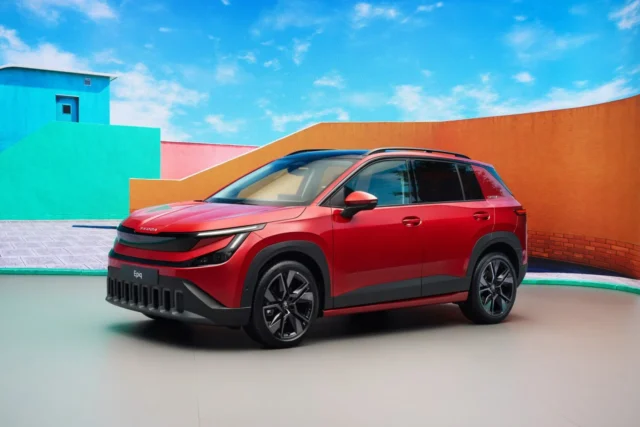
31 Electric Cars Driven To Zero In Winter: Real-World Highway Range Test
What This Winter EV Range Test Revealed
How far can an electric car really go on the highway in winter? A large real-world test drove 31 electric vehicles from 100% state of charge all the way to zero in cold motorway conditions, measuring actual range, energy consumption, battery behavior and power limiting until the cars could no longer continue normally.
The results show why official EV range ratings can be misleading for winter road trips. In cold weather, sustained highway speed, cabin heating, winter tires, battery temperature and aerodynamic drag can reduce usable range dramatically. For many electric cars, realistic winter highway range is far lower than the number printed in brochures or shown in ideal test cycles.
This article breaks down the most important findings from the 31-car winter EV range test: which models went the farthest, how much range was lost compared with rated figures, why aerodynamics mattered so much, and what drivers should expect when planning long electric car trips in cold weather.
Why Winter Highway Range Matters So Much
Electric vehicle range is not a single fixed number. The same car can deliver very different results depending on speed, temperature, tires, terrain, wind, heating demand, battery condition and driving style. This is especially true in winter, when several unfavorable factors appear at the same time.
Cold batteries are less efficient than warm batteries. Cabin heating requires energy. Winter tires usually increase rolling resistance. Cold air is denser, which increases aerodynamic drag at highway speeds. Regenerative braking is less useful on long motorway drives because the car spends most of its time cruising steadily rather than slowing down and recovering energy.
This makes winter highway driving one of the hardest real-world scenarios for an electric car. It is also one of the most important scenarios for drivers. Many people do not worry about range during short city trips. They worry about range when they are traveling long distances in cold weather, with the heater on, at normal traffic speed, and with limited charging options.
That is why a full winter highway range test is more useful than a simple brochure rating. It shows what happens when the car is used in the way many drivers actually fear most: cold, fast, continuous and far from ideal.
What “Driven To Zero” Means
The phrase driven to zero is important. Many EV tests stop at 10%, 5% or when the car warns the driver to charge. That is safer and more convenient, but it hides the most stressful part of battery operation.
Driving to zero reveals how the car behaves when the battery is nearly depleted. It shows whether the range estimate remains accurate, whether power is reduced aggressively, whether the car still maintains highway speed, and how much usable energy remains after the dashboard begins warning the driver.
This does not mean drivers should normally drive their EVs to zero. They should not. Running an electric car completely empty is inconvenient, risky and potentially stressful for the battery. But as a test method, it is extremely valuable because it exposes behavior that normal partial-range tests cannot show.
A car that looks predictable at 20% state of charge may behave differently below 10%. Some EVs preserve a hidden buffer. Some begin limiting power. Some show conservative range estimates. Others become less reassuring near the end. These details matter when drivers are trying to understand real-world winter trip planning.
Test Conditions
The test was conducted in February 2026 under cold European motorway conditions. All vehicles started with fully charged batteries and were driven primarily at sustained highway speeds until they reached zero or could no longer continue normally.
The conditions were demanding but realistic. Temperatures ranged from about 28°F to 37°F, or roughly –2°C to +3°C. Cabin heating remained active. All cars used winter-rated tires. The driving style followed normal traffic rather than hypermiling.
This is important because the test was not designed to produce the best possible number. It was designed to show realistic cold-weather highway performance.
The test environment also matters. Although it took place in Hungary, the physics are highly relevant to drivers in North America, Northern Europe and other cold regions. A car traveling at highway speed in cold air faces the same basic forces everywhere: aerodynamic drag, rolling resistance, drivetrain losses, heating demand and battery chemistry limitations.
Whether the road is called a motorway, autobahn or interstate, the energy problem is the same.
Why Official EV Range Ratings Can Mislead In Winter
Official EV range ratings are useful for comparison, but they are not a guarantee of real winter highway range. Rating systems such as EPA, WLTP or other certification cycles are controlled test methods. They help compare vehicles under standardized conditions, but they do not fully represent every real-world use case.
Winter highway driving is particularly severe because it combines several energy-consuming factors. Higher speed increases aerodynamic drag. Cold temperatures reduce battery efficiency. Heating the cabin consumes additional energy. Winter tires add rolling resistance. If the car has no efficient heat pump, the energy penalty can be even larger.
A vehicle rated for 300 miles may not travel 300 highway miles in cold weather. In this test, many vehicles delivered only about 60% to 70% of their rated range during winter motorway driving. Older or less efficient EVs could lose even more.
This does not mean official ratings are useless. It means drivers need to understand what those ratings represent. A rated range number is not the same as a guaranteed winter road-trip number.
The Headline Result
The strongest conclusion from the test is simple: winter highway range can be 35% to 55% lower than official rated range, depending on vehicle design, battery size, efficiency, body shape and age.
Efficient sedans and fastbacks performed best because their aerodynamic shape reduced high-speed energy consumption. Large SUVs and older EV platforms generally consumed more energy. Small-battery cars were hit hardest because cabin heating and cold-weather losses represented a larger share of available energy.
The best-performing vehicles were not simply the cars with the largest batteries. Battery size mattered, but aerodynamic efficiency and drivetrain efficiency mattered almost as much. A large battery in a bulky vehicle could be less impressive than a smaller battery in a very efficient body.
This is one of the most important lessons for EV buyers: winter range is not only about kilowatt-hours. It is about how effectively the car uses those kilowatt-hours.
Longest Winter Highway Range Results
The longest-distance results came from efficient, long-range EVs with good aerodynamics and large usable battery capacity. These cars were able to combine battery size with low consumption, which is the ideal formula for winter highway driving.
The Mercedes-Benz EQS 450+ achieved one of the strongest results, traveling roughly 301 miles total to zero, with around 258 miles of highway distance and average consumption near 21.0 kWh per 100 miles. That is a strong winter result for a large luxury EV and shows the importance of aerodynamic design.
The Mercedes-Benz CLA 250+ also performed very well, with approximately 288 miles total to zero and around 232 miles of highway distance, using an estimated usable battery capacity around 85 kWh. Its average consumption was close to 20.4 kWh per 100 miles, making it one of the most efficient cars in the test.
The Kia EV4 Fastback delivered another strong result, reaching about 247 miles total to zero and roughly 214 miles of highway distance, with consumption near 21.1 kWh per 100 miles.
These results show that sleek body design can be just as important as battery size. At highway speed, the car is constantly pushing air aside. The less energy it wastes doing that, the more range it keeps.
Best-Performing Vehicles
| Vehicle | Approx. usable battery | Highway distance | Total distance to zero | Avg. consumption |
|---|---|---|---|---|
| Mercedes-Benz EQS 450+ | ~108 kWh | ~258 miles | ~301 miles | ~21.0 kWh / 100 mi |
| Mercedes-Benz CLA 250+ | ~85 kWh | ~232 miles | ~288 miles | ~20.4 kWh / 100 mi |
| Kia EV4 Fastback | ~78 kWh | ~214 miles | ~247 miles | ~21.1 kWh / 100 mi |
The most interesting pattern is that all three vehicles were efficient for their class. They did not win only because of battery size. They won because their battery capacity, aerodynamics and energy management worked well together.
Why Aerodynamics Mattered More Than Weight
Many EV discussions focus heavily on vehicle weight. Weight matters, especially during acceleration and climbing. But on a steady winter highway drive, aerodynamics can become the larger factor.
At sustained high speed, the car must continuously push through air. The faster the car travels, the more energy is required to overcome aerodynamic drag. Cold air is denser than warm air, which makes this problem slightly worse in winter. This is why a sleek sedan or fastback can outperform a taller SUV even if both have similar battery sizes.
Weight is not irrelevant. Heavier vehicles may consume more energy during acceleration and on rolling terrain. But on long, steady motorway sections, a slippery shape can be more valuable than a modest weight advantage.
This explains why some large but aerodynamic EVs performed better than expected, while some crossovers and SUVs used significantly more energy. In winter highway testing, the body shape is not a styling detail. It is a range factor.
Tesla Model Y Winter Highway Performance
The Tesla Model Y is one of the most important EVs in the market, so its winter highway result is especially relevant. In the test, two Model Y variants with similar usable battery capacity were included.
The Model Y RWD achieved roughly 190 miles total distance to zero, with about 157 miles of highway distance and average consumption around 21.7 kWh per 100 miles. The Model Y Standard reached about 181 miles total distance, with approximately 154 miles of highway distance and average consumption near 22.0 kWh per 100 miles.
These numbers show two things. First, the Model Y remains relatively efficient for a crossover. Second, winter highway driving still imposes a major range penalty compared with ideal conditions or official range claims.
For drivers, a winter highway expectation around 180 to 190 miles to empty from this battery class is more realistic than relying on optimistic dashboard or brochure numbers. Practical charging stops should be planned earlier than zero, so the usable trip leg would be shorter than the full-drain test result.
Tesla Model Y Results
| Model | Approx. usable battery | Highway distance | Total distance to zero | Avg. consumption |
|---|---|---|---|---|
| Tesla Model Y RWD | ~62.5 kWh | ~157 miles | ~190 miles | ~21.7 kWh / 100 mi |
| Tesla Model Y Standard | ~62.5 kWh | ~154 miles | ~181 miles | ~22.0 kWh / 100 mi |
For most real trips, drivers should not plan to use the full 181 to 190 miles. A more comfortable winter charging strategy would keep a buffer and plan stops well before the battery reaches a critical level.
Mainstream EV Winter Range
The mainstream EVs in the test generally clustered into predictable range bands. Cars with usable battery capacity around 60 to 65 kWh typically delivered around 170 to 190 miles of winter highway range. Cars with 70 to 75 kWh usable capacity often reached around 190 to 215 miles, depending heavily on aerodynamics and efficiency.
These numbers are important because many popular EVs fall into this middle range. They are not small city cars, but they are also not ultra-long-range luxury models. For many households, these are the cars people actually buy.
A 170 to 215 mile winter highway range can be perfectly usable if charging infrastructure is good and the driver plans realistically. It is less convenient if chargers are sparse, broken, crowded or located far from the route. The car may be capable, but the trip experience depends on both vehicle range and charging network reliability.
This is why EV ownership is not just about the car. It is also about route planning, charging speed, charger availability and weather expectations.
Small-Battery EVs In Winter
Small-battery and early-generation electric cars faced the strongest winter limitations. Vehicles with usable battery capacity around 28 to 36 kWh often delivered roughly 100 to 135 miles of total winter range.
That may still be enough for local use, commuting and urban driving, but it becomes limiting on winter highways. At sustained speed, cabin heating and cold battery behavior consume a large share of the available energy. There is simply less buffer.
A Škoda Citigo e-iV-class vehicle with around 32 kWh usable capacity was in the range of about 118 to 130 miles. Early Hyundai Ioniq Electric-type vehicles with around 28 kWh usable capacity were closer to 100 to 112 miles. These results are not failures; they reflect the design purpose and battery capacity of earlier EVs.
Small EVs can be excellent city cars. But winter highway driving exposes the limits of small batteries quickly.
Energy Consumption Across The Fleet
Across the 31 tested vehicles, average energy consumption ranged from very efficient values around 20.4 kWh per 100 miles to much higher figures around 26 to 28 kWh per 100 miles in less efficient vehicles, larger SUVs or older platforms.
The fleet-wide average was around 22.5 kWh per 100 miles, which is a useful reference point for winter highway planning.
A simplified pattern emerged:
| Body style | Typical winter highway consumption |
|---|---|
| Aerodynamic sedans / fastbacks | 20–21.5 kWh / 100 mi |
| Compact hatchbacks | 21–23 kWh / 100 mi |
| SUVs / crossovers | 23–27 kWh / 100 mi |
The difference between 21 and 27 kWh per 100 miles is significant. On a 75 kWh usable battery, that difference can mean roughly 80 miles of range variation under similar conditions.
That is why efficiency should be treated as seriously as battery capacity.
How Much Range Do EVs Lose In Winter?
The test showed a broad winter highway range loss of about 35% to 55% compared with official or rated range figures.
Efficient sedans and fastbacks generally performed best, losing roughly 35% to 40% under cold highway conditions. Mainstream family EVs often lost around 40% to 45%. Small-battery or older EVs could lose 45% to 55%, especially if battery aging and heating load were significant.
This range loss does not mean EVs are unsuitable for winter. It means winter road trips require more conservative planning. A driver who expects 100% of the rated range in cold highway conditions will be disappointed. A driver who plans around 60% to 70% of rated range will have a much more realistic experience.
A practical rule for winter highway planning is simple: take the official range number, reduce it by about one third to one half depending on the vehicle and conditions, then add a safety buffer.
Rated Range Vs Real Winter Highway Range
| Vehicle category | Typical winter highway range loss |
|---|---|
| Efficient sedans / fastbacks | –35% to –40% |
| Mainstream EVs | –40% to –45% |
| Small or older EVs | –45% to –55% |
The most efficient vehicles still lost range, but they retained enough usable distance to remain practical for long trips. The weakest winter results came from cars with small batteries, less efficient shapes or older battery packs.
Battery Aging Becomes More Visible In Winter
Battery aging is not always obvious in mild weather or short-distance driving. In winter highway use, it becomes much more visible.
High-mileage vehicles in the test showed several aging-related effects. Usable capacity could be reduced by about 10% to 20%. Voltage sag appeared earlier under sustained load. Power limiting could begin sooner below low state of charge. Some older EVs lost around 20 to 30 miles of winter highway range compared with lower-mileage examples of similar models.
This does not mean every older EV is bad. Battery degradation varies widely. Chemistry, thermal management, charging habits, climate, mileage and manufacturer design all matter. Some high-mileage EVs remain very usable. Others show more noticeable winter limitations.
For used EV buyers, winter testing is especially important. A car that seems fine during a short test drive may have much less highway range in cold weather than expected. Battery health reports, real consumption data and charging history can be more valuable than odometer mileage alone.
Why Speed Has Such A Strong Effect
Highway speed is one of the biggest range factors for EVs. In this test, increasing cruising speed by about 6 mph could raise energy consumption by roughly 7% to 10%.
This happens because aerodynamic drag increases rapidly with speed. The car does not simply use a little more energy as speed rises. At highway speeds, drag becomes a dominant force. A small increase in speed can produce a noticeable increase in consumption.
This is why driving at 80 mph in winter can reduce range much more than many drivers expect. Slowing slightly may add meaningful distance without changing the trip experience dramatically.
For example, reducing speed from 80 mph to 70–72 mph may extend range enough to reach a more convenient charger. In cold weather, that can be more effective than turning off comfort features.
Heat Pumps And Winter Efficiency
Heat pump systems can significantly improve winter efficiency because they use energy more effectively than simple resistive heating. Instead of converting electricity directly into heat, a heat pump moves heat from one place to another. This can reduce cabin heating energy consumption under many winter conditions.
The advantage depends on temperature, system design and driving pattern. In extremely cold conditions, heat pumps may be less effective, and supplemental resistive heating may still be needed. But in typical near-freezing winter conditions, a good heat pump can help preserve range.
This is one reason newer EV platforms often perform better in winter than older ones. Better thermal management, battery preconditioning and heat pump integration can reduce cold-weather penalties.
For buyers in cold climates, a heat pump is not just a comfort feature. It can be a meaningful range feature.
Why Winter Tires Affect EV Range
Winter tires improve safety in cold weather, snow and ice, but they can reduce efficiency. Their rubber compounds, tread patterns and rolling resistance differ from summer or low-rolling-resistance EV tires.
This does not mean drivers should avoid winter tires. Safety comes first. But it does mean winter tires are part of the range equation. The same EV may consume more energy with winter tires than with optimized summer tires.
In a proper winter range test, winter tires are realistic because real drivers should use weather-appropriate tires. The results therefore represent practical winter use better than a test performed on summer tires in cold weather.
Why Cabin Heating Matters
Cabin heating can consume significant energy, especially in smaller EVs. In a gasoline or diesel vehicle, waste heat from the engine warms the cabin. In an EV, there is much less waste heat available, so the car must use battery energy for heating.
The impact is larger in small-battery vehicles because the same heating demand represents a larger percentage of the battery. A 2 kW heating load is less significant in a 100 kWh luxury EV than in a 28 kWh compact car.
Preconditioning while plugged in can help. If the car warms the cabin and battery before departure using grid power, less battery energy is needed at the beginning of the trip. Seat heaters and steering wheel heaters can also improve comfort with less energy than heating the entire cabin aggressively.
For winter road trips, smart thermal management can add useful range.
Why Driving To Zero Exposes Power Limiting
Many EVs begin limiting power at very low state of charge. This protects the battery and prevents voltage from dropping too far under load. In normal driving, many owners never experience this because they charge before reaching critical levels.
A full-drain test exposes this behavior. Some cars may continue at normal speed almost until the end. Others may gradually reduce power. Some may display warning messages or limit acceleration. Under winter conditions, voltage sag can make this happen earlier or more aggressively.
This matters because “0%” is not only a number on the dashboard. The final part of the battery may not be fully usable at highway speed. A car might still move slowly but no longer maintain normal motorway pace. For trip planning, this means the practical end of range can arrive before the car is completely immobile.
Drivers should therefore avoid planning trips that depend on using the last few percent of battery. The low-charge zone is a safety buffer, not a normal operating target.
What This Means For U.S. EV Drivers
Although the test took place in Europe, the results are highly relevant to U.S. drivers. Cold-weather interstate driving creates similar energy demands: sustained high speed, low temperatures, cabin heating and long distances between charging stops.
For U.S. drivers, the main takeaway is that EPA range should not be treated as winter highway range. A car rated for 300 miles may realistically deliver closer to 180 to 210 highway miles in cold weather, depending on the model and conditions.
This is especially important in regions such as the Midwest, Northeast, Mountain West and Canada-border states, where winter road trips can combine low temperatures, headwinds, snow, slush and long gaps between chargers.
The practical strategy is conservative planning. Start with a full battery, precondition before departure, use route planning with charger alternatives, keep a reserve and do not assume that the dashboard estimate will remain accurate under changing weather and speed conditions.
Winter EV Road Trip Planning Tips
A winter EV road trip is easier when planned around real range rather than ideal range.
Use these practical rules:
- Plan around 60% to 70% of rated range for highway winter driving.
- Charge earlier than you would in summer.
- Keep at least a 10% to 15% reserve when possible.
- Precondition the battery and cabin while plugged in.
- Use seat heaters and steering wheel heating to reduce cabin heating load.
- Avoid unnecessary high-speed driving.
- Check charger status before arrival.
- Prefer reliable fast chargers with backup options nearby.
- Expect higher consumption in wind, snow or slush.
- Do not rely on the final 5% of battery for normal highway driving.
These habits can make winter EV travel much less stressful.
Which EVs Are Best For Winter Highway Driving?
The best winter highway EVs usually share several traits. They have efficient aerodynamics, good thermal management, a reasonably large usable battery, an effective heat pump, stable battery performance at low temperatures and accurate range prediction.
A huge battery alone is not enough. A large, inefficient SUV can consume much more energy than a sleek sedan. A smaller but very efficient EV may outperform expectations. Good software also matters, because drivers need accurate predictions and reliable route planning.
For cold-weather highway users, the ideal EV is not necessarily the one with the highest advertised range. It is the one that retains the most useful range under cold, fast, real-world conditions.
What The Test Says About EV SUVs
Electric SUVs and crossovers are popular because they offer space, comfort and a higher seating position. But they are not always the best shape for highway range. Their larger frontal area and less aerodynamic profile can increase consumption significantly at speed.
This does not make electric SUVs bad. Many are excellent family vehicles. But drivers should understand that highway winter efficiency may be lower than in sedans or fastbacks with similar battery sizes.
If two EVs have the same usable battery capacity, the more aerodynamic one will usually travel farther at high speed. This becomes even more important in winter, when all vehicles already face additional energy penalties.
Why Older EVs Need More Conservative Planning
Older EVs can still be useful, but winter highway driving exposes their limitations more clearly. Smaller battery packs, less efficient heating systems, older battery chemistry and degradation can all reduce range.
A used EV that works well for commuting may not be ideal for long winter road trips. That does not make it a bad car. It simply means its mission should match its capability.
For used EV buyers, winter range should be part of the buying decision. Ask about battery health, charging habits, real highway consumption and cold-weather behavior. If possible, look at owner data from similar vehicles in similar climates.
The cheapest used EV may be a good city car, but not a good winter highway car.
Why The Last 10% Of Battery Is Different
Many drivers think of EV battery percentage as a simple fuel gauge. In practice, the last 10% can behave differently from the rest of the battery, especially in winter.
At low state of charge, battery voltage is lower. Under load, voltage can sag further. Cold temperatures make this more difficult. To protect the battery and maintain safety, the car may reduce power or warn the driver more aggressively.
This is why the last 10% should be treated as an emergency reserve rather than normal trip capacity. It may still contain energy, but not always energy that can be used comfortably at highway speed.
A test that stops at 10% misses this behavior. A test that goes to zero reveals it.
Does Regenerative Braking Help In Winter Highway Driving?
Regenerative braking helps EV efficiency in city driving and stop-and-go traffic. It recovers some energy that would otherwise be lost as heat in the brakes.
On the highway, its benefit is smaller because the car is cruising steadily. There are fewer braking events. On a long motorway section, the dominant energy losses are aerodynamic drag, rolling resistance, drivetrain losses and heating.
In winter, regenerative braking can also be limited when the battery is cold or full. At the beginning of a trip with a fully charged cold battery, regen may be reduced until the battery warms or state of charge drops.
This is another reason winter highway range can be much lower than mixed-cycle ratings. The car cannot rely on urban regen benefits during steady high-speed driving.
What The Test Means For EV Buyers
For EV buyers, the test provides several useful lessons.
First, do not compare vehicles only by official range. Compare real efficiency, battery size, body shape and winter performance.
Second, consider your driving pattern. If most trips are short and urban, even a smaller EV may be enough. If you often drive long winter highway routes, choose a car with more real-world buffer.
Third, look for heat pump availability and good thermal management. These features matter more in cold climates.
Fourth, do not ignore charging speed. A car with slightly shorter range but excellent fast charging may be more convenient than a longer-range car that charges slowly.
Fifth, consider battery age if buying used. Winter highway range can reveal degradation more clearly than summer commuting.
What The Test Means For EV Skeptics
The test also gives a balanced answer to EV skeptics. Yes, electric cars lose significant range in winter. No, this does not mean they are unusable.
The correct conclusion is more practical. Winter EV range is predictable when measured properly. Some models perform very well. Others have clear limitations. Drivers need realistic expectations and good charging plans.
A gasoline car also uses more fuel in winter, but the penalty is less visible because refueling is fast and familiar. In an EV, the penalty affects route planning more directly. That is why accurate winter data matters.
The issue is not whether EVs work in winter. They do. The issue is how much range they lose and whether the driver plans around that loss.
What The Test Means For Automakers
For automakers, this kind of testing highlights what matters in real-world EV design. Big batteries help, but efficiency is equally important. Aerodynamics, heat pumps, thermal management, range prediction and low-state-of-charge behavior can strongly shape the user experience.
A vehicle that performs well in winter earns driver trust. A vehicle that gives optimistic estimates and then limits power early near zero creates anxiety.
Automakers should therefore focus not only on headline range but also on transparent winter performance, accurate route planning, reliable preconditioning and consistent charging behavior.
As EV adoption grows, real winter highway tests will become more important than marketing claims.
Key Lessons From The 31-Car Winter EV Test
The results can be summarized in several practical points.
Real winter highway range is much lower than rated range. In many cases, drivers should expect a 35% to 55% reduction.
Aerodynamics are critical. Efficient sedans and fastbacks often perform better than taller SUVs with similar battery capacity.
Battery size helps, but it is not the whole story. Efficiency determines how far each kilowatt-hour goes.
Small-battery EVs are strongly affected by cabin heating and cold-weather losses.
Battery aging is more visible in winter than in mild conditions.
The last 10% of battery can reveal power limiting and voltage sag.
Winter road trips are fully possible, but they require realistic planning.
The 31-car winter EV highway range test provides a clear, practical picture of what electric vehicles can and cannot do in cold motorway conditions. It confirms that winter range loss is real, sometimes large, and strongly affected by speed, aerodynamics, battery size, heating demand and vehicle age.
It also shows that modern EVs can handle winter highway travel when drivers plan with realistic numbers. The best performers delivered impressive cold-weather distance, especially when efficient body design and large usable battery capacity worked together. Mainstream EVs remained usable but required earlier charging stops. Small and older EVs showed clear winter limitations.
The most important message is not that EVs fail in winter. The message is that winter highway range must be understood differently from official rated range. A driver who expects the brochure number may be disappointed. A driver who plans around measured winter reality can travel confidently.
For anyone buying, comparing or road-tripping an electric car in cold weather, this kind of full-drain test is far more useful than idealized range claims. It shows the real answer to the question many EV drivers ask every winter: how far will the car actually go when the battery is full, the road is cold and the destination is still many miles away?
Image(s) used in this article are either AI-generated or sourced from royalty-free platforms like Pixabay or Pexels.
This article may contain affiliate links. If you purchase through these links, we may earn a commission at no extra cost to you.
Get the weekly RF & IT briefing
Radio guides, RF calculators, AI, Windows, Linux and satellite communication explainers. One useful email per week. No spam.