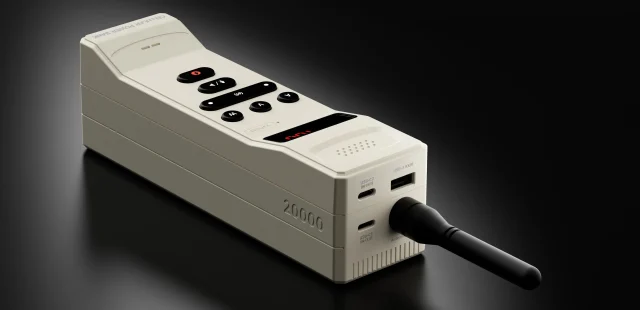
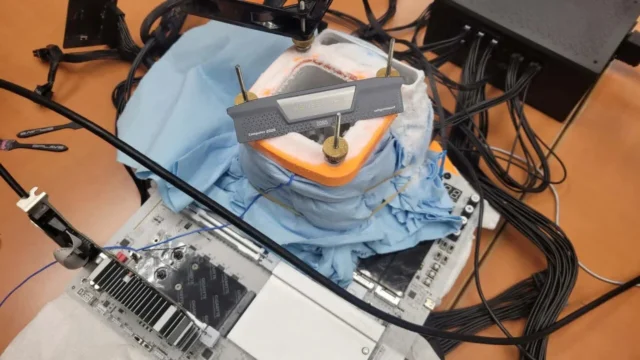
The term “black box” is misleading. In commercial aviation, these devices are bright orange, impact-resistant, and engineered to survive conditions that destroy nearly every other onboard system. Officially known as the Cockpit Voice Recorder (CVR) and Flight Data Recorder (FDR), these systems form the core of modern accident investigation and flight safety analysis.
Black boxes are not optional accessories. Under international aviation regulations, they are mandatory on virtually all commercial transport aircraft and most turbine-powered aircraft above defined weight thresholds. Their role extends far beyond post-crash analysis. They provide the empirical foundation for systemic safety improvements, procedural changes, and aircraft design modifications.
What Is A Flight Data Recorder (FDR)?
The Flight Data Recorder captures parametric data describing the aircraft’s operational state throughout the flight. Early generations recorded a few dozen parameters on magnetic tape. Modern digital FDR systems record hundreds to thousands of data points.
Typical parameters include:
Airspeed (IAS, TAS)
Pressure altitude
Radio altitude
Vertical acceleration (Nz)
Pitch, roll, yaw attitudes
Engine parameters (N1, N2, EGT, fuel flow)
Flap and slat positions
Autopilot modes
Control surface deflections
Flight management system outputs
In legacy systems, the FDR was a standalone unit. In modern aircraft such as the Boeing 787 or Airbus A350, the FDR function is integrated into complex avionics architectures and often supported by digital data acquisition units (FDAU or DFDAU).
Sampling And Data Resolution
Data acquisition rates vary by parameter:
Slow-changing parameters: 1 Hz
Control inputs: 4–8 Hz
High-dynamic parameters (accelerations): 8–64 Hz
Regulatory requirements (e.g., EASA CS-25, FAA 14 CFR Part 121) define minimum parameter sets and recording durations. Modern FDRs must typically store at least 25 hours of flight data in a continuous loop buffer.
What Is A Cockpit Voice Recorder (CVR)?
The Cockpit Voice Recorder captures audio from multiple sources:
Pilot and co-pilot headset microphones
Area microphone in the cockpit
Radio communications
Aural warnings and system alerts
Modern CVRs record at least 2 hours of cockpit audio (older systems recorded 30 minutes). The 2-hour requirement was adopted to capture extended pre-incident context.
The CVR does not continuously transmit data. It records locally in a loop. When memory capacity is reached, older audio is overwritten unless the system is manually preserved after a serious incident.
Crash Survivability Engineering
The most critical component is the Crash Survivable Memory Unit (CSMU). This module houses solid-state memory and is engineered to withstand extreme conditions:
Impact shock: 3,400 g for 6.5 milliseconds
Static crush: 5,000 lbs for 5 minutes
Penetration resistance
High-temperature fire: 1,100 °C for 60 minutes
Deep sea immersion: pressure equivalent to 20,000 ft underwater
Long-term saltwater exposure (30 days minimum)
The housing typically consists of stainless steel or titanium, thermal insulation layers, and phase-change materials to absorb heat.
Underwater Locator Beacon (ULB)
Image(s) used in this article are either AI-generated or sourced from royalty-free platforms like Pixabay or Pexels.
This article may contain affiliate links. If you purchase through these links, we may earn a commission at no extra cost to you.
Get the weekly RF & IT briefing
Radio guides, RF calculators, AI, Windows, Linux and satellite communication explainers. One useful email per week. No spam.