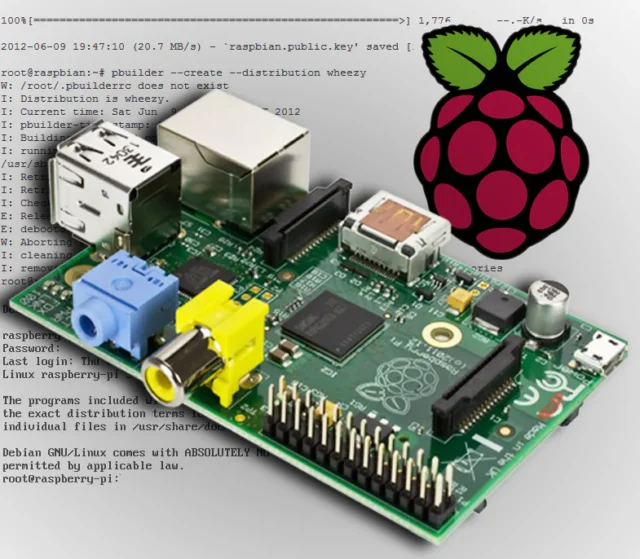
The evolution of the Raspberry Pi is one of the most unusual success stories in modern computing. What began as a deliberately underpowered, ultra-cheap educational computer has gradually transformed into a platform that, in its latest generations, approaches — and in some scenarios rivals — entry-level desktop PCs. This was not an accident, and it was not a sudden change of direction. It is the result of technical reality, user behavior, and long-term strategic pressure converging on the same point.
The Raspberry Pi was never intended to replace desktop computers. Its original purpose was to make computing understandable again. The reason that purpose now requires hardware like the Raspberry Pi 5 — and very likely the Pi 6 — lies in how education, software development, and user expectations have changed over time.
The original mission was education, not performance
The earliest Raspberry Pi models were born from a simple but worrying observation: many students arriving at university could use computers, but had no idea how they actually worked. They consumed software, but could not create it.
The Raspberry Pi was designed as a corrective tool. It was meant to be:
affordable enough to feel disposable
simple enough to be understandable
powerful enough to run a real operating system
open enough to expose the relationship between hardware and software
Low performance was not a flaw. It was a pedagogical decision. A slow system forces awareness. Limited memory encourages efficiency. Minimal resources make abstractions visible. At that stage, nobody was talking about replacing desktops.
Early hardware limits were intentional — and useful
The first generations came with obvious constraints:
weak CPUs
minimal RAM
SD-card-based storage
basic graphics capabilities
From a teaching perspective, this made sense. Inefficient code had visible consequences. The operating system was not hidden behind layers of optimization. You learned not only how to program, but why performance and resource management matter.
However, education does not exist in isolation. And the world around the Raspberry Pi changed very quickly.
The community pushed the platform beyond the classroom
The Raspberry Pi escaped education almost immediately. Developers, hobbyists, and engineers began using it for tasks it was never strictly designed for:
media centers
home servers and NAS systems
routers and network appliances
industrial controllers
digital signage
robotics and automation
IoT gateways
This was a turning point. The Raspberry Pi was no longer just a learning tool — it became a practical computing node. Practical use cases bring practical expectations, and those expectations exposed the limits of early hardware.
Performance stopped being optional
Once users started connecting monitors, running web browsers, opening multiple applications, and relying on graphical environments, performance stopped being a luxury. It became a baseline requirement.
A system that:
stutters
freezes
drops frames
takes seconds to respond
does not teach patience. It teaches abandonment.
This is a critical point. If a learning tool creates frustration instead of curiosity, it fails its mission. At that moment, the Raspberry Pi had to evolve or risk becoming irrelevant.
The modern attention threshold problem
Today’s users — especially students — grow up in a world of instant feedback:
smartphones respond immediately
applications animate smoothly
video streams never buffer
interfaces feel fluid and responsive
Against this backdrop, a sluggish educational platform does not feel “authentic” or “character-building”. It feels broken. This is not a marketing problem, but a cognitive one. Poor responsiveness disrupts learning before it even begins.
Why a real Linux desktop matters educationally
A modern Raspberry Pi does not run a simulated environment. It runs a real operating system on real hardware.
That means learners interact with:
genuine package managers
a real kernel
actual permission models
real networking stacks
real performance constraints
On weak hardware, much of this experience is lost to waiting. On more capable hardware, the focus shifts back to understanding how systems behave.
With newer generations, it becomes realistic to teach and experiment with:
containerized workloads
modern programming languages and toolchains
web services and APIs
databases and background services
parallel workloads
This is not about replacing desktop PCs. It is about providing a realistic development environment at a low entry cost.
The meaning of “hobby” has changed
The idea of a hobby project has evolved dramatically. It is no longer limited to blinking LEDs or reading a sensor value.
Modern hobby projects often include:
web-based dashboards
REST APIs
persistent storage
encryption and authentication
networked communication
mobile or browser-based clients
These are complete systems, not isolated experiments. Supporting them requires more than symbolic computing power. The Raspberry Pi adapted to this reality rather than resisting it.
Industrial and semi-industrial usage changed the equation
A less romantic but essential factor is that Raspberry Pi adoption spread into professional environments.
Industrial control, data collection, edge computing, and automation all require:
consistent performance
long-term software support
stable hardware availability
These use cases provide financial stability that indirectly supports the educational mission. Without them, sustaining large-scale manufacturing, documentation, and long-term operating system maintenance would be far more difficult.
Why there is no separate “weak” and “strong” product line
It is often asked why there is not a permanently cheap, weak educational model alongside a high-performance professional version.
There are practical reasons:
SoC development is expensive
manufacturing volumes matter
software maintenance scales poorly across fragmented platforms
community fragmentation harms ecosystem health
A single, scalable platform with multiple configurations is easier to support and more sustainable in the long run.
The price debate and the value misconception
Yes, the Raspberry Pi is more expensive than it once was. But price alone is a misleading metric.
What matters is:
capability per unit cost
longevity of support
documentation quality
ecosystem maturity
Many cheaper alternatives exist, but few offer the same combination of stability, community knowledge, and long-term usability.
Competitive pressure from mini PCs and SBCs
The computing landscape has changed. Compact x86 systems, powerful ARM boards, and integrated accelerators are now common.
If the Raspberry Pi had remained underpowered, it would not have stayed relevant — even in education. Teaching modern computing on obsolete hardware does not prepare students for real-world systems.
Is the Raspberry Pi still for learning and programming?
Yes — but at a different level.
Modern programming is not limited to printing text on a console. It involves:
networking
data processing
security
concurrency
graphical interfaces
sometimes even local AI inference
Teaching these topics requires hardware that can keep up with reality.
The core idea that explains everything
The Raspberry Pi did not become powerful because it abandoned its roots. It became powerful because education itself changed.
A platform that is too weak to model modern computing no longer teaches how computers work — it teaches how to tolerate limitations that no longer exist elsewhere.
The Raspberry Pi grew more powerful not to replace desktop computers, but because a tool that feels outdated can no longer educate effectively in a modern computing world.
Image(s) used in this article are either AI-generated or sourced from royalty-free platforms like Pixabay or Pexels.
This article may contain affiliate links. If you purchase through these links, we may earn a commission at no extra cost to you.
Get the weekly RF & IT briefing
Radio guides, RF calculators, AI, Windows, Linux and satellite communication explainers. One useful email per week. No spam.