The USAF shortwave radio network – the story behind 11.175 MHz
Shortwave radio communication has not disappeared in the era of satellites and global digital networks. One of the most fascinating examples is the United States Air Force global HF radio network, which many shortwave listeners recognize from the famous 11.175 MHz frequency.
This frequency has become one of the most widely monitored military radio channels in the world. On many days it carries distinctive coded voice transmissions known as EAM (Emergency Action Messages).
However, the well-known 11.175 MHz channel is only one part of a much larger global communications system used by the U.S. military.
For radio enthusiasts, intelligence analysts and hobbyist listeners, the frequency represents a rare opportunity to observe a real operational military communication network still using classic shortwave radio.
What the HFGCS system is
The infrastructure behind these transmissions is called the HFGCS – High Frequency Global Communications System.
This network is a worldwide HF radio communication system used primarily by the United States Air Force and strategic command infrastructure. It links aircraft, command centers and ground stations through long-distance shortwave radio.
The main purposes of the system include:
-
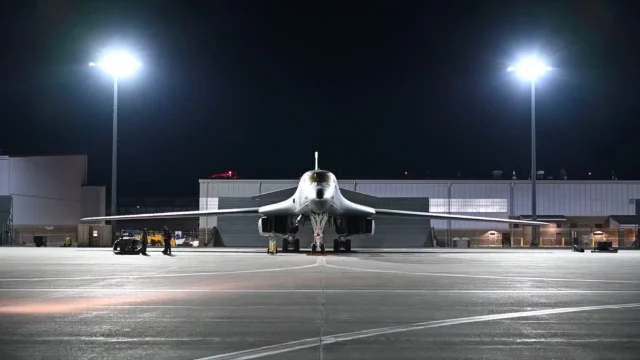
communication with strategic bombers
-
backup communication for nuclear command and control
-
global aircraft reach without relying on satellites
-
transmission of emergency command messages
In essence, HFGCS functions as a strategic redundancy layer. If satellites, fiber networks or other communication infrastructure were disrupted, HF radio would still allow command authorities to reach aircraft anywhere on Earth.
This is possible because HF radio waves can travel thousands of kilometers by reflecting from the ionosphere, allowing global communication with relatively simple ground infrastructure.
The most monitored frequencies
The HFGCS network operates on multiple frequencies simultaneously. These frequencies are selected depending on time of day and propagation conditions.
Several channels have become well known among shortwave listeners.
Common HFGCS frequencies include:
| Frequency | Typical use |
|---|---|
| 4.724 MHz | nighttime propagation |
| 6.739 MHz | intermediate conditions |
| 8.992 MHz | daytime communication |
| 11.175 MHz | the most famous monitoring channel |
| 13.200 MHz | daytime long-distance coverage |
| 15.016 MHz | high MUF daytime operation |
Among these, 11.175 MHz is the most frequently monitored because activity on this channel is often continuous.
Shortwave listeners around the world regularly tune to this frequency to monitor routine system tests and coded message traffic.
Emergency Action Messages (EAM)
One of the defining features of the HFGCS network is the Emergency Action Message, abbreviated as EAM.
These transmissions consist of structured groups of numbers and phonetic alphabet characters that are read slowly and clearly by radio operators.
A typical sounding transmission might resemble:
“Hotel Alpha three seven Bravo Tango… five two nine one seven three…”
These messages typically contain:
-
dozens of characters
-
structured coded groups
-
predetermined formatting
The messages are not intended to be understood by the public. Their meaning can only be interpreted using classified codebooks or encryption procedures used by military units.
To outside listeners, EAM transmissions appear as sequences of numbers and phonetic letters, but within the military command chain they represent specific operational instructions.
The “Skyking” messages
Occasionally the HFGCS network broadcasts a different type of transmission known among listeners as Skyking messages.
These messages usually begin with the phrase:
“Skyking, Skyking, do not answer…”
They are shorter than typical EAM transmissions and appear to carry time-sensitive operational instructions.
Within the radio monitoring community, these transmissions have long been associated with:
-
strategic bomber operations
-
nuclear command communication
-
high-priority operational directives
However, the exact function and meaning of Skyking messages have never been officially confirmed by the U.S. military.
Their mysterious nature has made them one of the most discussed phenomena in the world of shortwave monitoring.
Global transmitting stations
The HFGCS network operates through multiple transmitting stations located around the world.
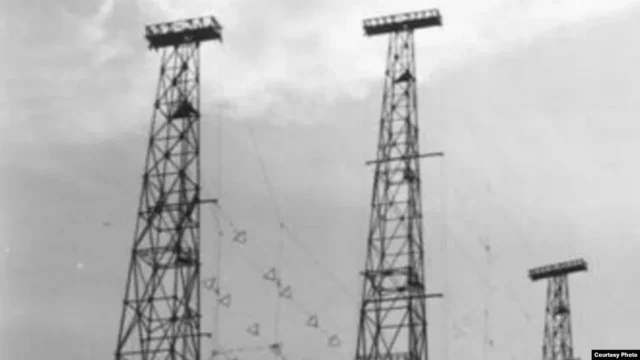
These sites use powerful HF transmitters and large antenna arrays designed to cover different geographic regions.
Well-known transmitting locations include:
-
Andrews Air Force Base (United States)
-
Offutt Air Force Base (United States)
-
Ascension Island
-
Diego Garcia
-
Guam
-
Hawaii
The stations typically use high-power transmitters combined with large directional antenna systems such as:
-
curtain antennas
-
log-periodic arrays
-
high-gain HF beam antennas
These antennas allow signals to be directed toward specific regions of the world where aircraft or military units may be operating.
Why multiple stations transmit simultaneously
One of the distinctive characteristics of HFGCS transmissions is the echo-like sound often heard during monitoring.
This happens because multiple transmitting stations broadcast the same message at the same time on the same frequency. The technique is called simulcast transmission.
The reason for this design is reliability.
HF radio propagation depends heavily on:
-
time of day
-
ionospheric conditions
-
solar activity
-
geographic location
By transmitting from several stations simultaneously, the network increases the probability that at least one signal path will reach the intended receiver.
For aircraft operating thousands of kilometers away, receiving the signal from several directions greatly improves communication reliability.
Why the signal sometimes sounds like an echo
Because the transmitting stations are located on different continents, their signals reach the listener at slightly different times.
Even a small difference in travel distance can produce a delay of several milliseconds.
For example:
-
one station’s signal may arrive after 25 milliseconds
-
another signal might arrive after 40 milliseconds
This delay causes the distinctive echo effect heard in many recordings of 11.175 MHz.
Another contributing factor is multi-path propagation, where the signal travels through multiple ionospheric reflection paths before reaching the receiver.
As a result, listeners sometimes hear multiple copies of the same voice transmission overlapping each other.
Why the echo does not prevent communication
Although the echo can sound confusing to casual listeners, the communication format used on HFGCS is designed to tolerate such distortions.
Several techniques help ensure message clarity:
-
operators speak slowly and clearly
-
messages follow strict structured formats
-
transmissions are often repeated
Military radio operators are trained to interpret HF communications even under poor signal conditions.
As a result, even when echoes or fading occur, the intended recipients can still decode the message accurately.
What listeners typically hear on 11.175 MHz
Monitoring the 11.175 MHz channel can reveal several types of transmissions.
Common activity includes:
-
Emergency Action Messages
-
communication checks
-
signal quality tests
-
short exchanges with aircraft
The voice is usually calm, professional and deliberately paced to ensure intelligibility over HF radio channels.
Sometimes multiple operators with different voice characteristics can be heard depending on which transmitting station is active.
How to listen to the frequency
The HFGCS frequencies can be monitored legally in most countries because receiving radio transmissions is generally permitted.
To listen to the network, enthusiasts typically use:
-
a shortwave radio receiver
-
a Software Defined Radio (SDR)
-
a simple wire antenna
The transmissions are usually received using USB (Upper Side Band) mode.
For example:
11.175 MHz USB
is the most common tuning configuration used by listeners.
With a modest antenna and an SDR receiver, the network can often be heard from thousands of kilometers away.
Monitoring activity around the world
Over the years a global community of shortwave listeners and radio hobbyists has documented HFGCS activity.
Through monitoring reports and shared recordings, enthusiasts have identified patterns such as:
-
increased activity during international crises
-
periodic system tests
-
recurring operator call signs
-
different transmitter audio signatures
While the meaning of the coded messages remains classified, the monitoring community has mapped much of the system’s operational behavior.
The future of military HF communication
Despite the dominance of satellites and digital communication networks, HF radio remains an important part of military communication strategies.
Its advantages include:
-
independence from satellites
-
resilience against infrastructure damage
-
extremely long communication range
-
relatively simple equipment requirements
For these reasons, systems like HFGCS are expected to remain active for many years.
Even in a highly digital world, shortwave radio continues to serve as a reliable global backup communication system.
For radio enthusiasts and shortwave listeners, monitoring frequencies like 11.175 MHz provides a rare glimpse into the operation of a real strategic military communication network — even if the true meaning of the messages remains hidden behind layers of military encryption.
Image(s) used in this article are either AI-generated or sourced from royalty-free platforms like Pixabay or Pexels.
This article may contain affiliate links. If you purchase through these links, we may earn a commission at no extra cost to you.
Get the weekly RF & IT briefing
Radio guides, RF calculators, AI, Windows, Linux and satellite communication explainers. One useful email per week. No spam.