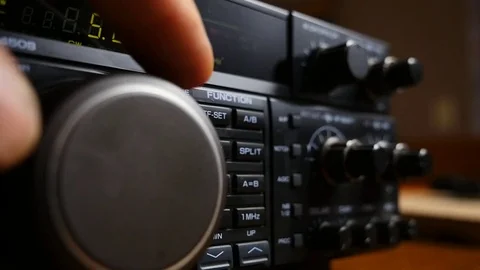
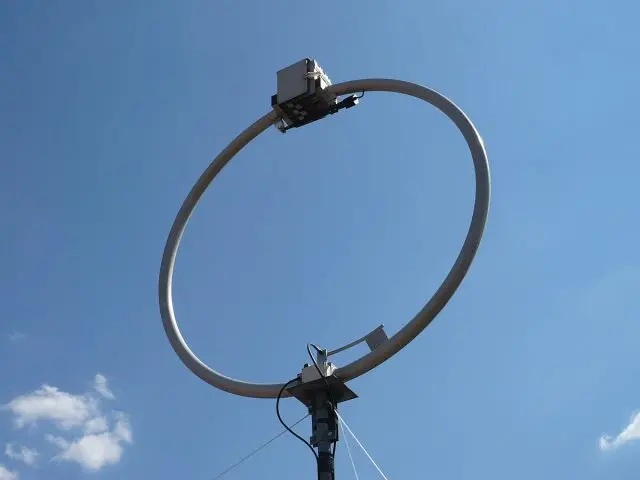
Ham Radio Battery Runtime Calculator
A ham radio battery runtime calculator helps estimate how long a handheld transceiver, portable QRP setup, or mobile radio can operate before the battery needs to be recharged or replaced. This is especially useful for portable field use, emergency communications, SOTA and POTA activations, public service events, and any situation where reliable off-grid power matters. Instead of relying on rough guesses, you can enter battery capacity, voltage, current draw, and duty cycle to get a more realistic operating time estimate.
For many radio amateurs, battery planning is just as important as choosing the right transceiver or operating mode. A compact handheld radio may seem efficient, but real-world battery runtime can vary significantly depending on transmit power, receive time, standby current, temperature, battery chemistry, and accessory load. A practical ham radio battery calculator makes it easier to compare setups, size backup batteries, and avoid running out of power during an activation or event.
Use this tool to estimate battery runtime for HT radios, portable field stations, or mobile installations. It can help you plan longer operating sessions, optimize your power budget, and better understand how usage patterns affect total runtime. Whether you are preparing for a contest, building a go-kit, or simply comparing battery options for amateur radio use, this calculator gives you a fast and useful baseline.
Ham Radio Battery Runtime Calculator
Estimate operating time for a handheld, portable, or mobile radio setup. Enter your battery size, current draw, and duty cycle to calculate average current, usable battery energy, and expected runtime.
Battery setup
Radio load
Estimated runtime
How ham radio battery runtime really works
A ham radio battery runtime calculator is useful because portable and mobile radio operation depends on one thing that operators often underestimate: available energy under real operating conditions. Many amateurs look only at the battery label, see a number such as 2000 mAh, 6 Ah, or 20 Ah, and assume that tells the full story. In practice, actual runtime depends on a combination of battery chemistry, nominal voltage, current draw in different operating states, transmit duty cycle, operating temperature, accessory load, and how conservatively you want to use the battery. A radio battery may look large on paper, but if the station spends significant time transmitting at high power, the available operating time can shrink very quickly.
This is exactly why a ham radio battery runtime calculator is more useful than a rough mental estimate. It converts battery capacity and operating behavior into something practical: expected runtime in hours. For handheld transceivers, portable QRP stations, mobile VHF and UHF rigs, field communication kits, and emergency radio systems, this estimate can be the difference between a successful activation and a dead station halfway through the session. Whether you operate during a SOTA activation, a POTA activation, a local net, a contest, or a public service event, battery planning matters.
Many radio amateurs focus heavily on antennas, propagation, and output power, but power management is just as critical. A field setup with poor energy planning may fail long before propagation changes or equipment issues become a problem. If you want a station that works reliably away from mains power, understanding battery runtime is one of the most important practical skills in amateur radio.
Why battery planning matters in amateur radio
Portable amateur radio operation is different from fixed-station use because you are limited by stored energy. At home, most operators can rely on a power supply and AC mains, so the radio can stay on as long as needed. In the field, the battery becomes the limiting resource. Once it is depleted, the station stops. This is why battery runtime estimation is essential for handheld radios, mobile rigs used with external batteries, digital mode stations, and portable HF equipment.
There are several typical situations where a ham radio battery calculator becomes especially useful. One is outdoor operation. SOTA, POTA, hiking activations, and camping setups all depend on predictable battery performance. Another is emergency preparedness. A go-kit is only as good as its actual runtime, not the theoretical number written on the battery case. Event communication is another case. If you are supporting a marathon, bike race, or community event, the station may need to remain on for many hours with repeated transmit activity. In all of these cases, battery runtime directly affects reliability.
Even casual operators benefit from this kind of planning. A handheld transceiver used on local repeaters may seem easy to power, but runtime can vary dramatically depending on how often you transmit, what power level you use, whether scanning is enabled, how bright the display backlight is, and whether accessories are connected. Two operators using the same radio may get very different results simply because their operating habits are different.
A battery runtime calculator helps remove guesswork. Instead of asking, “Will this battery probably last long enough?” you can ask a more precise question: “Given this current draw, this duty cycle, and this usable battery percentage, how many hours should I realistically expect?” That is a much better basis for station planning.
The key variables that determine radio battery runtime
Battery runtime is not controlled by a single factor. It is the result of several variables interacting with one another. Understanding these variables helps you use the calculator more effectively and interpret the results more realistically.
Battery capacity
Battery capacity is usually expressed in milliamp-hours or amp-hours. For example, a small handheld radio pack might be rated at 1800 mAh, 2200 mAh, or 2500 mAh, while a larger portable battery may be rated at 6 Ah, 10 Ah, or 20 Ah. Capacity tells you how much charge the battery can theoretically deliver over time.
In simple terms, 2000 mAh is the same as 2 Ah. A 10 Ah battery can theoretically deliver 10 amps for one hour, 1 amp for ten hours, or 0.5 amps for twenty hours. But that is only an idealized starting point. Real batteries do not always behave perfectly, especially at high current draw, low temperatures, or with aging cells. This is why the usable capacity setting in the calculator is important.
Battery voltage
Voltage matters because it determines the total stored energy, not just the total charge. Two batteries with the same amp-hour rating can store different amounts of energy if they operate at different voltages. Energy is typically expressed in watt-hours.
The relationship is:
Watt-hours = amp-hours × volts
For example:
2 Ah × 7.4 V = 14.8 Wh
6 Ah × 12.8 V = 76.8 Wh
20 Ah × 12 V = 240 Wh
This is why battery voltage cannot be ignored. A 2 Ah handheld battery and a 2 Ah portable battery are not equivalent if they operate at different voltages. When a ham radio battery runtime calculator includes voltage, it gives a more meaningful picture of how much energy is really available.
Current draw
Current draw is one of the most important inputs in any amateur radio battery calculator. Radios do not consume the same amount of current all the time. Most transceivers have at least three basic operating states:
- transmit
- receive
- standby or idle
Transmit current is usually the highest, often much higher than receive current. Receive current is moderate. Standby current is usually the lowest, although some radios still consume a noticeable amount while idle, especially if the display, GPS, Bluetooth, APRS, digital processing, or scanning features are active.
A typical handheld might draw roughly:
- 1.5 A to 2.5 A while transmitting
- 0.15 A to 0.30 A while receiving
- 0.04 A to 0.10 A while idle
A mobile radio may draw much more on transmit, especially at 25 W or 50 W output levels. HF transceivers, particularly when using voice peaks or digital modes, can draw even more substantial current, especially from 13.8 V systems.
Duty cycle
Duty cycle describes how your operating time is divided among transmit, receive, and standby. This is critical because even a high transmit current may not dominate average consumption if transmit time is brief. Conversely, a seemingly modest radio can consume more power than expected if it spends long periods in receive mode with accessories connected.
A common handheld duty cycle example might be:
- 10% transmit
- 35% receive
- 55% standby
Another operator might use:
- 5% transmit
- 20% receive
- 75% standby
A contest, event, or emergency net may produce a completely different profile. This is why a good battery runtime calculator should let you adjust the duty cycle rather than assume a fixed pattern.
Usable battery percentage
Not all rated battery capacity is realistically available. This is one of the biggest reasons why real runtime differs from theoretical runtime. Battery packs lose capacity with age, and some chemistries should not be deeply discharged if you want good cycle life and reliable field performance. Cold weather also reduces effective capacity. In many cases, planning around 70% to 95% usable capacity is more realistic than assuming 100%.
For example:
- a fresh Li-Ion pack in mild weather may allow around 90% usable capacity
- a LiFePO4 battery may allow a high usable percentage
- an older SLA battery may deliver much less than its nameplate value under field conditions
Using the usable capacity setting in the calculator helps produce estimates that are closer to real-world amateur radio operation.
Extra accessory load
Many portable radio setups include devices beyond the transceiver itself. These may include:
- speaker microphones
- APRS trackers
- external audio interfaces
- cooling fans
- small computers
- tablets
- signal decoders
- lighting
- USB charging devices
Even a relatively small continuous accessory draw can reduce battery runtime noticeably over a long operating session. An additional 0.1 A or 0.2 A may not sound like much, but over many hours it becomes significant. This is especially important in portable digital mode setups, where the total current draw is often higher than operators initially expect.
The basic runtime formula
At the core of a ham radio battery runtime calculator is a simple logic chain.
First, the calculator determines usable battery capacity:
Usable capacity (Ah) = rated capacity (Ah) × usable percentage
Then it calculates average current draw based on duty cycle:
Average current =
(transmit current × transmit fraction) +
(receive current × receive fraction) +
(idle current × idle fraction) +
extra accessory current
Finally, it calculates runtime:
Runtime (hours) = usable capacity (Ah) ÷ average current (A)
This gives a reasonable runtime estimate for many amateur radio scenarios.
For example, assume:
- battery capacity: 2 Ah
- usable percentage: 90%
- transmit current: 1.5 A
- receive current: 0.18 A
- idle current: 0.06 A
- accessory current: 0 A
- duty cycle: 10% TX, 35% RX, 55% idle
Step 1:
Usable capacity = 2 × 0.90 = 1.8 Ah
Step 2:
Average current =
(1.5 × 0.10) +
(0.18 × 0.35) +
(0.06 × 0.55)
Average current =
0.15 + 0.063 + 0.033 = 0.246 A
Step 3:
Runtime = 1.8 ÷ 0.246 = 7.32 hours
So in this example, the radio might operate for a little over seven hours under those assumptions.
That does not mean you will always get exactly that result in the field, but it gives a much more useful estimate than guessing from battery size alone.
Why handheld radio runtime often surprises operators
Many operators expect a handheld transceiver to last a very long time because the battery pack looks efficient and the radio is physically small. In reality, handheld runtime depends heavily on usage style. A radio that sits mostly idle while monitoring a repeater can last a long time. The same radio used actively on high power, with frequent transmissions, heavy receive audio, bright backlight, GPS, APRS, or digital features enabled may drain far faster.
This explains why online discussions about handheld battery life often seem inconsistent. One operator may report getting all day from a pack, while another says the same radio struggles through a few hours. Both may be telling the truth. Their current draw and duty cycle are simply different.
A handheld battery runtime calculator is valuable because it reveals this relationship quantitatively. Instead of treating battery life as mysterious or inconsistent, it shows how operating patterns change average current draw. That makes it easier to adjust your setup intelligently.
For example, reducing transmit power from high to medium or low can have a major effect on transmit current. Reducing scan time or disabling unnecessary features can lower idle and receive consumption. Carrying a second battery may be more practical than carrying a single oversized pack, depending on how you operate. These are station planning decisions, and a calculator helps make them rational.
Portable HF and QRP battery planning
Portable HF and QRP operation is one of the best use cases for a ham radio battery calculator. Unlike a simple handheld setup, HF field operation often involves more variables:
- the transceiver may have higher receive current
- transmit current varies with power level
- accessories may consume continuous current
- digital modes may produce long transmit intervals
- operators may use battery chemistries such as LiFePO4 for field work
A small HF transceiver at QRP levels can be quite efficient, but the total station load may still become significant once you add logging devices, interface hardware, or power conversion losses. A portable operator planning a summit or park activation needs to know not just whether the battery is “large enough,” but whether it is large enough with adequate margin.
This is where realistic usable capacity assumptions matter. Carrying a battery that theoretically supports six hours is not the same as carrying one that comfortably supports six hours with reserve margin. Weather, band conditions, operating intensity, and time spent calling CQ can change your actual current profile.
Good portable operators usually think in terms of power budget, not just battery labels. They ask:
- what is my average current draw?
- how long will I operate?
- how much reserve do I want?
- what happens if conditions force longer calling or more transmit time?
A battery runtime calculator supports exactly this kind of planning.
Battery chemistry and its effect on amateur radio use
Different battery chemistries behave differently, and that affects real-world radio runtime. Understanding the chemistry helps you choose better assumptions in the calculator.
Li-Ion and LiPo
Lithium-ion and lithium-polymer batteries are common in handheld transceivers and compact portable systems. They offer good energy density and relatively light weight, which makes them excellent for field use. They are widely used because they deliver a good balance of capacity, size, and convenience.
However, they are not immune to capacity loss. Age, storage habits, heat, and charging patterns all affect long-term performance. A battery pack that was excellent when new may provide noticeably shorter runtime after heavy use or several years of service.
LiFePO4
Lithium iron phosphate batteries are very popular for portable amateur radio because they offer good voltage stability, long cycle life, and strong suitability for field operation. Many operators consider LiFePO4 one of the best chemistries for portable HF and emergency communication kits. They are often heavier than equivalent Li-Ion packs, but they are robust and practical.
Because LiFePO4 maintains voltage well under load, it is particularly attractive for radios that like a stable input supply. For many portable radio operators, it is a preferred chemistry for serious field work.
Sealed lead-acid
Sealed lead-acid batteries are older technology, heavier, and often less efficient in portable use, but they are still found in backup systems and budget field kits. Their effective usable capacity can be disappointing under high current draw or poor conditions, particularly if they are aging or not fully charged. This is why assuming 100% rated capacity for an SLA battery is often unrealistic.
NiMH
Nickel-metal hydride batteries still appear in some radio packs and accessory setups. They can be practical, but performance depends heavily on cell quality, condition, and charge state. They usually make more sense in smaller applications than in larger portable field systems.
A radio battery runtime calculator is most useful when you select battery assumptions that match the chemistry you are actually using. A battery is not just a capacity number. Its chemistry affects how much of that rated capacity is truly available during operation.
How transmit power changes runtime
One of the easiest ways to extend radio battery runtime is to reduce transmit power when full output is not necessary. This is especially relevant for handheld radios and mobile stations. Many operators leave their radios on high power out of habit, even when a repeater, simplex contact, or local net would work perfectly well on medium or low.
Why does this matter so much? Because transmit current is usually the highest current state. If transmit power is doubled or increased significantly, transmit current often rises sharply. Even if transmit time is only a small fraction of the duty cycle, repeated high-power transmissions can dominate the total energy budget.
For example, imagine a handheld radio where:
- low power TX current is 0.9 A
- medium power TX current is 1.5 A
- high power TX current is 2.2 A
If the operator is using a 10% transmit duty cycle, the effect on average current can be substantial. Over a long session, that difference directly affects runtime. If lower power still provides reliable communication, using it can greatly improve endurance.
This principle is central to good portable operating practice. The best field operator is not always the one carrying the largest battery. Often it is the one using power more efficiently.
Why digital modes can drain batteries faster
Digital modes deserve special attention because they often place different demands on the power system than casual voice operation. With voice modes such as FM or SSB, transmit activity may be intermittent and speech patterns naturally include pauses. Digital modes can behave differently. Some involve sustained transmit periods, continuous signaling, or steady-duty transmissions that keep current draw elevated.
This means a portable digital station may achieve less runtime than a voice station using the same battery, even if nominal power output is similar. The operator who plans battery runtime using casual voice assumptions may be disappointed once the station runs a more demanding digital workload.
This is another reason to use realistic duty cycle values in the calculator. If your operating style includes frequent or lengthy transmit periods, the calculator should reflect that. A generous-looking battery can become much smaller in practice once the average current rises.
The importance of reserve margin
One of the most common mistakes in amateur radio battery planning is treating the calculator result as a hard guarantee rather than an estimate. In real life, it is wise to build in reserve margin. If the calculator says your station should last six hours, that does not necessarily mean a six-hour event is risk-free. Conditions change. Batteries age. Operating intensity may increase. Weather may reduce effective capacity. You may decide to stay active longer than planned.
Reserve margin is especially important in emergency communication, event support, remote portable operation, and any situation where battery replacement is inconvenient. Sensible operators often plan for a margin of 20% to 50%, depending on mission importance. That means if the target session is six hours, the preferred battery plan may support significantly more than six theoretical hours.
A ham radio battery calculator helps with this because it lets you experiment. You can compare the effect of larger batteries, different duty cycles, lower power, or accessory removal. Instead of guessing what reserve you have, you can see how different choices affect endurance.
Common mistakes when estimating ham radio battery life
Many disappointing runtime results can be traced to a few common planning errors.
Assuming the rated battery capacity is fully usable
Manufacturers provide nominal ratings, but those numbers do not automatically translate into full real-world usable capacity. Temperature, age, discharge limits, and actual load matter.
Ignoring receive and standby consumption
Some operators focus only on transmit current because it is the largest number. But if the station spends most of its time in receive or standby, those modes also matter. A radio that draws 0.2 A continuously in receive can consume a significant amount of energy over many hours.
Forgetting accessories
A radio may not be the only thing drawing power. In a portable setup, accessory loads can quietly reduce runtime.
Using unrealistic duty cycle assumptions
A battery estimate is only as good as the operating profile behind it. If you assume 5% transmit but your actual event requires repeated long check-ins and directed net traffic, your estimate will be too optimistic.
Not accounting for aging batteries
Older batteries often provide less capacity than their label suggests. This is especially important for handheld packs that have seen years of use.
Planning with zero reserve
Even a good estimate should not be treated as an absolute guarantee.
A good amateur radio battery runtime calculator reduces these errors, but only if the inputs are realistic.
How to use this calculator effectively
To get the most value from a ham radio battery runtime calculator, use inputs that reflect your actual equipment and operating style as closely as possible.
Start with the battery. Enter the real capacity and nominal voltage, and choose a usable capacity percentage that makes sense. If the battery is old, cold, or conservatively used, do not assume 100%.
Next, use realistic current draw values. Manufacturer specifications can be helpful, but real measurements are even better. If you have access to an ammeter, power analyzer, or bench supply with current readout, measure your radio in transmit, receive, and idle conditions. This will usually produce a much better estimate than relying on generic assumptions.
Then think honestly about your duty cycle. A repeater monitoring session, a contest, a portable activation, and an emergency net all produce different operating profiles. Do not use the same transmit percentage for every scenario. Let the calculator reflect the actual task.
Finally, include any accessory load that runs continuously or frequently. Small current draws add up over time.
When used this way, the calculator becomes more than a novelty tool. It becomes a station planning instrument.
Best use cases for a ham radio battery runtime calculator
This kind of tool is particularly useful in several amateur radio niches.
Handheld radio planning
Operators can estimate runtime for HT packs under different power levels and operating patterns.
Portable activations
SOTA, POTA, hiking, camping, and field-day style operations all benefit from battery planning.
Emergency communication kits
A go-kit should be tested and planned around actual runtime, not assumptions.
Event support
Long-duration events often require reliable communication over many hours. Battery estimates help determine whether spare packs or larger battery systems are needed.
Mobile battery operation
Even a mobile rig can be battery-powered in off-grid use cases, and runtime matters there as well.
Digital mode field operation
Higher and more sustained power use makes estimation especially valuable.
In all of these cases, the value of the calculator is the same: it converts electrical parameters into operational planning.
Why average current is more important than peak current
Peak current matters because it affects wiring, connectors, battery suitability, and voltage stability under load. But when you are trying to estimate runtime, average current is what really determines endurance. This is why duty cycle matters so much.
A radio may briefly draw several amps on transmit, but if transmit time is limited, the battery may still last a long time. On the other hand, a station with modest peak current but long continuous receive or accessory consumption may use more total energy than expected.
This is one of the reasons why a battery runtime calculator feels more informative than simply checking the maximum current figure in the manual. It gives you a weighted view of station behavior.
Measuring current draw for better estimates
If you want highly realistic results, measure your equipment instead of relying only on documentation. Many radio specifications are approximate or simplified, and actual field configuration can change the numbers.
You can measure current draw by:
- using a bench supply with current display
- inserting a meter in series with the DC supply
- using a power analyzer or inline watt meter designed for DC systems
- observing current at different power levels and modes
Measure:
- transmit current at the power levels you actually use
- receive current at normal volume and operating state
- idle current with the real feature set enabled
- accessory draw for any connected devices
Once you have these numbers, the calculator becomes much more accurate. This is especially useful if you publish activation guides, build emergency kits, or optimize portable station designs.
Portable operating strategies that improve battery life
Battery runtime is not only about choosing a bigger battery. Smart operators often improve endurance by changing how they operate.
Useful strategies include:
- lowering transmit power when possible
- reducing unnecessary display brightness
- disabling features you do not need
- minimizing scan behavior if it increases current draw
- choosing efficient accessories
- using headphones or lower audio output when practical
- selecting operating modes with lower average consumption
- scheduling operations intelligently to avoid wasted monitoring time
A ham radio battery calculator can help quantify the benefit of these changes. Instead of relying on vague claims like “low power lasts longer,” you can estimate how much longer and decide whether the trade-off is worth it.
How this tool helps compare different battery options
Another major benefit of a battery runtime calculator is comparison. Radio amateurs often consider multiple battery choices:
- carry one larger pack or two smaller packs
- use Li-Ion or LiFePO4
- keep the existing handheld pack or add an external battery
- choose a lighter battery with shorter runtime or a heavier battery with more reserve
Without a calculator, comparison tends to be informal and subjective. With a calculator, you can compare actual estimated runtime based on your operating profile. That makes the decision more technical and less guess-based.
This is particularly important for hiking and portable field work, where every gram matters. Carrying too little battery is a problem, but carrying far more than needed also has a cost in weight and bulk.
Ham radio battery runtime and emergency preparedness
Emergency communication is one of the strongest arguments for proper battery planning. In a backup or disaster scenario, utility power may be unavailable, charging may be limited, and communication needs may be unpredictable. In that environment, runtime estimation becomes more than a convenience. It becomes part of system readiness.
A battery-powered emergency radio setup should not be evaluated by label capacity alone. It should be evaluated by realistic endurance under realistic communication patterns. If the station must support many hours of monitoring with periodic transmissions, a battery runtime calculator is a practical way to estimate that requirement.
Preparedness-minded operators often benefit from testing multiple scenarios, such as:
- light net participation
- sustained event traffic
- increased transmit demand
- cold weather use
- aging battery packs
- accessory-heavy deployments
This kind of planning can reveal weak points before the station is needed.
Why this topic has strong search and user value
From an SEO perspective, a ham radio battery runtime calculator supports strong informational and practical search intent. Operators search for phrases such as ham radio battery calculator, handheld radio battery life calculator, HT battery runtime, portable radio battery estimate, LiFePO4 runtime for ham radio, and amateur radio battery planning because they want a tool and an explanation. That combination is valuable. Users often want both the immediate calculation and the technical reasoning behind it.
Long-form content beneath a calculator also improves user experience because it answers the questions people ask after using the tool. They want to know whether the result is realistic, what assumptions matter most, how battery chemistry affects performance, why handheld runtimes vary, and how to improve endurance. A detailed page that includes both the interactive calculator and a strong technical explanation can satisfy that intent much better than a bare tool with no context.
This matters for discoverability as well as engagement. A thin calculator page may have limited depth, but a comprehensive page that explains battery capacity, amp-hours, voltage, current draw, duty cycle, usable percentage, and portable radio power management can rank for a broader set of long-tail queries.
Practical examples of how to interpret results
Suppose your calculator shows a runtime of about seven hours for a handheld with a moderate duty cycle. That result should be interpreted as a planning estimate, not a guarantee. If your event is expected to last four hours, that may be sufficient with margin. If your event is expected to last seven hours exactly, the margin may be too thin. Carrying a spare battery would be wiser.
Now imagine you reduce transmit power and the estimate rises from seven hours to nine hours. That tells you the operating change is meaningful. Or perhaps you compare an older battery at 75% usable capacity with a newer one at 90% and see a major improvement. That gives you a clearer basis for deciding whether battery replacement is worthwhile.
Or perhaps you discover that an accessory load of only 0.15 A cuts your runtime noticeably. That may motivate a different configuration or a larger battery.
These are practical station decisions, and a calculator helps turn them into measurable trade-offs.
Building a better portable station with power budgeting
Serious portable station design always includes power budgeting. The operator should know:
- battery capacity in Ah and Wh
- radio current draw in different modes
- duty cycle assumptions
- accessory consumption
- desired mission duration
- acceptable reserve margin
Once these values are known, the rest of the station design becomes more disciplined. You can decide whether the battery size is appropriate, whether the radio power level is reasonable, whether digital operation is practical, and whether weight or endurance should be optimized.
A ham radio battery runtime calculator supports exactly this engineering-style approach. It is simple enough for beginners to understand, but still useful to experienced operators planning more advanced field systems.
Understanding the limits of any battery calculator
Even a very good ham radio battery runtime calculator has limits. It is still a model. It cannot fully predict every field condition. Real results will vary because of:
- battery age
- ambient temperature
- manufacturing variance
- cable losses
- connector resistance
- transmit audio patterns
- mode-specific load behavior
- intermittent accessory use
- changes in operator behavior during the session
This does not make the calculator unhelpful. It simply means the result should be treated as an informed estimate. In practical engineering terms, that is still extremely useful. Most station planning does not require perfect prediction. It requires a realistic approximation that helps reduce risk and improve decision-making.
Choosing better assumptions for better results
If you want the most realistic battery runtime estimate, use conservative assumptions. Enter a slightly reduced usable percentage, especially for older batteries or cold weather. Use real measured current values when possible. Choose a duty cycle that reflects how you actually operate, not how you hope to operate. Include accessory load honestly. And leave reserve margin.
These choices will usually produce a result that is more useful in practice than an optimistic calculation based on ideal conditions. In portable and emergency radio work, conservative estimates are usually better than impressive but fragile numbers.
What this calculator is best at
This ham radio battery runtime calculator is best used as a fast planning tool. It helps answer questions such as:
- How long will my handheld radio battery likely last?
- Should I carry one battery or two?
- How much does high transmit power reduce runtime?
- Is my portable setup realistic for a half-day outing?
- How much do accessories affect total endurance?
- Will this battery support my activation or event with margin?
That makes it useful not only for beginners, but also for experienced radio amateurs who want a cleaner way to compare operating scenarios.
Final notes for portable and field operators
Portable amateur radio is always a balance between capability, weight, endurance, and reliability. The best station is not automatically the one with the largest radio, highest power, or biggest battery. It is the one whose power system matches the mission. A well-sized battery, realistic duty cycle, sensible power level, and modest reserve margin often produce a more dependable field station than an oversized but poorly understood setup.
This is why a detailed ham radio battery runtime calculator belongs on any serious amateur radio resource page. It is practical, broadly useful, relevant to handheld, portable, mobile, and emergency communication scenarios, and closely aligned with what real operators need to plan. It helps translate electrical values into operational decisions, which is exactly what good amateur radio tools should do.
If the number looks lower than expected, that is not bad news. It is useful information. It tells you where the limits are and where improvement is possible. Lower power, a different battery chemistry, a better operating profile, fewer accessories, or more reserve can all change the outcome. Once you understand the relationship between battery energy and radio workload, runtime stops being guesswork and becomes something you can design around.
Summary: this calculator helps estimate amateur radio battery life by combining battery capacity, voltage, current draw, duty cycle, and usable percentage into a realistic runtime estimate. That makes it valuable for handheld transceivers, portable QRP stations, mobile rigs, field activations, emergency communications, and any ham radio setup where dependable battery performance matters
Image(s) used in this article are either AI-generated or sourced from royalty-free platforms like Pixabay or Pexels.
This article may contain affiliate links. If you purchase through these links, we may earn a commission at no extra cost to you.
Get the weekly RF & IT briefing
Radio guides, RF calculators, AI, Windows, Linux and satellite communication explainers. One useful email per week. No spam.