
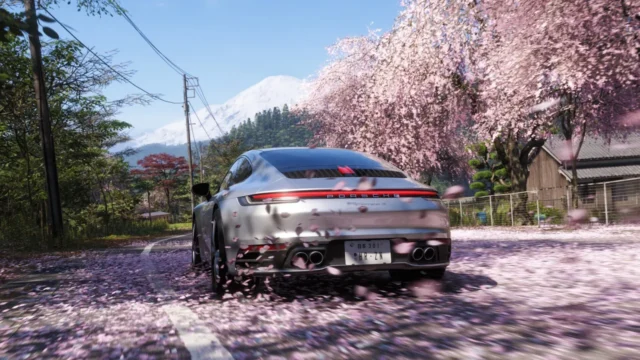
Forza Horizon 6 is not just another racing game release. It is one of the most anticipated open-world driving games of recent years, and for many players it represents the moment the Horizon series finally arrives in the location fans have requested for more than a decade: Japan.
The Forza Horizon franchise has always been built around a simple but extremely effective idea. Instead of placing the player inside a strict racing championship with narrow rules, fixed tracks and professional motorsport structure, it creates a large, festival-style open world where driving itself becomes the central experience. The player is free to race, explore, tune cars, collect rare vehicles, join online events, complete seasonal challenges or simply drive across beautiful roads without any particular goal.
Forza Horizon 6 continues that formula, but the Japanese setting changes the tone of the entire game. Japan is not just a background. It is one of the most car-culture-rich countries in the world, and that makes it an almost perfect environment for a game about speed, style, modification, exploration and automotive fantasy.
The game brings together urban night roads, mountain passes, coastal routes, rural scenery, expressways, technical drifting routes and festival locations. It combines everyday driving culture with legendary performance cars, classic Japanese tuning traditions and the visual spectacle expected from a modern AAA racing title. This is why the launch attracted so much attention. Forza Horizon 6 is not merely the sixth numbered entry in the series. It is the game many fans believed the franchise was always moving toward.
Why Forza Horizon 6 created such huge anticipation
The wait for Forza Horizon 6 was unusually intense because the previous game, Forza Horizon 5, set a very high standard. It was a technically impressive, accessible and commercially successful open-world racer that brought the Horizon Festival to Mexico. It delivered a large map, hundreds of cars, strong online support and a structure that could entertain both casual players and dedicated car enthusiasts.
That success created a difficult problem for the next game. A sequel could not simply offer more cars and slightly better graphics. It needed a setting that felt meaningful enough to justify a new generation of Horizon gameplay. For years, the most requested answer was Japan.
The reason is obvious. Japan has a unique position in global car culture. It is the home of some of the most loved performance cars ever built, from the Nissan Skyline GT-R and Toyota Supra to the Mazda RX-7, Honda NSX, Mitsubishi Lancer Evolution and Subaru Impreza WRX STI. It has a deep history of drifting, time attack, mountain-road driving, compact sports cars, kei cars, tuning shops, motorsport engineering and underground street-racing mythology.
Forza Horizon fans have spent years imagining what a Japan-based Horizon game could look like. They expected neon city streets, mountain touge roads, cherry blossom routes, expressway racing, small villages, technical drift zones and dense urban environments. The longer the wait continued, the larger the expectation became.
This is why Forza Horizon 6 carried more pressure than a normal sequel. It had to satisfy several different audiences at once. Long-time Horizon fans wanted a fresh world that felt different from Mexico, Britain, Australia and the previous festival locations. Car culture fans wanted Japan to be represented with enough depth and respect. PC players expected advanced graphics settings, ray tracing and modern upscaling support. Console players expected a polished, stable and visually spectacular Xbox Series X|S experience. Game Pass users expected a large first-party title worth downloading immediately.
That combination made Forza Horizon 6 one of the most important racing game launches of 2026.
The basic idea of Forza Horizon 6
Forza Horizon 6 is an open-world racing game built around the fictional Horizon Festival. The player enters a large, stylized version of Japan and gradually becomes one of the main stars of the festival. Instead of following a narrow campaign, the game gives the player freedom to choose how to progress.
The map is filled with road races, street races, dirt events, cross-country challenges, drift zones, speed traps, danger signs, showcase events, seasonal activities and multiplayer modes. The player earns credits, experience, cars, cosmetic rewards and progression unlocks by driving and competing across the world.
The important point is that Forza Horizon 6 is not a hardcore racing simulator. It uses real cars and recognizable tuning logic, but it remains accessible. A player can enjoy it with a controller, automatic transmission and assists enabled, while more experienced players can disable assists, fine-tune cars and chase cleaner racing lines. This balance is one of the franchise’s biggest strengths. It is approachable enough for casual players, but deep enough to remain interesting for people who care about car handling, tuning and performance.
The open-world structure also means that the game is not only about winning races. Driving from one side of the map to another can be part of the experience. Finding hidden roads, photographing cars, testing upgrades, exploring the city at night or cruising through the countryside can be just as important as finishing first.
Forza Horizon 6 is therefore closer to an automotive playground than a traditional racing championship. It is a driving game, a car collection game, a tuning game, a social online game and a visual showcase at the same time.
Why Japan changes the Horizon formula
Japan gives Forza Horizon 6 a stronger identity than many open-world racing settings because the country naturally supports several different driving styles.
Mountain roads are ideal for drifting and technical driving. They are narrow, curved and full of elevation changes. A high-powered supercar is not always the best choice there. Lightweight coupes, tuned hatchbacks, rear-wheel-drive sports cars and classic Japanese performance machines can feel more rewarding because the roads demand rhythm, throttle control and precise steering.
Urban roads create a different atmosphere. Dense streets, tunnels, bridges, neon lighting and wet asphalt are perfect for night racing and cinematic driving. A city environment gives the game a more intense and modern visual character, especially when ray-traced reflections and high-quality lighting are used.
Expressways allow high-speed driving. This is where hypercars, grand tourers and extreme builds can stretch their legs. Japan’s highway culture has long been associated with speed, tuning and late-night automotive scenes, so it fits naturally into the Horizon fantasy.
Rural roads and coastal routes add contrast. They slow down the pace and make the world feel broader than a simple racing map. These roads are important because Forza Horizon is also about exploration. A beautiful road with no immediate race objective can still be valuable if it makes the player want to keep driving.
This variety is what makes Japan such a powerful choice. It is not only visually attractive. It provides gameplay variety through geography. A good Horizon map must make different cars feel useful in different situations. Japan can do that better than many other locations.
The role of Japanese car culture
Forza Horizon 6 benefits from the fact that Japanese car culture is already globally recognizable. Even players who are not deeply involved in automotive history usually know some of its icons. The Toyota Supra, Nissan Skyline GT-R, Mazda RX-7, Honda Civic Type R, Subaru WRX STI and Mitsubishi Lancer Evolution have appeared in films, games, magazines, racing events and online communities for decades.
These cars are not only fast. They carry stories. The Skyline GT-R is associated with motorsport dominance and tuning potential. The Supra is tied to turbocharged power and drag-racing builds. The RX-7 represents rotary-engine uniqueness and lightweight balance. The Civic Type R shows how a front-wheel-drive car can become a serious performance machine. The WRX STI and Lancer Evolution represent rally heritage, all-wheel-drive grip and turbocharged aggression.
A Japan-based Horizon game allows these cars to exist in a context that feels natural. Driving a tuned RX-7 through a mountain pass at night feels different from driving the same car across a desert highway or an English countryside road. The environment gives the car meaning.
This also applies to customization. Japanese tuning culture is not one single thing. It includes clean street builds, drift builds, time attack cars, stance culture, widebody kits, lightweight track machines, classic restorations, kei-car enthusiasm and extreme high-power builds. Forza Horizon 6 can use this diversity to make the garage feel more personal.
A player might build a Nissan Silvia for drifting, a Honda NSX for technical road racing, a Toyota GR Supra for street races, a Subaru Impreza for dirt routes and a Lexus LFA for high-speed cruising. The same map can support all of those fantasies.
Gameplay structure and progression
Forza Horizon 6 continues the familiar Horizon approach to progression. The player does not move through the game in a strictly linear order. Instead, progression is built from several overlapping activities.
Racing remains the foundation. Road racing focuses on paved routes, clean racing lines and car performance. Street racing usually feels faster and more aggressive, often using city streets or mixed road environments. Dirt racing rewards traction, suspension setup and control on loose surfaces. Cross-country events are more chaotic and often involve jumps, off-road routes and less predictable terrain.
Drift zones are especially important in a Japanese setting. Drift culture is one of the strongest reasons fans wanted Japan in the first place. Mountain passes, technical corners and downhill routes give drifting more character than a simple open area. A good drift zone is not only about holding a slide. It is about linking corners, managing angle, keeping speed and reading the road ahead.
Speed traps and speed zones test raw performance and route knowledge. Danger signs turn the world into a stunt playground. Showcase events provide the exaggerated cinematic moments Horizon is known for, often placing cars against aircraft, trains, boats or other spectacular opponents.
Exploration also matters. Barn finds, hidden collectibles, scenic routes and map discovery are a major part of the Horizon experience. Forza Horizon 6 can make this stronger by using Japan’s visual variety. A player may discover a hidden mountain route, a quiet shrine road, an industrial dock area, a coastal viewpoint or a dense urban shortcut.
The game also uses live content to keep players returning. Seasonal playlists, weekly challenges, limited-time cars and online events create a sense that the festival continues after the main campaign. This has become a central part of modern Forza Horizon. The game is not designed to be finished once and abandoned. It is designed to be revisited regularly.
The car list and why it matters
Forza Horizon 6 features a very large garage, with more than 550 real-world cars expected at launch or across the early content cycle. The number itself is impressive, but in a game like this, variety is more important than raw quantity.
A good Horizon car list needs several layers. It needs modern hypercars for players who want extreme speed. It needs classic sports cars for nostalgia. It needs rally cars for loose-surface events. It needs off-road trucks and SUVs for cross-country racing. It needs everyday performance cars for realism. It needs unusual vehicles for fun. It needs modern electric cars because the automotive world is changing. It needs Japanese icons because the setting demands them.
The strongest part of Forza Horizon has always been the feeling that almost every player can find a car that matters personally. Some players want the most efficient racing machine. Others want a car they owned in real life. Some want a childhood poster car. Others want to recreate a vehicle from film, anime, motorsport or internet culture.
Forza Horizon 6 should be especially strong in this area because Japan gives emotional weight to many cars that might otherwise feel like ordinary entries in a menu. A Mazda MX-5 on a tight mountain road makes sense. A Nissan GT-R on an expressway makes sense. A Subaru rally car on a forest route makes sense. A small kei car in a dense urban area makes sense. A drift-built Silvia on a downhill course makes sense.
When the car and the road belong together, the driving experience feels more authentic, even if the game itself remains arcade-friendly.
Driving physics and accessibility
The driving model in Forza Horizon 6 follows the established Horizon philosophy. It is not a full simulation, but it is not a simple arcade model either. Cars have noticeable differences in weight, drivetrain, grip, acceleration, braking and tuning behavior. A front-wheel-drive hot hatch does not feel like an all-wheel-drive rally car. A vintage muscle car does not feel like a modern Japanese coupe. A hypercar does not feel like a small roadster.
This distinction matters because the game’s huge car list would become meaningless if every vehicle behaved the same. Horizon keeps the handling accessible, but it still gives enough personality to different cars to make collecting and tuning worthwhile.
Assists allow the player to adjust difficulty. Beginners can use traction control, stability control, braking assistance and automatic shifting. Experienced players can reduce or disable those assists for more direct control. This makes the game flexible. It can be a relaxed driving experience for one player and a more demanding racing challenge for another.
Japan’s road design should make the physics more noticeable. Wide desert highways allow almost any powerful car to feel fast, but they do not always test handling. Narrow roads, switchbacks, elevation changes and city corners make balance more important. A well-tuned mid-power car may become more enjoyable than an overpowered hypercar because the road rewards control rather than brute force.
This is one of the main reasons Forza Horizon 6 has the potential to feel different from previous entries. The setting can naturally encourage more technical driving without making the game inaccessible.
Graphics, lighting and atmosphere
Forza Horizon games are always visual showcases, and Forza Horizon 6 has one of the strongest possible settings for modern graphics technology. Japan gives the developers a wide range of lighting conditions and visual moods.
A daytime mountain road can emphasize natural light, tree shadows and distant landscapes. A rainy city route can show reflections, headlights, traffic lights and wet asphalt. A coastal road can highlight water, sky, horizon distance and weather changes. A night expressway can use artificial lighting, tunnels, car reflections and high-speed motion to create a cinematic atmosphere.
Ray tracing is especially relevant here. Reflections on car paint, puddles, glass buildings and wet roads can significantly improve realism. Global illumination can help indoor and shaded environments feel more natural. The combination of high-quality car models and advanced lighting is important because cars are not background objects in Forza Horizon. They are the main visual subject.
The Japanese setting also gives the art direction a strong identity. Cherry blossoms, autumn leaves, neon signs, mountain mist, lanterns, modern buildings, rural roads and festival structures can create a world that feels immediately recognizable. The risk, of course, is that the game could become visually exaggerated or cliché-driven. But Horizon has always used stylized realism rather than strict documentary realism. The goal is not to reproduce Japan meter by meter. The goal is to create a drivable, compressed, beautiful Horizon version of Japan.
PC version and technical features
The PC version of Forza Horizon 6 is especially important because the Horizon audience on PC has grown significantly. Modern PC players expect more than a simple console conversion. They expect scalability, ultrawide support, high frame rates, detailed graphics settings, upscaling technologies and stable performance across a wide range of hardware.
Forza Horizon 6 supports modern PC graphics features such as high-resolution output, HDR, ray tracing, ultrawide displays, unlocked frame rates and advanced upscaling. Technologies such as DLSS, FSR and XeSS are important because they allow players to balance image quality and performance. This is especially useful in a visually dense open-world game where native 4K rendering with ray tracing can be demanding even for strong GPUs.
A good PC version also needs practical options. Players should be able to adjust shadows, reflections, texture quality, geometry detail, ray tracing, anti-aliasing, motion blur, crowd density, environment detail and other settings without unnecessary friction. Benchmark tools are also useful because they give players a repeatable way to test performance before committing to long gameplay sessions.
Storage is another important factor. Modern open-world games stream large amounts of data continuously. Roads, buildings, vehicles, vegetation, traffic, lighting and event assets must appear quickly while the player drives at high speed. This is why SSD storage is no longer just a luxury. For a game like Forza Horizon 6, an SSD is effectively part of the expected platform.
Forza Horizon 6 system requirements
Forza Horizon 6 is designed to run across several hardware tiers, from older gaming PCs to high-end ray-tracing systems. The most important detail is that the minimum configuration is not absurdly high for a 2026 AAA title. This matters because racing games benefit from a large player base, especially when they include online events and seasonal content.
The minimum PC specification is expected to target basic 1080p gameplay at reduced settings. A system in this class would typically include an older six-core processor, 16 GB of RAM, an SSD and an entry-level dedicated gaming GPU such as a GTX 1650, RX 6500 XT or similar card. This does not mean the game will look its best on such hardware, but it suggests that players with older systems may still be able to participate.
The recommended specification is more realistic for players who want a smoother and more visually impressive experience. A mid-range modern CPU such as a Core i5-12400F or Ryzen 5 5600X, paired with a GPU around the RTX 3060 Ti or RX 6700 XT class, should be a more comfortable target for high-quality 1080p or 1440p gameplay.
High-end and extreme settings are aimed at players who want 4K resolution, high frame rates and ray tracing. This requires significantly stronger hardware, especially if ray-traced global illumination and reflections are enabled. A GPU in the RTX 4070 Ti, RX 7900 XT or stronger class is more appropriate for this kind of experience. For the most demanding ray-tracing presets, even newer and more expensive cards may be required.
The RAM requirement also scales upward. While 16 GB should be enough for lower and recommended tiers, high-end settings and heavy ray tracing may benefit from 24 GB or 32 GB. This is increasingly normal for modern open-world games, especially when running at high resolutions with large textures and background applications open.
A practical PC buying recommendation would be simple. Players who only want to experience the game can aim for the minimum tier, but players who want Forza Horizon 6 to look and feel like a showcase title should target the recommended tier or higher. For 4K ray tracing, a high-end GPU and fast NVMe SSD are strongly preferable.
Expected PC performance tiers
For easier interpretation, the system requirements can be understood through practical performance targets.
A minimum-level PC should be treated as a low-settings machine. It may run the game at 1080p, but players should expect reduced shadows, lower environment detail, limited ray tracing or no ray tracing, lower reflection quality and possibly the need for upscaling.
A recommended PC should be the best target for most players. This kind of system should offer a strong balance between image quality and smooth performance. It should handle high settings more comfortably and may support 1440p gameplay with upscaling enabled.
A high-end PC is for players who want premium visuals. This includes higher texture quality, better reflections, denser environments, stronger lighting effects and higher frame rates. It is also the level where ray tracing becomes more practical.
An extreme PC is for 4K, high refresh rates and advanced ray tracing. This is not necessary for enjoying the game, but it is the tier that turns Forza Horizon 6 into a visual showcase.
The most important practical advice is that ray tracing should be treated as optional. It can improve the look of the game, especially in cities, tunnels, rainy weather and reflective environments, but it is expensive. Players who prefer responsiveness and high frame rates may get a better experience by reducing ray tracing and using the saved performance for smoother gameplay.
Xbox Series X and Series S experience
Forza Horizon 6 is also a major Xbox Series X|S release. On console, the key advantage is simplicity. Players do not need to worry about graphics drivers, shader compilation, resolution scaling or hardware compatibility. The game is optimized for fixed hardware, and the experience should be more predictable than on PC.
Xbox Series X should deliver the stronger visual experience, with higher resolution, better detail and more stable performance targets. Xbox Series S will likely use reduced resolution and adjusted settings, but the core gameplay should remain the same. This is important because the Horizon series is designed around broad accessibility. It cannot be a game that only feels complete on the most expensive hardware.
Game Pass also changes the launch situation. Because Forza Horizon 6 is part of Microsoft’s ecosystem strategy, many players will try it through subscription rather than buying it outright. This can significantly increase the early player base and make online events more active.
For a racing game, early population matters. More players mean more community events, more shared liveries, more custom races, more rivals competition and more social activity. This is one reason Forza Horizon games often feel alive at launch.
Premium edition and early access
Like many modern AAA releases, Forza Horizon 6 uses a premium edition and early access model. Players who buy the Premium Edition or Premium Upgrade can begin playing before the standard release. This model has become common in large first-party and third-party games because it rewards the most committed fans while also creating a staggered launch period.
The premium package usually includes extra cars, VIP benefits, car packs, expansion access and other bonuses. Forza Horizon players who plan to spend hundreds of hours in the game may find this attractive because the franchise is heavily built around car collection and long-term content.
However, this model also has a downside. Some players dislike early access tied to more expensive editions because it creates a feeling that the real launch is split into two parts. Standard players may feel left behind during the first few days, especially when online discussion, streams and videos are already full of gameplay.
Forza Horizon 6 must therefore make sure the standard edition still feels complete. Premium bonuses can add value, but the core game must stand on its own. If the base experience is rich enough, premium content feels optional. If too much desirable content feels locked away, it can harm player perception.
Multiplayer and community features
Multiplayer has become a central part of the Forza Horizon identity. Many players do not only want to race against AI. They want to cruise with friends, join convoys, create custom events, compare times, download liveries, share tunes and participate in seasonal activities.
Forza Horizon 6 benefits from the Japanese map because it should create excellent social driving spaces. City areas are good for car meets and photo sessions. Mountain roads are ideal for drifting groups. Expressways are useful for high-speed cruises. Rural and coastal roads support relaxed convoy driving.
Community-created content also matters. Horizon players often spend huge amounts of time designing liveries, building tunes and creating custom race routes. A strong map gives those players better raw material. Japan’s road variety should allow creators to design technical drift routes, high-speed street events, scenic tours and challenging point-to-point races.
Online play is also important for long-term retention. A player may finish the main campaign, but weekly playlists, community challenges and multiplayer events can keep the game active for years. The success of Forza Horizon 6 will depend not only on its launch content, but also on how well the developers maintain the live environment after release.
Seasonal content and long-term support
Forza Horizon games are no longer one-time releases in the old sense. They are ongoing platforms. Weekly and monthly updates give players new objectives, reward cars and themed activities. This structure is essential because car collecting is one of the main reasons people continue playing.
In Forza Horizon 6, seasonal content has especially strong potential because Japan itself has visually distinct seasons. Spring can emphasize cherry blossoms and bright scenery. Summer can focus on festivals, heat and coastal driving. Autumn can bring red leaves and mountain atmosphere. Winter can introduce snow, icy roads and a very different driving feel in higher regions.
This seasonal structure can make the same map feel different over time. A road that is fast and grippy in dry weather may become more difficult in rain or snow. A city that looks clean and modern in daylight may feel completely different at night in wet conditions. This helps prevent the open world from becoming stale.
Long-term support will also likely include car packs and expansions. Expansions are particularly important because they can add new environments, new gameplay systems or more focused themes. Forza Horizon 6 has a setting strong enough to support several expansion directions, from motorsport-focused content to more extreme terrain or specialized car culture events.
How Forza Horizon 6 compares to Forza Motorsport
Forza Horizon 6 and Forza Motorsport belong to the same broader Forza brand, but they serve different audiences and different moods.
Forza Motorsport is focused on circuit racing. It emphasizes structured competition, track discipline, car classes, lap times, braking points, tire behavior and motorsport progression. It is more serious and more controlled. The player is usually on a closed racing circuit, competing in a more traditional racing environment.
Forza Horizon 6 is more open, more playful and more lifestyle-oriented. It does not ask the player to behave like a professional racing driver at all times. It allows exploration, stunts, off-road chaos, street racing fantasy, drifting, casual cruising and car collecting. It is less strict, but often more varied.
This difference is important because some players confuse the two. Forza Horizon 6 is not meant to replace a racing simulator. It is meant to deliver a broad, visually spectacular open-world car experience. Its strength is freedom, not strict realism.
For players who want serious track racing, Forza Motorsport may be the better choice. For players who want Japan, car culture, exploration, tuning and festival-style racing, Forza Horizon 6 is the more relevant game.
How Forza Horizon 6 compares to The Crew Motorfest and Need for Speed
Forza Horizon 6 also competes with other open-world racing games, especially The Crew Motorfest and Need for Speed. Each series has a different identity.
Need for Speed traditionally focuses on street racing, police chases, customization and a more rebellious urban tone. It often has stronger narrative elements and a more stylized atmosphere. Its driving model is usually more arcade-like, and its customization can be more visually aggressive.
The Crew Motorfest focuses on a festival structure and broad vehicle variety, including cars, bikes, boats and planes depending on the entry. It emphasizes a large automotive culture celebration and often uses playlist-style progression.
Forza Horizon 6 sits between these approaches. It has the festival structure, but it also has a stronger reputation for polished driving, high-quality car models and technical presentation. It is more accessible than a simulator but generally more refined than many arcade racers. Its car list, tuning system and visual quality are among its strongest advantages.
The Japanese setting also gives it a major marketing advantage. Many racing fans have wanted a high-budget open-world Japan game for years. If Forza Horizon 6 delivers that fantasy properly, it will occupy a very strong position in the genre.
Why the Japanese map could make slower cars more enjoyable
One of the most interesting possibilities in Forza Horizon 6 is that Japan may make slower cars more fun. In many open-world racing games, the fastest cars dominate because the roads are wide and the distances are large. Hypercars become the obvious choice because they reduce travel time and win many events easily.
Japan can change this balance. Narrow mountain roads, city corners, elevation changes and technical routes can make handling more important than top speed. A lightweight sports car can feel more alive than a 1,500-horsepower monster if the road constantly demands braking, turning and throttle control.
This is good for gameplay variety. It gives players a reason to drive cars that are not statistically dominant. A Mazda MX-5, Toyota AE86, Honda S2000, Nissan Silvia or older Subaru can become genuinely enjoyable because the environment suits it.
A strong Horizon game should not make the garage feel like a ladder where every car below the top class becomes useless. It should make many different cars feel desirable for different reasons. Japan is one of the best settings for that design philosophy.
Drifting and touge racing
Drifting is likely to be one of the defining activities in Forza Horizon 6. Japan is deeply connected to the history and mythology of drifting, especially through mountain-road driving, grassroots events and professional competition.
Touge-style roads are ideal for this because they are not simple flat circuits. They include tight hairpins, changing elevation, blind corners and short straights. This makes drifting more interesting because the player must control the car through sequences rather than isolated corners.
A good drift build in Forza Horizon 6 will likely need more than raw power. Suspension setup, differential tuning, tire choice, gearing and weight balance all matter. Players who enjoy tuning will be able to create cars that slide predictably and hold angle through complex roads.
Drifting also has strong social value. It is fun to watch, easy to share in video clips and ideal for online convoys. A group of players drifting through a Japanese mountain pass is exactly the kind of image that helped create the hype around this game.
Tuning and upgrades
Tuning is one of the systems that gives Forza Horizon 6 depth beyond simple racing. Players can modify cars for different goals. A car can be built for grip, drift, rally, top speed, acceleration, drag racing, off-road stability or general open-world driving.
Engine upgrades increase power, but power is not always the answer. Too much power can make a car difficult to control, especially on technical roads. Tires, suspension, brakes, weight reduction and gearing can be more important depending on the event.
In a Japan-based map, tuning decisions should become more meaningful. A high-speed expressway build needs different gearing and aero behavior than a mountain drift build. A wet city race may reward all-wheel drive and predictable handling. A dirt event may require softer suspension and rally tires. A technical road race may favor balance over maximum horsepower.
This is where Forza Horizon’s accessible tuning system works well. It allows casual players to install upgrade packages quickly, while more advanced players can adjust details manually. The game does not require engineering knowledge, but it rewards experimentation.
Visual customization and player identity
Forza Horizon is also about style. Visual customization, paint designs, liveries, wheels and body kits allow players to give cars a personal identity. This is especially relevant in a Japan setting because Japanese automotive culture has always included strong visual subcultures.
A clean white Honda NSX, a widebody Supra, a drift-liveried Silvia, a rally-style Impreza, a black expressway GT-R or a retro-styled AE86 all communicate different tastes. The game becomes not only about performance, but about identity.
Community liveries extend this further. Players can recreate racing liveries, fictional designs, anime-inspired artwork, sponsor-style graphics or minimalist factory looks. In previous Horizon games, this user-generated design culture became a major part of the experience. Forza Horizon 6 should continue that tradition.
Photo mode also benefits from this. Japan gives players a strong visual background for car photography. A customized car under neon lights, on a mountain road at sunrise or near a coastal viewpoint can become part of the game’s appeal. For many players, taking and sharing screenshots is almost as important as racing.
Accessibility for new players
One of the reasons Forza Horizon has become so successful is that it does not require deep racing knowledge to enjoy. A new player can enter the game, choose a car, follow the map and start having fun quickly. The game constantly rewards activity, even when the player is not perfect.
This matters because racing games can be intimidating. Traditional racing simulators often require knowledge of braking points, manual shifting, racing lines, car setup and tire behavior. Forza Horizon 6 reduces that barrier without removing all skill. It gives players assists, rewind, forgiving event structure and a wide range of difficulty options.
Rewind is especially important. It allows players to correct mistakes without restarting an entire race. Some purists dislike this, but it fits Horizon’s purpose. The game is designed to be enjoyable, not punishing.
Forza Horizon 6 should therefore work for several types of players. A beginner can use assists and focus on exploration. A casual player can collect cars and complete events at a relaxed pace. A competitive player can tune builds, chase rivals times and optimize performance. A social player can join friends online. A photographer can use the map as a virtual automotive studio.
The importance of sound design
Sound is critical in a racing game, and Forza Horizon 6 has a lot to prove in this area. Car enthusiasts care deeply about engine sound, turbo noise, exhaust tone, gear changes, tire squeal and environmental audio. A visually beautiful car can feel disappointing if it sounds flat or generic.
Japan’s car culture makes this even more important because many iconic cars are known for distinctive sounds. A rotary engine should not sound like a normal inline-four. A turbocharged RB engine should have its own character. A naturally aspirated V10, a boxer engine, a high-revving four-cylinder and a hybrid hypercar should all feel different.
Environmental sound also matters. City tunnels, mountain echoes, wet roads, gravel surfaces and crowds can all make the world feel more alive. In an open-world game, sound helps communicate speed and surface change. It also makes cruising more satisfying.
Music is another part of Horizon’s identity. The fictional festival structure allows radio stations and curated soundtracks to become part of the atmosphere. The right music can make a long drive feel memorable, especially in night racing or scenic routes.
Who should play Forza Horizon 6
Forza Horizon 6 is best suited for players who enjoy cars, freedom and variety. It is not only for hardcore racing fans. In fact, part of its success comes from the fact that it can attract people who do not normally play racing games.
Car enthusiasts will enjoy the garage, tuning, customization and Japanese setting. Casual players will enjoy the accessibility, visual spectacle and constant rewards. Competitive players will find value in rivals, tuning, online racing and seasonal challenges. Content creators will find strong material in the map, cars, customization and photo mode. PC hardware enthusiasts will use the game as a graphics and performance showcase.
The game is less suitable for players who want strict simulation, professional motorsport realism or a serious career mode with licensing and race regulations. Forza Horizon 6 is not trying to be that. It is designed as a broad open-world driving experience.
Potential weaknesses
Even with strong anticipation, Forza Horizon 6 still faces some risks.
The first risk is formula fatigue. The Horizon structure is successful, but familiar. If the game relies too heavily on the same progression systems, event types and reward loops, some long-time players may feel that Japan is only a new skin over an old structure. The setting must influence gameplay, not just scenery.
The second risk is unrealistic expectation. Because fans requested Japan for so long, no version of the map can satisfy every fantasy. Some players will want more city density. Others will want more mountain roads. Some will expect specific real-world locations, while others will want a broader fictional interpretation. The game must balance authenticity with playability.
The third risk is monetization. Premium editions, car passes and expansions can be acceptable if the base game feels generous. But if too many desirable cars or features are locked behind additional purchases, players may criticize the content model.
The fourth risk is PC performance. Open-world games are technically complex. Even with good optimization, some users may experience stuttering, driver issues or performance inconsistency depending on hardware and settings. A racing game must feel smooth because input response and frame pacing directly affect the driving experience.
The fifth risk is online balance. Seasonal content can keep the game alive, but it can also create pressure. If too many cars are time-limited or difficult to obtain later, casual players may feel punished for not playing every week.
Why Forza Horizon 6 matters
Forza Horizon 6 matters because major open-world racing games are now relatively rare. The genre is not as crowded as it once was. Many classic racing franchises have disappeared, slowed down or changed direction. Forza Horizon remains one of the few racing series with enough budget, technical ambition and mainstream reach to feel like a major gaming event.
It also matters because it shows how racing games have evolved. A modern racing game is no longer just a list of tracks and cars. It is an ecosystem. It needs a world, online events, live content, customization, photo tools, accessibility features, performance options and long-term support. Forza Horizon 6 represents that modern model.
The Japanese setting gives the game a chance to become one of the most memorable entries in the series. If the map is strong, the car list is well balanced, the PC version performs well and the live content remains interesting, Forza Horizon 6 could become the definitive open-world racing game for many players.
FAQ
Is Forza Horizon 6 an open-world game?
Yes. Forza Horizon 6 is an open-world racing game. Players can freely drive across a large Japanese map, discover events, complete races, explore roads, collect cars and participate in online activities.
Where does Forza Horizon 6 take place?
Forza Horizon 6 takes place in Japan. The setting includes a mix of urban roads, mountain routes, rural landscapes, expressways and scenic driving areas inspired by Japanese geography and car culture.
Is Forza Horizon 6 a racing simulator?
No. It is not a hardcore simulator. It uses real cars and has meaningful handling differences, but it is designed to be accessible and enjoyable for a wide audience. It sits between arcade racing and simulation.
How many cars are in Forza Horizon 6?
The game features more than 550 real-world cars. The car list includes a broad mix of Japanese icons, modern performance cars, classics, off-road vehicles, hypercars and other vehicle types.
Why were fans so excited about Forza Horizon 6?
The main reason was the Japanese setting. Fans had requested Japan for years because of its deep connection to drifting, tuning, mountain roads, street racing culture and legendary performance cars.
Is Forza Horizon 6 good for beginners?
Yes. The Horizon series is known for accessibility. Players can use driving assists, automatic shifting, rewind and adjustable difficulty settings. Beginners can enjoy the game without deep racing knowledge.
Is Forza Horizon 6 good for serious racing fans?
Yes, but with limits. It is not a strict simulator, but it offers tuning, car classes, rivals challenges, online racing and enough handling variety to keep experienced players engaged.
Does Forza Horizon 6 require a powerful PC?
Not necessarily. The minimum requirements are expected to support older gaming PCs at reduced settings. However, high-resolution gameplay, ray tracing and extreme visual settings require much stronger hardware.
Is an SSD required?
An SSD is strongly recommended and effectively expected for a modern open-world racing game. It helps with loading, asset streaming and smoother gameplay while driving quickly across the map.
Should I enable ray tracing?
Ray tracing can improve reflections and lighting, especially in cities, rain and night scenes. However, it is demanding. Players who prefer higher frame rates may want to reduce or disable ray tracing.
Image(s) used in this article are either AI-generated or sourced from royalty-free platforms like Pixabay or Pexels.
This article may contain affiliate links. If you purchase through these links, we may earn a commission at no extra cost to you.
Get the weekly RF & IT briefing
Radio guides, RF calculators, AI, Windows, Linux and satellite communication explainers. One useful email per week. No spam.


