For years, the question sounded almost too obvious to ignore: if Elon Musk controls both the world’s most famous electric car company and the world’s largest satellite internet network, why are Teslas still depending on ordinary mobile networks to stay online? It was the kind of question that followed Musk from investor calls to interviews and social media threads, partly because it seemed to sit at the intersection of everything he likes to talk about: autonomy, software-defined machines, global infrastructure, and the idea that terrestrial systems are often too slow, too fragmented, or too expensive to support the future he wants to build. Tesla vehicles already behave less like traditional cars and more like rolling computers. They stream music, receive over-the-air software updates, plan routes through cloud-connected navigation, send diagnostics, support remote monitoring, and increasingly form part of a broader AI-driven mobility strategy. Yet beneath all of that futuristic language has been a very ordinary dependency: the cellular modem.
That dependency has never been especially glamorous, but it has been essential. Tesla’s premium connectivity features, real-time traffic visualization, entertainment apps, vehicle telemetry, navigation updates, and remote services have historically relied on mobile data networks, typically through 4G and, in newer designs, 5G hardware. For most drivers in cities and suburbs, that arrangement works well enough that it disappears into the background. The car connects, the map loads, the playlist starts, the update eventually arrives. But the moment a vehicle leaves dense mobile coverage, crosses borders, enters a patchy rural area, or becomes part of a commercial fleet that must be supervised continuously, the old compromise becomes more visible. Cellular connectivity is built for human geography: towers follow population, roads, economics, licenses, and national borders. A robotaxi network, at least in theory, wants something closer to operational geography: coverage wherever the vehicle may need to function, report, recover, or be remotely assisted.
That is why the discovery that Tesla’s Cybercab design appears to include an integrated Starlink antenna feels more significant than a routine hardware update. Recent reporting based on Tesla’s own cutaway imagery says the Cybercab is shown with a Starlink V5 antenna integrated into the vehicle structure, alongside conventional GPS and 5G LTE connectivity hardware. The important detail is not simply that a Tesla-branded vehicle may talk to SpaceX satellites. It is that Tesla seems to be designing a dedicated autonomous vehicle with satellite connectivity from the beginning, rather than treating Starlink as a camping accessory, an aftermarket mod, or a novelty for off-grid enthusiasts. Reports have also stressed that this does not necessarily mean the Cybercab will abandon cellular data; the design appears to retain 5G LTE, suggesting a hybrid system in which satellite and terrestrial networks coexist rather than replace one another overnight.
The Long Road From Connected Cars to Connected Fleets
The connected car did not begin with autonomy. Long before vehicles were expected to drive themselves, automakers learned that a car with a modem was easier to sell, service, monitor, and monetize than a machine that disappeared after leaving the dealership. General Motors pushed OnStar into the mainstream as an emergency and concierge service. Luxury brands experimented with telematics, remote diagnostics, stolen-vehicle tracking, and navigation updates. Smartphones then changed consumer expectations almost overnight. Drivers who once accepted static dashboard maps began to expect live traffic. Passengers wanted streaming services. Automakers discovered that software features could be sold after purchase. Cars became nodes in a commercial data network, even before they became serious candidates for automation.
Tesla accelerated that transition because it designed the car as a software platform from the start. The company’s over-the-air updates were not merely a convenience; they became part of Tesla’s identity. A Model S, Model 3, Model Y, or Cybertruck could wake up with new interface elements, driver-assistance refinements, charging improvements, entertainment features, or bug fixes. That created a powerful sense that the vehicle was not finished at delivery. It also made continuous connectivity part of the product experience. The modern Tesla owner does not think about the mobile network every time a command is sent from the app or the navigation system calculates Supercharger availability. The connection is assumed, and that assumption is precisely what creates the next engineering challenge.
Cellular networks are extraordinary infrastructure, but they are not universal infrastructure. They are dense where demand justifies the investment and thinner where fewer customers live. They are divided by operators, bands, roaming agreements, spectrum rules, device certifications, and national policies. They perform differently in cities, mountains, deserts, forests, industrial zones, coastal roads, and underground spaces. They can be overloaded during emergencies, blocked by terrain, degraded inside parking structures, and financially awkward when fleets cross borders. None of this makes cellular technology obsolete. On the contrary, 5G remains far better suited than satellites for high-capacity urban connectivity, dense traffic corridors, and low-power devices. But for a company imagining autonomous mobility at scale, cellular connectivity alone may begin to look like a patchwork solution.
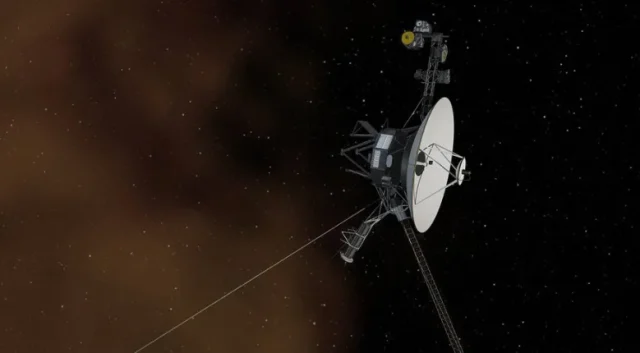
This is where Starlink changes the conversation. Starlink is not the first satellite internet system, but it is the first to make low-Earth-orbit broadband feel like a mass-market service rather than a niche tool for ships, oil rigs, research stations, or remote cabins. Traditional geostationary satellite internet relied on spacecraft orbiting roughly 35,786 kilometers above Earth, which created high latency because signals had to travel such enormous distances. Starlink instead uses thousands of satellites in low Earth orbit, much closer to the surface, reducing latency while increasing the number of spacecraft required to maintain coverage. That tradeoff is brutally difficult from a launch and operations perspective, but SpaceX has a structural advantage: it also owns the Falcon 9 launch system that made rapid satellite deployment economically plausible. As of late July 2026, public satellite-tracking analysis cited by Space.com counted more than 10,800 Starlink satellites in orbit, with nearly all of them operational, making Starlink by far the dominant low-Earth-orbit broadband constellation.
What makes the Cybercab development so intriguing is that Tesla is not simply asking whether a private car can browse the internet through space. That question has already been answered by RV owners, boaters, remote workers, disaster responders, and technically adventurous drivers who have mounted Starlink terminals on vehicles. The more interesting question is whether a car designed for autonomy needs a second communications layer that is not beholden to local cellular coverage. A human driver can often tolerate a lost data connection because the car remains under human control. A robotaxi, by contrast, must be supervised, updated, observed, dispatched, recovered, and integrated into a fleet-management system. Even if the driving intelligence runs locally on the vehicle, the business around that intelligence depends on communication.
Why Starlink in a Tesla Was Harder Than It Sounded
For years, Musk’s answers about Starlink in Tesla vehicles tended to circle around a practical objection: antennas. Starlink’s earliest user terminals were not tiny invisible components. They were conspicuous phased-array dishes, roughly the size of a pizza box, built to electronically steer radio beams toward fast-moving satellites crossing the sky. They worked because they could see a broad portion of the sky and because they had enough surface area, power, and thermal capacity to do their job. That is perfectly acceptable on the roof of a house, the deck of a ship, a rural cabin, or even an RV. It is far less elegant on the smooth glass roof of a Tesla sedan. Tesla’s mainstream vehicles were designed with panoramic glass roofs, sleek aerodynamics, and minimal exterior clutter. Bolting a satellite terminal onto that surface would have been both visually jarring and technically compromised.
Satellite antennas for moving vehicles face a different world from antennas fixed to houses. A home terminal can be installed in a favorable location and left alone. A car changes orientation constantly. It passes under trees, bridges, signs, tunnels, and urban canyons. It vibrates, accelerates, brakes, and turns. It must survive heat, cold, water, car washes, impacts, dust, and years of exposure. It cannot draw unlimited power without affecting vehicle efficiency. It cannot protrude in a way that harms aerodynamics, wind noise, crash performance, manufacturing cost, or regulatory compliance. It must coexist with cellular antennas, GPS receivers, Wi-Fi, Bluetooth, keyless-entry systems, cameras, radar-like sensors if present, high-voltage power electronics, and the electromagnetic noise of a modern EV. In other words, “put Starlink in the car” sounds simple only until the antenna engineer enters the room.
The shrinking of Starlink hardware changes that equation. SpaceX’s official Starlink Mini specifications list a compact terminal with dimensions of roughly 298.5 by 259 by 38.5 millimeters, demonstrating how far the user-terminal form factor has moved from the early, bulky dish era. The Mini is not the same thing as the Cybercab’s reported integrated V5 antenna, and one should not casually assume identical performance or packaging. But it illustrates the broader direction: smaller phased arrays, better silicon, improved thermal design, more efficient beamforming, and hardware that can plausibly be integrated into mobile platforms rather than visibly mounted on top of them.
Tesla’s Cybercab is also a more natural candidate for satellite integration than the company’s existing glass-roof cars. The vehicle is a purpose-built robotaxi rather than a conventional consumer sedan or crossover. It is not trying to preserve a rear windshield for a human driver. It does not need to package the familiar ergonomic compromises of a steering wheel, pedals, mirrors, and conventional controls in quite the same way. Its roof and rear body structure can be treated as part of a communications, sensing, and compute architecture from the beginning. A plastic or composite roof section can be friendlier to radio-frequency transmission than metal and easier to package around an antenna module than a large sheet of automotive glass. In that context, the Cybercab is not merely “a Tesla with Starlink.” It may be the first Tesla shape that makes Starlink feel native.
Still, it would be a mistake to imagine that satellite internet suddenly becomes the primary nervous system of every Tesla vehicle. The reports around the Cybercab point to coexistence with 5G LTE, not a clean break from cellular networks. That makes engineering sense. In cities, terrestrial networks are usually faster, more efficient, cheaper per bit, and less vulnerable to sky obstruction. A robotaxi operating in a dense urban fleet would often be surrounded by cellular coverage. Starlink’s value may be strongest as redundancy, capacity supplement, remote-area coverage, fleet-resilience layer, or emergency fallback. The same car could use 5G when it is available, satellite when it is needed, Wi-Fi in depots, and short-range links for maintenance or diagnostics. The future connected vehicle is unlikely to have a single pipe to the internet. It will have a hierarchy of links, chosen dynamically by cost, latency, reliability, bandwidth, and mission criticality.
What a Satellite-Connected Robotaxi Actually Needs
The most persistent misunderstanding about autonomous vehicles is the idea that they are remotely driven by someone in a control room. Serious autonomous driving systems do not work that way. The latency, reliability, liability, and bandwidth requirements of remote real-time driving would be absurd for everyday city traffic. Tesla’s Full Self-Driving strategy, whether one is optimistic or skeptical about it, has always centered on onboard perception and decision-making. Cameras feed neural networks running on the car’s computer. The vehicle must interpret lanes, traffic lights, pedestrians, cyclists, road edges, parked cars, construction zones, and unpredictable human behavior locally, because a car cannot wait for a cloud server before deciding whether to brake.
That does not mean connectivity is optional. A robotaxi does not need the network to make every steering decision, but it does need the network to be part of a commercial transportation system. It must receive ride assignments, report its status, upload logs, flag unusual events, stream limited diagnostic data, update maps or route information, communicate with fleet operators, process payments, support passenger services, and possibly connect to remote assistance when it encounters ambiguous situations. A vehicle that stops in a confusing construction zone does not necessarily need a remote operator to drive it like a video game. It may need high-level guidance: proceed, pull over, wait, reroute, or hand off to a recovery protocol. That is a lower-bandwidth problem than full remote driving, but it is also a reliability problem.
Starlink’s potential role is therefore less about entertainment and more about operational continuity. Passenger streaming is the visible use case: people sitting in a robotaxi may want video, conferencing, gaming, social media, or work connectivity. But the more consequential use case is fleet supervision. If Tesla wants robotaxis to operate across areas where cellular coverage is inconsistent, or if it wants a failover link for safety-critical events, satellite connectivity becomes a strategic asset. It may allow a Cybercab to keep reporting location and health status when cellular service drops. It may permit better recovery after network congestion, natural disasters, or carrier outages. It may reduce dependence on roaming contracts across markets. It may also give Tesla tighter vertical integration, because the connectivity layer could be negotiated within Musk’s broader industrial ecosystem rather than entirely through mobile network operators.
The technical limits remain real. Low-Earth-orbit satellite connectivity is not magic. A Starlink terminal needs a usable view of the sky. It will not work well in tunnels, deep underground garages, dense tree cover, or certain urban canyons. Buildings can block signals. Weather can affect performance. The antenna must track satellites moving rapidly overhead. Handoffs between satellites must be smooth. The car must manage power draw and thermal load. The network must allocate capacity among homes, ships, aircraft, RVs, direct-to-cell users, government customers, and potentially vehicles. A single Cybercab may not demand much bandwidth for telemetry, but a future fleet of thousands or millions of vehicles could become a meaningful load if passenger entertainment and frequent data uploads are allowed to flow freely over satellite links.
Independent research on mobile Starlink performance has also shown that using satellite broadband from a moving car is more complicated than stationary use. A 2024 measurement study in Central Europe found that mobile Starlink performance was significantly worse than stationary performance, while also highlighting practical challenges such as maintaining continuous power and dealing with real-world vehicle motion. That does not mean Starlink is unsuitable for vehicles; it means the design must be purpose-built and expectations must be realistic. An integrated Cybercab antenna, designed as part of the vehicle’s body and communications stack, could perform differently from an experimental setup. But the physics of motion, obstruction, power, and beam tracking do not disappear simply because the dish is hidden.
The Starlink Network Becomes Transportation Infrastructure
Starlink’s expansion has been astonishing not only because of the number of satellites in orbit, but because of the markets it has entered. What began as a rural broadband proposition has become a communications platform for ships, aircraft, military operations, disaster response, remote industries, and mobile users. Airlines have been among the most visible adopters. The reason is simple: aircraft are difficult to connect well, passengers increasingly expect high-speed internet, and legacy in-flight Wi-Fi has often been slow, expensive, or unreliable. Reports and Starlink customer lists have shown a growing airline footprint, including major carrier commitments and aircraft installations across multiple regions. The aviation market matters because it demonstrates that Starlink is no longer only about stationary terminals on rooftops; it is increasingly about vehicles that move fast, cross jurisdictions, and require continuous service.
Cars are not airplanes, but robotaxis share one important quality with aircraft: they are fleet assets. A privately owned sedan can tolerate inconvenience. A commercial fleet vehicle becomes an operational liability when it goes dark. Airlines invest in connectivity not merely because passengers want entertainment, but because aircraft connectivity increasingly supports operations, maintenance data, crew services, and customer experience. A robotaxi fleet would face similar layered incentives. The passenger sees the screen. The operator sees uptime, utilization, recoverability, diagnostics, and risk management. In that sense, adding Starlink to Cybercab is less like adding Wi-Fi to a car and more like adding a second communications bus to a machine that is expected to earn money autonomously.
The comparison with aviation also reveals why satellite connectivity becomes more valuable as autonomy increases. A human-driven taxi with a lost data connection can still complete a trip, read street signs, and ask the passenger for directions. An autonomous taxi can continue driving only if its onboard system remains confident, its route information is sufficient, and its operating domain permits the situation. When something falls outside that domain, communication with fleet systems becomes part of the safety case. Even if Starlink never carries the majority of Cybercab traffic, it may provide the kind of resilient backstop that makes regulators, operators, and insurers more comfortable with driverless fleets. Redundancy is not glamorous, but in transportation it is often the difference between a demo and a deployable system.
There is also a business dimension that cannot be ignored. Tesla currently pays for connectivity through telecom relationships, and it packages certain features through its own premium connectivity subscription. Every connected vehicle creates recurring data costs. Every country adds complexity. Every carrier relationship introduces negotiation, support, and margin considerations. Starlink does not remove all of that. Spectrum rights, service availability, local regulation, and capacity management remain complicated. But it gives Tesla and SpaceX a shared path toward internalizing at least part of the connectivity stack. If Cybercab becomes a Tesla-operated or Tesla-managed robotaxi fleet, the economics of data may look different from consumer-car connectivity. A fleet operator may care less about selling a $10 monthly entertainment package and more about reducing downtime, improving remote diagnosis, and maintaining consistent vehicle visibility across operating areas.
That kind of vertical integration has always been part of Musk’s industrial playbook. Tesla built Superchargers because charging infrastructure was too important to leave entirely to others. SpaceX built rockets because launch costs were too high and too slow. Starlink built a satellite constellation because rural broadband, mobility connectivity, and strategic communications could not be served globally by legacy infrastructure alone. A Starlink-connected Cybercab fits that pattern. It is not simply a product feature; it is a sign that Tesla may be treating connectivity as part of the vehicle platform, not merely as a commodity service bought from carriers.
The Engineering Tradeoffs Behind an Invisible Dish
A satellite antenna hidden in a car roof has to do several things at once. It must transmit and receive radio signals with enough gain to communicate with satellites hundreds of kilometers above Earth. It must steer beams electronically, because a mechanical dish spinning on a robotaxi roof would be absurd. It must survive automotive conditions. It must avoid interfering with other vehicle systems. It must be cheap enough to manufacture at scale. It must not compromise safety or design. It must work while the car is moving through an environment filled with obstructions. And, unlike a home terminal, it must operate in a product where every watt of energy matters because the battery is also the fuel tank.
Phased-array antennas solve part of this problem by using many small antenna elements whose signals are combined and shifted to steer a beam without physically moving the device. This is one of the reasons Starlink terminals look flat compared with old satellite dishes. The terminal does not need to point a parabolic reflector by motor; it can electronically shape the beam toward the satellite. But phased arrays are not free. They require radio-frequency components, signal processing, power, calibration, and thermal management. The more capable the array, the harder it becomes to hide it cheaply in a mass-produced car. That is why the evolution from early Starlink dishes to smaller terminals matters. Miniaturization is not cosmetic. It is the enabling condition for integration.
Automotive packaging introduces another subtle constraint: materials. Radio waves do not pass through all surfaces equally. Metal roofs are hostile to hidden antennas. Glass can work in some contexts but may include coatings, heating elements, structural layers, or tinting that affect signal behavior. Plastics and composites can be more transparent to radio frequencies, which is one reason the Cybercab’s roof and rear body structure matter. If Tesla can dedicate a non-metallic panel above the antenna, the vehicle can preserve a clean exterior shape while giving the Starlink module a better view of the sky. That sounds straightforward, but it affects body engineering, crash design, repair procedures, manufacturing tolerances, and environmental sealing.
Thermal design may be just as important. Starlink user terminals are active electronic devices, not passive pieces of metal. They can heat up under load and may require careful power management. In a home installation, heat can dissipate into open air. In a vehicle roof, heat may be trapped near cabin materials, insulation, wiring, and structural components. Tesla would need to manage that without creating hot spots, noise, reliability issues, or excessive parasitic battery drain. A robotaxi that spends long hours in service cannot afford a communications system that becomes unreliable under summer sun, winter ice, or continuous passenger streaming. The best vehicle antenna is the one passengers never notice and fleet operators never think about.
Then there is the question of handoff between networks. A Cybercab with both 5G and Starlink should not behave like a laptop user manually switching Wi-Fi networks. It needs intelligent link management. Safety telemetry might use the most reliable available connection. Passenger entertainment could prefer cheap high-capacity terrestrial links when possible. Software updates might wait for depot Wi-Fi unless urgent. Remote-assistance channels might use redundant paths during critical events. Location, diagnostics, and vehicle state could be transmitted in low-bandwidth formats even when high-bandwidth service is unavailable. In mature form, the car’s connectivity stack should operate like an aircraft communications system: multiple links, prioritized traffic, graceful degradation, and clear rules for what happens when each layer fails.
Security will matter too. A satellite-connected vehicle expands the attack surface. Researchers have already examined security weaknesses in some satellite user-terminal contexts, including denial-of-service risks, and the broader lesson is that satellite broadband equipment must be treated with the same seriousness as terrestrial networking gear. A robotaxi is not just a consumer device; it is a moving machine with passengers inside, cameras outside, payment systems, location data, and operational links to a fleet. Tesla would need strong isolation between passenger internet access and vehicle-control systems, secure update pipelines, authenticated telemetry, hardened terminal firmware, and careful monitoring for jamming, spoofing, or network abuse. Satellite connectivity can improve resilience, but only if it is engineered as part of a secure system rather than an exposed convenience feature.
Why Direct-to-Cell Does Not Make the Car Antenna Obsolete
One might ask why Tesla would bother integrating a Starlink antenna at all if Starlink’s direct-to-cell technology is advancing. Direct-to-cell, sometimes described as satellite-to-phone or direct-to-device communication, is designed to let ordinary mobile phones connect to satellites without a special dish. That sounds like the ultimate solution: no bulky antenna, no vehicle integration problem, no visible hardware. SpaceX and telecom partners have been developing this capability, and academic measurement work has already examined early direct-to-device deployments in the United States. The technology is real, but its early performance and capacity characteristics are very different from broadband Starlink terminals. One 2025 measurement study observed the system during an SMS-oriented phase and estimated that announced mobile data service could provide only a few megabits per second per beam under outdoor conditions, with potential future improvements depending on regulation, spectrum, and power limits.
That distinction is crucial. Direct-to-cell is about extending mobile coverage to ordinary devices, especially for messaging, emergency communication, and basic data where towers are absent. A dedicated Starlink vehicle antenna can be larger, more capable, better powered, and more precisely integrated than a smartphone antenna. It can support higher throughput and more reliable links because the vehicle has room and energy that a phone does not. For a robotaxi fleet, those differences matter. A fallback messaging link may be enough to report location or send an emergency status. It is not necessarily enough for passenger broadband, large diagnostic uploads, or robust remote-assistance workflows. Direct-to-cell may eventually become part of the vehicle connectivity mix, but it does not eliminate the value of a dedicated antenna for a machine expected to operate commercially.
There is also an orbital and regulatory dimension. Starlink satellites currently operate across multiple low-Earth-orbit shells, and SpaceX has explored lower orbital altitudes for some services. Lower altitude can reduce path loss and latency, but it also affects satellite lifetime, atmospheric drag, coverage geometry, launch requirements, and astronomical visibility. Academic work modeling lower-altitude Starlink satellites has noted that altitude changes can shift the impact on observations depending on twilight and darkness conditions. That is a reminder that every improvement in one part of the system has consequences elsewhere. A car user may experience “better satellite internet,” but behind that phrase lies an enormous orbital logistics operation involving satellite manufacturing, launch cadence, collision avoidance, spectrum coordination, deorbiting, and environmental debate.
Direct-to-cell will likely become one of the most important satellite communications markets of the next decade, and Starlink is not alone. Amazon’s satellite ambitions, AST SpaceMobile, Lynk, Globalstar-related strategies, and telecom partnerships all point toward a world where satellites supplement terrestrial mobile networks. Reuters reported in July 2026 that Amazon’s Leo division had proposed a constellation of more than 5,000 satellites for direct-to-device services, underscoring how quickly the competitive landscape is moving. For Tesla, that means Starlink integration is not just a convenience born from corporate proximity. It may be a way to get ahead of a broader transition in which vehicles, phones, aircraft, ships, and industrial machines expect hybrid terrestrial-space connectivity as a normal feature.
The Cybercab as a Connectivity Prototype
The Cybercab is not a normal Tesla, and that is precisely why it matters. Tesla’s mass-market vehicles have to satisfy private buyers, regulators, repair networks, manufacturing targets, insurance structures, and consumer expectations. A robotaxi can be optimized differently. Its rear visibility requirements are different if no one is driving. Its interior can prioritize passengers rather than controls. Its body can be shaped around sensors, cleaning, durability, and fleet maintenance. Its connectivity can be treated as part of the business model rather than an optional convenience. That makes it the ideal test bed for an integrated satellite antenna, even if the feature later spreads to consumer models.
The absence of a conventional rear window is especially important. In a human-driven car, rearward visibility has historically shaped vehicle design, even as cameras and sensors have reduced some dependence on glass. In a robotaxi, the vehicle does not need a human driver to look backward through a mirror. That frees the rear roof and deck area for hardware packaging. Tesla can hide antennas, compute modules, structural elements, or serviceable panels in spaces that would be politically and aesthetically harder to use on a Model 3 or Model Y. The result is a vehicle architecture that may reveal where Tesla’s thinking is going before the company is ready to redesign its mainstream lineup.
That does not mean the Model 3 and Model Y will soon receive full Starlink antennas. The economics are not obvious. A dedicated Starlink terminal adds cost, weight, complexity, power draw, and manufacturing steps. Many customers spend nearly all their time in cellular coverage. For them, a satellite antenna may be unnecessary. Tesla would also need to decide whether Starlink connectivity becomes standard hardware, a premium option, a fleet-only feature, or a regional configuration. It might appear first in commercial vehicles, emergency-service variants, overland-oriented packages, Cybertruck derivatives, or high-end models before reaching mainstream cars. The Cybercab could therefore be less a direct preview of every future Tesla and more a proof point for the company’s broader connectivity architecture.
Yet once an automaker integrates a technology into one platform, the barrier to broader deployment tends to fall. Suppliers mature. Manufacturing learns. Software support improves. Service procedures develop. Cost declines. Customers discover use cases that were not obvious at launch. Consider how cameras, cellular modems, large touchscreens, and over-the-air updates moved from unusual features to expected components of modern vehicles. Satellite connectivity may follow a slower path, but the logic is similar. At first it solves edge cases. Then it becomes a premium differentiator. Eventually, in certain vehicle categories, it may become part of the baseline expectation.
The Limits of a Sky-Based Network
For all its promise, Starlink cannot erase the physical limits of radio communication. The car still needs sky visibility. Tunnels remain tunnels. Underground garages remain underground. Dense cities can be difficult because buildings obstruct line-of-sight paths. Forests and mountains can create intermittent service. Heavy rain or snow can degrade signals. A robotaxi operating in Manhattan, Tokyo, London, or Budapest cannot assume that a satellite link will always be cleaner than a terrestrial one. In many urban settings, a well-engineered cellular network will outperform satellite service simply because antennas are closer, capacity is denser, and the network is designed around streets rather than orbital passes.
This is why redundancy matters more than replacement. The most credible Cybercab connectivity model is not “Starlink instead of 5G,” but “Starlink plus 5G plus local connectivity plus onboard autonomy.” Each layer covers another layer’s weakness. Cellular networks provide dense urban bandwidth. Starlink provides broader geographic reach and independence from local tower infrastructure. Depot Wi-Fi or wired service can handle large updates and data offload. Onboard compute keeps the vehicle safe when the network degrades. Such a system is more complex than a single modem, but autonomy makes complexity unavoidable. A driverless fleet cannot be designed around best-case network conditions.
Capacity will also become a strategic issue. Starlink has scaled rapidly, but broadband constellations are shared systems. A satellite beam serving a region has finite capacity. If homes, aircraft, ships, military users, direct-to-cell devices, and vehicles all compete for the same resources, network management becomes critical. Passenger video streaming from thousands of robotaxis could consume far more bandwidth than essential telemetry. Tesla and SpaceX would need policies for prioritization. Fleet-safety data should outrank entertainment. Emergency communication should outrank software downloads. A car stuck in a dangerous location should get a more reliable channel than a passenger watching a movie. The network may be technically capable of many things, but business rules and safety rules will decide what it is allowed to do.
The public-policy questions are just as important. Starlink’s rapid growth has already drawn scrutiny from astronomers, space-safety experts, regulators, and competitors. Low-Earth-orbit mega-constellations increase the number of satellites that must be tracked, maneuvered, and eventually deorbited. They can affect optical astronomy, radio astronomy, collision risk, and the orbital environment. SpaceX has made brightness-mitigation efforts, and the scientific literature shows an evolving picture in which satellite design, altitude, orientation, and mitigation modes all matter. But the larger issue remains: if every major platform company wants its own orbital communications layer, the sky becomes crowded infrastructure. A Starlink-connected Cybercab is exciting partly because it shows technological convergence. It is concerning for the same reason. The connected-car future may depend on systems whose externalities extend far beyond roads.
A Glimpse of the Post-Smartphone Network
The deeper meaning of Starlink in the Cybercab is that the internet is escaping the devices and places that once defined it. For decades, connectivity was something associated with desks, then laptops, then phones. The next phase is ambient: cars, aircraft, factories, farms, robots, drones, ships, emergency equipment, sensors, and homes at the edge of coverage. In that world, the network is not a convenience layered on top of machines. It is part of how machines coordinate, recover, update, and become economically useful. Tesla understood this earlier than most automakers with software updates and app-based vehicle control. Starlink extends the same logic beyond the reach of towers.
A robotaxi is an especially powerful symbol because it combines several technological narratives at once. It is electric, software-defined, sensor-rich, AI-dependent, fleet-managed, and potentially satellite-connected. Each of those pieces has its own history, hype cycle, and engineering reality. Together they point toward a transportation system that is less about owning a car and more about operating a distributed robotic service. The Cybercab’s Starlink antenna, if it reaches production as shown, may be a small physical component hidden in a roof. But conceptually it is a bridge between two of Musk’s biggest bets: autonomous electric mobility on Earth and a private communications network in orbit.
Whether this becomes a major advantage depends on execution. Tesla still faces enormous challenges in autonomy, regulation, manufacturing, public trust, safety validation, and fleet economics. Starlink integration does not solve those problems. A better internet connection cannot make an autonomous vehicle safer if the driving system is not ready. It cannot guarantee profitable robotaxi operations. It cannot eliminate local rules, weather, vandalism, cleaning, charging logistics, passenger behavior, or insurance complexity. What it can do is remove one category of dependency and add resilience to the system Tesla wants to build. In engineering, that is often how revolutions arrive: not as a single miraculous invention, but as the removal of enough bottlenecks that a previously fragile idea becomes practical.
The timing is also important. For much of Tesla’s history, putting Starlink into cars would have looked like an indulgence. The terminals were too large, the use cases too narrow, the network too young, and the cars too dependent on glass-roof design. Now the pieces are shifting. Starlink has become a massive constellation with a growing mobility business. Antenna hardware has shrunk. Autonomous fleets are moving from concept art toward early deployments. Direct-to-device satellite connectivity is becoming a competitive market. Tesla is designing a vehicle that does not need to look like a conventional car. In that context, the Cybercab’s integrated satellite antenna no longer looks like a stunt. It looks like a signpost.
The most likely near-term future is hybrid. Tesla will not abandon cellular connectivity across its lineup tomorrow. The Model 3 and Model Y will not suddenly become satellite-first vehicles. Urban robotaxis will still rely heavily on terrestrial networks. But the old assumption that cars are connected only through mobile carriers is beginning to weaken. The Cybercab suggests that Tesla sees connectivity as a multi-layer system in which space-based internet can support autonomy, passenger services, remote monitoring, and fleet resilience. That matters because the future car is not merely a vehicle with apps. It is a machine that must remain aware, reachable, maintainable, and commercially productive under real-world conditions.
If the twentieth-century car was defined by the road, the twenty-first-century autonomous vehicle may be defined just as much by the network above it. The Cybercab’s Starlink antenna is not the whole story of Tesla’s robotaxi ambitions, and it should not be treated as proof that satellite internet is ready to replace cellular networks in every car. But it is one of those small hardware details that reveals a much larger strategic direction. Tesla’s newest vehicle may not simply be connected to the cloud. It may be connected to a private orbital infrastructure built by the same industrial empire that built the car. For drivers, passengers, regulators, and rivals, that raises a new question: when the car of the future goes online, who owns the sky it depends on?
Image(s) used in this article are either AI-generated or sourced from royalty-free platforms like Pixabay or Pexels.
This article may contain affiliate links. If you purchase through these links, we may earn a commission at no extra cost to you.
Get the weekly RF & IT briefing
Radio guides, RF calculators, AI, Windows, Linux and satellite communication explainers. One useful email per week. No spam.