Why BMW subscription features are still part of the plan
BMW may have stepped back from the most controversial version of its heated-seat subscription idea, but it has not abandoned subscription-based car features. The company still sees digital services, software-activated options and ConnectedDrive packages as a long-term part of its business model, especially as modern vehicles become more connected, electric and software-defined.
The backlash around heated seats made one thing clear: drivers strongly dislike paying repeatedly for hardware that already exists in the car. But BMW’s wider argument is different. The automaker says subscriptions make more sense for features that require ongoing data, cloud services, connectivity, software support or post-sale activation. That distinction may sound reasonable in theory, but in practice the line between a digital service and a locked vehicle feature is becoming increasingly blurred.
This article explains why BMW still supports subscription-based vehicle features, how ConnectedDrive fits into the strategy, why automakers are chasing recurring revenue, and why software-defined cars are changing the meaning of vehicle ownership.
What happened with BMW heated seat subscriptions?
BMW’s heated-seat subscription controversy became one of the clearest examples of consumer resistance to software-locked car features. The idea was simple but unpopular: in some markets, vehicles could contain the physical hardware for heated seats, but drivers would need to pay a recurring fee to activate the function.
The reaction was immediate. Drivers, journalists and online communities saw the model as a symbol of everything people dislike about subscriptions. Heated seats are not cloud storage. They are not real-time traffic data. They are not a streaming service. To many buyers, they are physical equipment already installed in a vehicle that was already purchased.
The criticism was not only about money. It was about ownership. If the heating elements, wiring and controls are already present inside the car, many customers believe they should not need to rent access to them. The vehicle owner sees the hardware as part of the car. The manufacturer sees the feature as a software-activated capability.
That conflict is at the center of the modern car subscription debate.
BMW eventually moved away from that specific heated-seat subscription implementation. But the broader idea did not disappear. The company’s position is that subscription-based services can still make sense when applied to digital services, connectivity-based features and optional post-sale activation.
ConnectedDrive is the real strategy
The heated-seat controversy received the most attention, but the bigger story is BMW’s ConnectedDrive ecosystem. ConnectedDrive is the broader digital service layer that connects the car, the driver, the mobile app, navigation services, remote functions and cloud-based features.
From BMW’s perspective, this is not a small experiment. It is part of the company’s long-term aftersales strategy. Modern cars are no longer sold only as finished mechanical products. They are increasingly sold as platforms that can be updated, configured and monetized after delivery.
ConnectedDrive allows BMW to offer services after the initial vehicle sale. These can include navigation enhancements, real-time traffic information, remote vehicle services, digital key functions, app-based control, connected assistance and other software-enabled features.
This model gives BMW a recurring relationship with the customer. Instead of the sale ending when the car leaves the dealership, the vehicle remains connected to BMW’s digital ecosystem for years. That creates opportunities for feature upgrades, service renewals, data-based products and subscription packages.
For BMW, this is commercially attractive. For customers, it depends heavily on what is being sold and how transparent the pricing feels.
Why automakers want recurring revenue
The automotive industry is changing economically. For decades, car manufacturers and dealers earned significant aftersales revenue from maintenance and repair. Internal combustion vehicles have many wear parts and service needs: oil changes, filters, timing components, exhaust systems, clutches, engine fluids and complex mechanical repairs.
Electric vehicles reduce some of that revenue. EVs still need tires, brakes, suspension work, cabin filters and occasional repairs, but they do not need oil changes, spark plugs, fuel filters or exhaust-system maintenance. Regenerative braking can also reduce brake wear. Fewer moving parts mean fewer routine service opportunities.
This creates a financial problem for automakers. If vehicles become mechanically simpler and require less maintenance, manufacturers need new revenue streams after the initial sale. Software is the obvious answer.
A subscription model creates predictable recurring income. It turns the car into an ongoing service relationship. Instead of selling a feature once, the manufacturer can sell access monthly, yearly or for the life of the vehicle. Investors often like recurring revenue because it is easier to forecast than one-time purchases.
BMW is not the only automaker experimenting with software-locked vehicle features, paid digital services and connected-car subscriptions. Mercedes-Benz, Tesla, Ford, General Motors, Toyota, Volkswagen and Audi have all tested different versions of the same idea, from paid driver-assistance systems to remote app services and software-enabled performance upgrades. For a broader industry view, read our full analysis of car subscription features beyond BMW.
The difference between digital services and locked hardware
There is a major difference between charging for a true digital service and charging repeatedly for hardware already built into the car.
A digital service may require ongoing infrastructure. Real-time traffic data, cloud-based navigation, remote app access, live concierge services, map updates, emergency call systems and connected entertainment may involve servers, mobile data, software maintenance and licensing costs. In these cases, an ongoing fee can be easier to justify.
Locked hardware is more controversial. If the car already contains the heating elements, sensors, adaptive lighting hardware or performance-capable components, customers may feel they already paid for the physical capability. A recurring fee then feels less like a service and more like a paywall.
BMW’s challenge is to separate these categories clearly. If customers believe subscriptions are used only for cloud-backed services, they may accept them. If they believe subscriptions are used to restrict hardware they already own, they may reject them.
The problem is that modern cars make this boundary difficult. Almost every feature now depends on software. Even physical systems are controlled by electronic modules. A heated seat, adaptive suspension, driver assistance function or lighting system may all be software-controlled. That makes almost any feature technically lockable.
Why drivers object to car subscriptions
Consumer resistance to automotive subscriptions is not simply resistance to paying. Drivers already pay for insurance, fuel, charging, maintenance, tires, connectivity, parking and financing. The objection is more specific: many drivers do not want ownership to become conditional.
A car has traditionally been understood as a product. You buy it, and the equipment installed in it belongs to you. Optional extras cost more at purchase, but once paid for, they remain part of the vehicle.
Subscriptions change that relationship. A feature may exist physically but remain inactive unless the account is paid. A second owner may not receive the same enabled features. A used car may have hardware that is technically present but digitally locked. A driver may lose access because of payment status, account issues, region changes or backend service decisions.
This feels different from traditional ownership. It makes the car resemble a smartphone app ecosystem, where functions are controlled by accounts, licenses and digital permissions.
For some buyers, this flexibility is useful. For others, it creates distrust.
Ownership versus access
The BMW subscription debate is really part of a larger cultural shift from ownership to access. This shift is already visible in software, music, films, cloud storage, professional tools and gaming. Cars are now entering the same pattern.
In the old model, a vehicle was a fixed product. The feature list was determined at the time of purchase. If the car had heated seats, adaptive cruise control or navigation, those features were part of the car.
In the new model, the car becomes a configurable platform. Features may be activated, deactivated, upgraded or renewed through software. The hardware may be standardized across many vehicles, while software determines which functions are available to each customer.
This has business advantages. It simplifies manufacturing because automakers can build more vehicles with the same hardware. It allows customers to activate features later. It may increase used-car flexibility because a second owner can enable options the first owner did not buy.
But it also creates uncertainty. The driver no longer owns only a machine. The driver depends on a digital relationship with the manufacturer.
Software-defined vehicles change the car business
A software-defined vehicle is a car whose functions are increasingly controlled, updated and expanded through software. This does not mean the mechanical parts disappear. It means software becomes central to how the car behaves.
Modern vehicles already contain many electronic control units, sensors, cameras, radars, connectivity modules and domain controllers. As architectures evolve, more functions will be centralized into powerful computing platforms. Over-the-air updates can change infotainment, driver assistance, charging behavior, navigation logic, battery management and user-interface features.
This architecture makes subscriptions easier. If features are controlled by software, access can be managed by digital licenses. A vehicle can be sold with hardware already installed, and the manufacturer can decide which functions are active for a particular user or market.
BMW’s subscription strategy is therefore not an isolated pricing experiment. It is connected to the broader technical direction of the car industry. As cars become software platforms, automakers will try to monetize software in the same way technology companies do.
Wireless connectivity makes subscriptions possible
Subscription-based car features depend on connectivity. Without a reliable digital link between the vehicle and the manufacturer’s backend systems, feature activation, license verification and remote updates would be far more difficult.
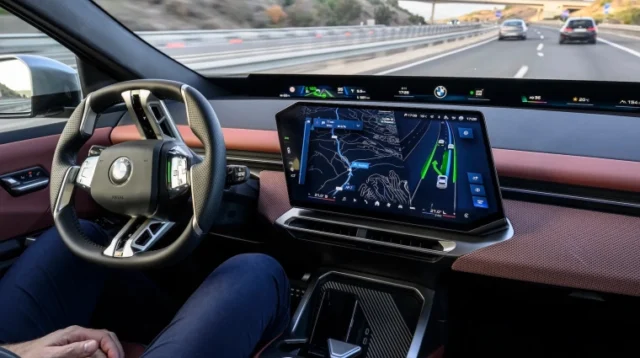
Modern BMW vehicles, like many premium cars, contain embedded cellular connectivity. This allows the car to communicate with cloud services, download updates, send diagnostics, access navigation data, support app-based controls and enable or disable certain digital services.
This wireless infrastructure is the hidden foundation of the subscription model. A car can be treated as a connected endpoint, not just a standalone machine. The manufacturer can provision features remotely. The app can show available services. The backend can verify entitlements. Updates can add or modify functions.
This is technically powerful. It enables remote diagnostics, stolen vehicle tracking, emergency services, digital keys, live navigation, software updates and predictive maintenance. But it also means the user experience can become dependent on account status, network availability and cloud infrastructure.
In the old model, if a feature was installed, it worked locally. In the connected model, some features may depend on remote authorization.
The hidden dependence on cloud services
A connected vehicle subscription is not only a payment model. It is an infrastructure model. The feature may depend on servers, authentication systems, mobile networks, software licenses and cloud APIs.
This creates a new type of dependency. If the backend service is unavailable, if the mobile connection fails, if the account has an error, or if a subscription expires, the user may lose access to a function. That may be acceptable for entertainment or live traffic data. It becomes more controversial for comfort, performance or driver-assistance features.
Automakers will argue that essential safety functions are not placed behind unstable subscription gates. But customer trust depends on clear boundaries. Drivers need to know which features are permanent, which are time-limited, which depend on connectivity and which remain functional offline.
If those boundaries are unclear, subscription models will continue to create backlash.
Privacy concerns in connected cars
Subscription-based vehicle ecosystems usually require data. The car may exchange information with the manufacturer about feature usage, account status, vehicle status, location-based services, diagnostics, app commands and software versions.
Some data exchange is necessary for useful services. Real-time traffic cannot work without connectivity. Remote lock and unlock require communication. Predictive maintenance depends on vehicle telemetry. Navigation services need data.
The privacy concern is scale. A modern connected car can generate large amounts of information about how, where and when it is used. If subscriptions expand, the incentive to collect and analyze vehicle usage data may also grow.
This raises several questions:
Who owns the data?
How long is it stored?
Can it be shared with partners?
Can it be used for pricing, insurance or marketing?
Can drivers disable nonessential data collection?
Is the subscription price partly subsidized by data use?
For customers, subscription pricing is only one part of the debate. Data control may become just as important.
Cybersecurity concerns
Connected car features also increase cybersecurity risk. Every connected interface must be secured: cellular modems, Wi-Fi, Bluetooth, mobile apps, cloud APIs, backend systems and over-the-air update mechanisms.
If desirable features are controlled digitally, then authentication and security become central to ownership. A compromised account, flawed backend or vulnerable vehicle interface could affect access to services or vehicle functions.
Automakers invest heavily in cybersecurity, but the attack surface is growing. A traditional mechanical car had limited remote exposure. A software-defined connected car is part of a networked ecosystem.
This does not mean connected services are automatically unsafe. It means trust must be earned through strong security architecture, transparent updates, responsible vulnerability handling and clear user control.
Subscription-based features depend on customers trusting the manufacturer not only with money, but with software access, data and long-term service reliability.
BMW is not alone
BMW is not the only automaker exploring recurring digital revenue. Tesla, General Motors, Mercedes-Benz and other manufacturers have all offered or explored paid connected services, software-enabled upgrades or subscription packages.
Tesla has subscription-based connectivity and driver-assistance options. General Motors introduced paid connected services long before the current debate through systems such as OnStar. Many premium brands have charged recurring fees for navigation updates, remote services or concierge features.
What has changed is public sensitivity. Drivers may accept subscriptions for services that clearly require ongoing infrastructure. They are much more resistant when subscriptions appear to restrict hardware that is already installed.
BMW became a symbol of the debate because heated seats are easy to understand. They are physical, familiar and emotionally connected to comfort. A subscription for them feels more provocative than a subscription for live traffic data.
But the trend is industry-wide. Automakers are watching each other and testing what customers will accept.
Tesla and the normalization of software upgrades
Tesla played a major role in normalizing the idea that cars can gain or lose capabilities through software. Over-the-air updates changed customer expectations. A vehicle could improve after purchase. Features could be added later. Performance, range estimation, user interface and driver-assistance behavior could change without visiting a dealer.
This created real benefits. Software updates can fix bugs, improve efficiency and extend functionality. But it also made feature monetization easier. If a car can receive capabilities through software, then those capabilities can also be sold, leased or bundled into subscription tiers.
BMW and other traditional automakers are now adapting to the same logic. They want the revenue benefits of software platforms while avoiding the backlash that comes from appearing to charge twice for hardware.
The challenge is customer perception. Tesla owners may be more accustomed to software-based feature packaging. BMW buyers may have different expectations from a premium traditional brand.
Why electric vehicles accelerate the subscription trend
Electric vehicles accelerate the shift toward subscription features for several reasons.
First, EVs are more software-dependent than older combustion vehicles. Battery management, charging curves, thermal control, regenerative braking, route planning and energy prediction all rely heavily on software.
Second, EVs reduce some traditional service revenue. That increases the pressure to find recurring income elsewhere.
Third, EV buyers often expect technology-rich vehicles. Large screens, apps, over-the-air updates, advanced driver assistance and connected route planning are part of the modern EV experience.
Fourth, EV platforms are often designed with centralized electronics and digital architecture from the beginning. This makes software activation easier.
For BMW, subscriptions are therefore not only about one controversial feature. They are part of the economic and technical transition from mechanical premium cars to connected electric platforms.
Which subscriptions customers may accept
Not all car subscriptions are equally controversial. Some are likely to be accepted because they clearly provide ongoing service value.
Customers may accept subscriptions for:
- real-time traffic data,
- connected navigation,
- remote app services,
- emergency call packages,
- cloud-based voice assistants,
- music or entertainment bundles,
- Wi-Fi hotspot services,
- live parking information,
- advanced map updates,
- fleet management tools.
These services depend on data, servers, licensing or ongoing infrastructure. A recurring fee feels more understandable.
More controversial subscriptions include:
- heated seats,
- heated steering wheel,
- installed lighting functions,
- performance already enabled by hardware,
- basic driver-assistance functions,
- battery capacity unlocks,
- physical comfort features.
These feel like hardware ownership issues. If the component is already in the car, many drivers expect it to be included permanently.
One-time purchase versus monthly subscription
BMW and other automakers may reduce backlash by offering one-time purchases alongside subscriptions. A subscription can be useful for temporary access. A one-time unlock can satisfy customers who want permanent ownership.
For example, a driver may want a feature only for a winter season, a lease period or a long trip. A short subscription could make sense. Another driver may want the feature permanently and prefer to pay once.
The problem begins when subscription is the only option. If customers cannot permanently buy access to installed features, they may feel trapped.
A fair model would make the distinction clear:
- cloud service: recurring fee acceptable,
- hardware unlock: one-time purchase should be available,
- safety feature: should not be subscription-dependent,
- temporary trial: useful if transparent,
- used-car transfer: must be clearly defined.
This kind of clarity will matter more as software-defined vehicles become common.
Used cars and the subscription problem
Subscription-based vehicle features create complications in the used-car market. In a traditional used car, the buyer can inspect the equipment and know what the car has. In a software-defined car, the hardware may be present but the feature may not be active.
A used BMW may contain sensors, heating elements or driver-assistance hardware, but the second owner may need to pay to activate certain functions. This changes how used cars are valued and inspected.
Buyers will need to ask new questions:
Which features are permanently enabled?
Which features are subscription-based?
Do subscriptions transfer to the next owner?
Are there lifetime unlocks?
Are features tied to the vehicle or the user account?
Can the manufacturer remove or change availability later?
This adds complexity. It may also create opportunity. A used-car buyer might activate a feature the original owner did not purchase. But only if the pricing is fair and the system is transparent.
Regulatory pressure may increase
As automakers expand software-locked features, regulators may become more interested. Consumer protection authorities could examine whether customers are clearly informed about locked hardware, subscription terms, data usage and feature availability.
Key regulatory questions may include:
- Was the buyer told that hardware was installed but locked?
- Are subscription terms clear?
- Are safety-related features affected?
- Can features disappear after resale?
- Are data practices transparent?
- Is the car still functional if connectivity fails?
- Are advertised features permanent or conditional?
The more automakers push subscriptions into core vehicle functions, the more likely regulatory scrutiny becomes. Features such as navigation data or streaming services are one thing. Braking, driver assistance, visibility and safety-adjacent systems are another.
BMW’s cautious positioning may be partly about staying on the acceptable side of this boundary.
The psychological problem with paying twice
The strongest consumer objection is the feeling of paying twice. A buyer pays for the car. The manufacturer installs hardware. Then the buyer is asked to pay again to use it.
Even if the business logic makes sense internally, the customer psychology is negative. People do not like seeing unused capability locked behind a payment screen. It creates resentment because the limitation feels artificial.
This is different from buying an accessory later. If the hardware is absent, the customer understands why installation costs money. If the hardware is present but disabled, the cost feels like permission rather than equipment.
Automakers need to understand this distinction. Customers may tolerate digital upgrades. They are less likely to tolerate artificial restriction of physical features.
BMW’s careful argument
BMW’s current position appears more cautious than the heated-seat controversy suggested. The company emphasizes digital services, flexibility and post-sale choice. It argues that customers may benefit from being able to activate features later instead of committing at purchase.
This argument can work in some cases. A customer may buy a used BMW and activate a feature that the original buyer skipped. A driver may subscribe to a service only during a specific trip. A lease customer may prefer short-term access rather than a full purchase.
But the argument depends on fairness. If subscription pricing is too high, if permanent purchase options disappear, or if hardware feels artificially restricted, customer backlash will return.
The model can succeed only if buyers believe they are receiving flexibility rather than being charged repeatedly for something they already own.
What this means for future car buyers
Future car buyers will need to read feature lists more carefully. The important question will no longer be only “Does the car have this feature?” It will also be “Is this feature permanently included, software-locked, subscription-based or cloud-dependent?”
Buyers should check:
- standard equipment,
- optional equipment,
- one-time digital unlocks,
- monthly subscriptions,
- trial periods,
- transferability to second owners,
- connectivity requirements,
- data policies,
- cancellation terms.
This may sound excessive, but software-defined vehicles make it necessary. A car’s feature set may no longer be fully determined by hardware inspection.
For premium brands such as BMW, transparency will be essential. Customers paying premium prices will expect premium clarity.
What BMW gets right
BMW is not wrong that software and connected services can add value. Many drivers benefit from live navigation, remote services, digital keys, traffic updates, app integration and over-the-air improvements.
The ability to activate features after purchase can also be useful. It may reduce regret. It may make used cars more flexible. It may allow customers to try features before committing. It may simplify manufacturing and reduce configuration complexity.
The software-defined car is not automatically bad. Done well, it can improve the ownership experience.
The problem is not digital services themselves. The problem is whether automakers use software to create genuine value or to restrict already-installed capability in ways customers find unfair.
What BMW risks getting wrong
BMW risks damaging trust if customers feel the company is turning ownership into a series of permissions. Premium car buyers expect quality, but they also expect completeness. If a luxury vehicle contains hardware that requires recurring payment to use, the brand may appear less generous and more extractive.
There is also a competitive risk. If one automaker charges subscriptions for features another includes permanently, customers may compare not only vehicle price but ownership friction.
A subscription strategy can produce revenue, but it can also produce resentment. The heated-seat backlash showed that customers are willing to push back when they believe a line has been crossed.
BMW’s challenge is to build a subscription model that looks like optional service value, not digital rent extraction.
The future of car ownership
The future car will likely be more connected, more software-controlled and more configurable than today’s vehicles. This shift is already happening. Over-the-air updates, digital keys, driver profiles, app ecosystems and remote services are becoming normal.
The ownership model will change with it. Some features will be permanent. Some will be subscription-based. Some will be activated after purchase. Some will depend on cloud infrastructure. Some may transfer between owners, while others may not.
The central question is whether customers will feel empowered or controlled.
If subscriptions provide useful flexibility, they may become accepted. If they appear to lock basic features behind recurring fees, backlash will continue.
BMW is betting that drivers will eventually accept cars as ongoing digital service platforms. That may be true for some features. It is not yet clear where the market will draw the final line.
Practical summary
BMW has not abandoned subscription-based vehicle features. The heated-seat controversy forced the company to rethink a particularly unpopular implementation, but the broader ConnectedDrive strategy remains important.
The business logic is clear. Automakers want recurring revenue as vehicles become electric, connected and software-defined. Digital services can generate income long after the initial sale.
The customer concern is also clear. Drivers do not want to pay repeatedly for hardware they believe they already own. The distinction between a cloud-backed service and a software-locked physical feature will determine whether subscription models are accepted or rejected.
BMW’s future success with subscriptions will depend on transparency, fair pricing, permanent purchase options, data privacy, cybersecurity and respect for the traditional expectations of vehicle ownership.
BMW’s message is clear: subscription-based car features are not going away. The company may have learned from the heated-seat backlash, but it still sees digital services and software activation as central to the future of the automotive business.
This is not only a BMW story. It reflects a wider transformation of the car industry. Vehicles are becoming connected platforms. Automakers are becoming software service providers. Features are becoming digital entitlements. Ownership is becoming more complicated.
For drivers, the key issue is control. A connected car can be more capable, more flexible and more updatable than any previous generation of vehicle. But it can also make ownership feel conditional if too many features depend on subscriptions, accounts and remote authorization.
The future of automotive subscriptions will not be decided only by technology. It will be decided by trust. BMW and other automakers must convince customers that software-defined vehicles create real value rather than simply turning cars into rolling paywalls.
Image(s) used in this article are either AI-generated or sourced from royalty-free platforms like Pixabay or Pexels.
This article may contain affiliate links. If you purchase through these links, we may earn a commission at no extra cost to you.
Get the weekly RF & IT briefing
Radio guides, RF calculators, AI, Windows, Linux and satellite communication explainers. One useful email per week. No spam.