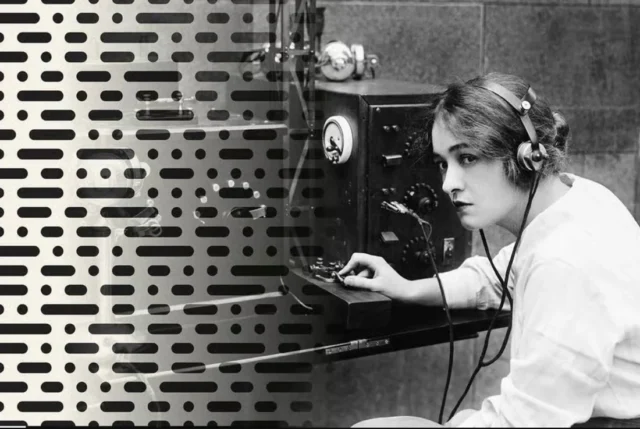
For more than a century, radio operators around the world have shared a strange technical language built from just three characters at a time. These compact abbreviations survived world wars, commercial Morse telegraphy, transatlantic maritime traffic, military field operations, amateur radio contests, satellites, SDR receivers, and even the internet age itself.
Long before smartphones, translators, and digital messaging platforms existed, radio operators needed a fast and universal way to exchange information. Weak signals, atmospheric noise, crowded frequencies, and international communication barriers forced early wireless operators to become masters of efficiency.
The solution became one of the most iconic systems in radio history: Q codes.
Even today, operators casually say things like:
- “Heavy QRM tonight.”
- “Nice QSO.”
- “Running QRP portable.”
- “Let’s QSY up 5.”
Many newer operators use these expressions daily without realizing they are speaking fragments of a communication system invented more than 100 years ago.
Some Q codes remain essential.
Some became misunderstood radio slang.
Others faded into obscurity and survive only in dusty maritime manuals and forgotten military documentation.
Yet the language itself refuses to die.
The Birth Of Radio’s Universal Shortcut System
In the early 1900s, wireless communication was expanding at an astonishing pace. Ships at sea, coastal stations, military units, and commercial telegraph operators increasingly relied on Morse code for long-distance communication.
But early radio had major limitations.
Signals were weak.
Transmitters were unstable.
Interference was everywhere.
Operators spoke different languages.
Every extra Morse character consumed precious airtime.
Efficiency mattered enormously.
A long transmission increased the probability of:
- Signal collisions
- Interference
- Copying errors
- Operator fatigue
- Lost traffic
International telecommunication authorities eventually developed standardized shorthand abbreviations beginning with the letter “Q.”
The choice of Q was deliberate. Very few common English words begin with that letter, minimizing confusion during Morse transmissions.
The result became one of the most successful communication compression systems ever created.
Instead of sending:
“MY SIGNAL IS FADING RAPIDLY”
an operator could simply send:
“QSB”
Instead of:
“WHAT IS YOUR LOCATION?”
they could transmit:
“QTH?”
The reduction in transmission time was dramatic.
Why Q Codes Worked So Brilliantly
The genius of Q codes was not just brevity.
It was universality.
A German operator, a Japanese operator, and a Brazilian operator could exchange essential technical information without sharing a common spoken language.
In an era long before machine translation or global English dominance, this was revolutionary.
A few simple characters carried highly specific meanings understood across the entire radio world.
Q codes also adapted beautifully to poor signal conditions.
When atmospheric noise or fading destroyed long messages, a short code often survived intact.
This made the system extremely valuable during:
- Maritime communication
- Emergency traffic
- Weak-signal DX work
- Military operations
- Long-distance HF communication
Even now, in the age of fiber internet and digital radio networks, the system still feels surprisingly modern.
The Most Famous Q Codes Still Used Today
Some Q codes became so deeply embedded in amateur radio culture that operators now use them almost like ordinary words.
QTH – Location
QTHQTH
QTH refers to station location.
Examples:
- “My QTH is Prague.”
- “Portable QTH today.”
- “Holiday QTH near the coast.”
Originally, this was a strict procedural abbreviation.
Today, it became conversational radio vocabulary.
Portable operators, DXpedition teams, and mountain-top activators use it constantly.
QRM – Interference
QRMQRM
QRM refers to interference caused by other stations.
Examples:
- “Severe QRM on 40 meters tonight.”
- “Local QRM wiped out the signal.”
Every HF operator eventually develops a complicated relationship with QRM.
Contest weekends often transform entire bands into controlled chaos, with stations fighting through overlapping signals and crowded frequencies.
Modern urban environments made QRM even worse.
Switching power supplies, solar inverters, LED lighting, Ethernet devices, and cheap electronics turned many neighborhoods into RF noise generators.
QRN – Atmospheric Noise
QRNQRN
Unlike QRM, QRN refers to natural noise.
Typical QRN sources include:
- Lightning storms
- Static crashes
- Atmospheric electricity
- Tropical storm activity
New operators often confuse QRM and QRN.
The distinction matters technically:
- QRM = Human-made interference
- QRN = Natural atmospheric noise
During summer months on lower HF bands, QRN can become brutal.
Signals disappear beneath crashing static bursts generated hundreds or even thousands of kilometers away.
QSB – The Famous HF Fade
QSBQSB
QSB describes signal fading caused by ionospheric propagation changes.
A station may swing from booming S9 levels to nearly inaudible within seconds.
Examples:
- “You’re deep in QSB.”
- “Signal strong but heavy QSB.”
For newcomers, QSB often feels mysterious.
One moment a station sounds local.
The next moment it nearly vanishes.
HF propagation constantly changes as ionospheric layers shift with:
- Solar radiation
- Time of day
- Geomagnetic conditions
- Seasonal effects
- Solar cycle activity
QSB is simply the audible consequence of that invisible atmospheric dance.
QRP – Low Power, Big Obsession
QRPQRP
Originally, QRP literally meant:
“Reduce transmitter power.”
Modern amateur radio transformed it into an entire operating philosophy.
Today, QRP usually means operating with intentionally low power levels.
Typical modern QRP definitions:
- 5 watts CW
- Around 10 watts SSB
- Ultra-low power portable setups
But QRP became much more than a technical category.
It evolved into a culture centered around:
- Efficiency
- Skill
- Lightweight equipment
- Antenna experimentation
- Portable operation
- Minimalism
Many operators enjoy the challenge of reaching distant stations using tiny battery-powered radios and simple wire antennas.
There is something deeply satisfying about crossing oceans with only a few watts.
QRO – The Opposite Philosophy
QROQRO
QRO means increasing transmitter power.
Modern usage often humorously describes large amplifier stations.
Examples:
- “He’s definitely running QRO.”
- “Time to go QRO for the pileup.”
In contesting culture, the contrast between QRP and QRO operators became almost legendary.
One side values efficiency and elegance.
The other values raw signal dominance.
Both approaches remain deeply embedded in amateur radio culture.
QSL – Confirmation And Collecting Tradition
QSLQSL
QSL means:
“I acknowledge receipt.”
From this simple abbreviation emerged one of amateur radio’s most beloved traditions: QSL cards.
For decades, operators mailed physical confirmation cards after successful contacts.
These cards became part technical record, part collectible artwork, and part international cultural exchange.
Modern confirmation systems now include:
- Paper cards
- eQSL
- ARRL Logbook of The World
- Online logging databases
But traditional paper QSL cards still hold enormous sentimental value.
Many operators proudly display walls covered with confirmations from rare countries and remote islands.
QRZ – One Of The Most Misused Q Codes
QRZQRZ
QRZ technically means:
“Who is calling me?”
Over time, voice operators transformed it into a nearly universal phrase heard after contacts.
Examples:
- “Thanks for the contact, QRZ?”
- “CQ DX, QRZ?”
The expression became so iconic that the massive callsign database QRZ.com adopted the name.
Interestingly, many operators use QRZ without knowing its original procedural meaning.
QSO – The Word Every Ham Uses
QSOQSO
QSO refers to communication between stations.
In practice, amateur radio operators almost universally use it instead of saying “contact.”
Examples:
- “Great QSO.”
- “First transatlantic QSO.”
- “Logged 500 QSOs during the contest.”
Few radio abbreviations became this culturally dominant.
The Strange Evolution Of Q Codes
One fascinating aspect of Q codes is how many changed meaning over time.
Amateur radio culture slowly reshaped them.
Some evolved naturally.
Others became technically incorrect but socially accepted.
QRP No Longer Means What It Originally Meant
Strictly speaking, QRP originally meant:
“Reduce transmitter power.”
Today, operators use QRP as:
- A power category
- A style of operation
- A noun
- An adjective
Examples:
- “QRP rig”
- “QRP operator”
- “QRP activation”
Language drift transformed a procedural instruction into a radio identity.
QTH Became Radio Slang
Originally, QTH simply meant station location.
Modern operators say things like:
- “Heading back to the QTH.”
- “Working from the portable QTH.”
The abbreviation evolved into conversational shorthand completely detached from its original formal structure.
QRL – The Often Ignored Courtesy Code
QRLQRL
QRL asks:
“Is this frequency busy?”
Traditionally, operators should check frequency occupancy before transmitting.
Proper CW etiquette often includes:
“QRL?”
followed by a pause.
But modern contesting and fast-paced operating habits sometimes ignore this entirely.
This remains a frequent source of frustration among experienced operators.
QSK – A Technically Demanding Feature
QSKQSK
QSK refers to full break-in CW operation.
In true QSK mode, the receiver remains active between individual Morse elements.
That means an operator can hear incoming signals literally between transmitted dots and dashes.
True QSK requires extremely fast transmit/receive switching and careful receiver recovery design.
Many operators casually misuse the term for ordinary semi break-in systems.
Forgotten Q Codes Almost Nobody Uses Anymore
Not every Q code survived.
Hundreds once existed.
Many vanished almost completely.
QSZ – Repeat Every Word Twice
QSZQSZ
Historically used during difficult conditions where accuracy was critical.
Weak-signal maritime and military traffic often relied on such procedures.
Modern digital systems made this largely obsolete.
QSW – Transmit On This Frequency
QSWQSW
Once useful for coordinating frequency changes in formal communication networks.
Modern synthesized radios and digital control systems reduced the need dramatically.
QTC – Traffic Messages
QTCQTC
Historically associated with formal message traffic.
Still occasionally heard during European HF contests.
But outside specialized operating environments, it largely faded away.
QUG – Forced Landing
QUGQUG
An aviation-oriented procedural code now almost entirely replaced by modern aviation phraseology.
QTO – Leaving Harbor
QTOQTO
Once important in maritime radio traffic.
Satellite systems and automated navigation reporting eventually made such procedural abbreviations far less necessary.
Why Q Codes Refuse To Disappear
Most historical communication systems eventually vanish.
Q codes survived because they remained genuinely useful.
They still offer:
- Brevity
- Clarity
- International compatibility
- Operational efficiency
- Cultural continuity
No modern replacement fully displaced them.
Even operators using advanced SDR transceivers with panoramic waterfall displays still casually say:
- “Heavy QRM.”
- “Nice QSO.”
- “Let’s QSY.”
- “Strong QSB tonight.”
The technology changed.
The language survived.
Q Codes In Modern Digital Radio
Ironically, some of the newest digital operating modes preserved some of the oldest radio terminology.
Modes like:
- FT8
- RTTY
- JS8Call
- PSK31
- CW skimmers
still heavily use traditional abbreviations and operating shorthand.
Even automated systems continue carrying fragments of century-old radio culture.
Emergency Communication And Q Codes
Emergency communication networks still value concise procedural language.
During disasters:
- Frequencies become crowded
- Operators may speak different languages
- Weak signals complicate communication
- Time becomes critical
Q codes simplify communication under stress.
That efficiency remains valuable even today.
The Cultural Side Of Q Codes
Q codes eventually became more than technical abbreviations.
They became part of amateur radio identity itself.
Operators casually blend them into everyday conversation:
- “Portable QTH this weekend.”
- “Band full of QRM tonight.”
- “Running QRP from the mountains.”
Some even invent humorous fake Q codes jokingly used during contests and field operations.
Very few technical communication systems ever became this culturally durable.
The Future Of Q Codes
New operators increasingly enter amateur radio through:
- SDR receivers
- Digital modes
- Portable operating
- YouTube tutorials
- Internet-linked systems
Many never learn traditional Morse code.
Yet Q codes continue spreading into newer generations.
Why?
Because they still work.
Three characters can still communicate complex technical meaning faster than a full sentence.
That efficiency remains timeless.
More importantly, Q codes connect modern operators with over a century of radio history.
A CW operator sending “QSB” today is using essentially the same conceptual language once heard aboard ocean liners, polar expeditions, military field stations, and early transatlantic wireless links.
Few communication systems ever survived technological change this successfully.
Essential Q Codes Quick Reference
| Q Code | Meaning |
|---|---|
| QRM | Interference from stations |
| QRN | Natural atmospheric noise |
| QRP | Low power / reduce power |
| QRO | Increase power |
| QSB | Signal fading |
| QSL | Confirmation of reception |
| QSO | Radio contact |
| QSY | Change frequency |
| QRZ | Who is calling me |
| QTH | Station location |
| QRL | Is frequency busy |
| QSK | Full break-in CW |
| QRT | Stop transmitting |
| QRX | Stand by |
| QSP | Relay message |
Q codes began as a practical solution to the technical limitations of early wireless communication.
Over time, they evolved into something much larger.
Today they are simultaneously:
- Technical shorthand
- Cultural tradition
- Historical artifact
- International operator language
- Living radio slang
The equipment changed radically over the decades.
The bands changed.
Operating styles changed.
But somehow, the strange little three-letter language survived almost untouched.
That alone says everything about how effective it really was.
Image(s) used in this article are either AI-generated or sourced from royalty-free platforms like Pixabay or Pexels.
This article may contain affiliate links. If you purchase through these links, we may earn a commission at no extra cost to you.
Get the weekly RF & IT briefing
Radio guides, RF calculators, AI, Windows, Linux and satellite communication explainers. One useful email per week. No spam.