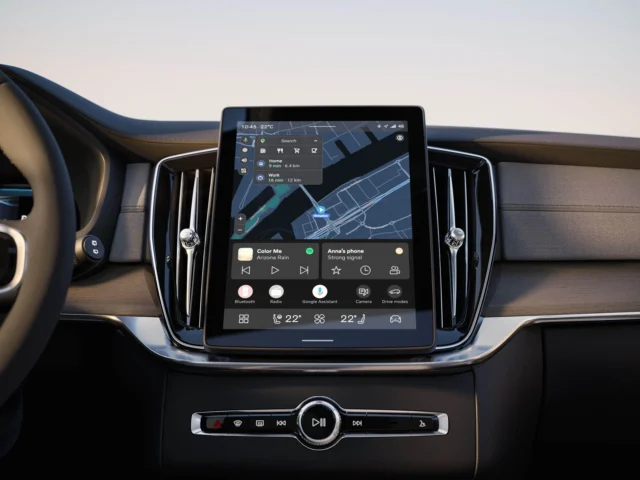
Volvo is about to roll out what it describes as the broadest software update in the company’s history, bringing a major new user experience to millions of vehicles already on the road. Starting next week, the Swedish automaker will begin delivering the update over the air, free of charge, to Android Automotive OS-based models across 85 countries.
For Volvo owners, this is more than a routine infotainment refresh. It is a large-scale upgrade designed to make the in-car interface faster, cleaner, and easier to use in everyday driving. It also signals how software is becoming just as important as hardware in the premium car market, where user experience, connectivity, and digital services increasingly shape how drivers judge a vehicle long after purchase.
A major global software rollout for Volvo
According to Volvo, around 2.5 million vehicles worldwide are expected to receive the new system. That makes this one of the most ambitious over-the-air software deployments ever attempted by the brand.
The update introduces Volvo Car UX, a redesigned operating environment for vehicles that already run Android Automotive OS. Rather than replacing the underlying Google-based platform, Volvo is refining the interface and daily interaction model that drivers actually see and use. In practical terms, the company is reshaping the dashboard experience to reduce distraction, minimize unnecessary taps, and surface the functions drivers use most often.
This is a significant move because it affects not just a handful of recent flagship models, but a wide range of vehicles sold over previous model years. In an era where many digital improvements remain locked to new hardware generations, Volvo is taking a broader approach by pushing meaningful usability improvements to existing customers.
Which Volvo models are getting the update?
The software package is scheduled to reach nearly all previously sold Volvo vehicles equipped with Android-based infotainment. That includes:
Volvo C40
Volvo XC40
Volvo EX40
Volvo EC40
Volvo S60
Volvo V60
Volvo V60 Cross Country
Volvo XC60
Volvo S90
Volvo V90
Volvo V90 Cross Country
Volvo XC90
This means owners of both SUVs and traditional wagon or sedan models are included, as long as their vehicle is built on the Android Automotive infotainment platform and meets the required software prerequisites.
That breadth matters. Volvo is not limiting the redesign to its newest electric models or to premium trims only. Instead, it is extending a modernized digital cabin experience across a substantial portion of its connected vehicle fleet.
What is Volvo Car UX?
Volvo Car UX is the company’s new user interface layer for its infotainment ecosystem. While the platform underneath remains Android Automotive OS, the visible experience has been redesigned around Volvo’s own priorities, customer feedback, and real-world usage patterns.
The goal is straightforward: make the system feel more intuitive and reduce the number of steps required to reach important features.
Modern cars now combine navigation, media, telephony, vehicle settings, climate information, driver assistance menus, and camera systems on a central screen. As a result, poor interface design can quickly become frustrating or even distracting. Volvo’s update appears aimed at solving exactly that problem by reorganizing the screen around the most frequently used tasks.
Instead of treating the infotainment system like a smartphone clone, Volvo is trying to make it work more naturally in a driving context, where attention must remain on the road and interactions need to be quick, predictable, and low-effort.
A simpler home screen focused on daily use
One of the biggest changes is the redesigned home screen. Volvo says it now places the most commonly used apps and controls directly on the main display, including navigation, media, and phone functions.
This may sound like a small adjustment, but in practice it can make a major difference. In many current infotainment systems, switching between Google Maps, music controls, and phone functions can require multiple taps or a full app exit. That breaks the flow of driving and creates unnecessary friction.
With the new layout, drivers should be able to access these core functions more directly from the main interface. Volvo specifically highlights a scenario where a driver is using Google Maps and wants to change music without leaving the navigation view. Under the updated interface, that kind of multitasking becomes easier and faster.
This design philosophy reflects a broader shift in automotive UI thinking. Carmakers are increasingly learning that the best infotainment experiences are not the ones with the most menus or animations, but the ones that reduce complexity and keep essential tools immediately accessible.
Fewer taps, faster access, lower distraction
Volvo says the new interface was developed with customer feedback in mind, and one of the central improvements is that frequently used functions now require fewer taps or clicks to activate.
That matters for both convenience and safety. In a moving vehicle, every extra step on a touchscreen adds cognitive load. Even simple tasks such as adjusting media playback, opening the camera view, or returning to navigation can become irritating if buried too deeply.
By flattening the interaction structure and prioritizing key actions, Volvo is aiming to reduce that burden. The result should be an interface that feels quicker in real use, not because the processor is necessarily faster, but because the pathway to core functions is shorter.
In many ways, that is the hallmark of good software design. A successful update does not always need dramatic new features. Sometimes the most valuable improvement is making existing features easier to reach exactly when the driver needs them.
A more modern design with clearer navigation
Volvo is also promising a more modern visual presentation and more pronounced navigation structure. That suggests the update is not only about function placement, but also about visual hierarchy.
In-car interfaces often suffer when too many equally weighted visual elements compete for attention. A cleaner design with stronger emphasis on priority areas can make the system feel more premium while also improving usability.
For Volvo, this is especially important because the brand has long positioned itself around Scandinavian simplicity, calm design language, and human-centered engineering. A cleaner, less cluttered digital interface fits naturally into that brand identity.
As software becomes central to the ownership experience, automakers increasingly need their digital design to reflect the same values as their exterior styling, interior materials, and overall product philosophy. Volvo Car UX appears to be part of that alignment.
The new contextual bar adapts to the situation
Another notable addition is a contextual bar that changes based on the current driving situation.
According to Volvo, this area of the screen dynamically surfaces relevant controls when they are most likely to be useful. For example, during low-speed driving, the icon for the exterior camera system may appear there, allowing the driver to activate it quickly while maneuvering in tight spaces. The same area can also provide access to recently used apps.
This is a smart direction for automotive software. A context-sensitive interface can help reduce clutter by avoiding permanent on-screen buttons for features that are only needed occasionally, while still making those features easy to reach at the right time.
If implemented well, this approach can improve both efficiency and clarity. The driver does not need to search through deeper menus for tools that become relevant only under specific conditions. The system anticipates likely needs and presents them when appropriate.
That kind of adaptive behavior is increasingly common in modern consumer software, and the automotive sector is now moving more decisively in the same direction.
Gemini integration is coming to Volvo cars
The update also prepares Volvo vehicles for the introduction of Google’s AI assistant, Gemini, which is expected to arrive later in the spring.
This is an important point because it suggests Volvo is not treating the current release as a standalone visual refresh. Instead, it is laying the software groundwork for the next phase of in-car digital functionality.
Gemini’s arrival could significantly expand voice interaction, contextual assistance, and natural-language control inside Volvo vehicles. While traditional voice assistants often struggle with complex or conversational requests, newer AI-based systems aim to interpret intent more flexibly and handle broader questions or multi-step commands.
In a car, that could eventually mean more natural destination search, smarter help with messaging or calls, improved control over media and cabin functions, and a better overall hands-free experience. Much will depend on how deeply Gemini is integrated into the vehicle ecosystem and which markets receive full functionality first, but the direction is clear: AI is becoming a core part of the connected car roadmap.
For Volvo, preparing its existing Android-based fleet for Gemini also helps future-proof the platform and keeps older vehicles relevant in a fast-moving software environment.
Why this update matters beyond infotainment
At first glance, an infotainment redesign might seem secondary compared with powertrain upgrades, safety features, or battery improvements. But in the modern car market, software updates increasingly define long-term ownership quality.
Drivers now expect their vehicles to improve after delivery, not remain frozen at the moment of purchase. Over-the-air updates have changed consumer expectations, especially in premium and technology-focused segments. People want better interfaces, new features, bug fixes, and smoother digital services without needing to replace the vehicle.
This makes large-scale software support a competitive advantage. It can improve customer satisfaction, strengthen brand loyalty, and extend the perceived modernity of the car. A vehicle that feels digitally outdated after two years can age faster in the mind of the owner than one that continues to receive substantial refinements.
Volvo’s move therefore has strategic importance. It reinforces the idea that the company’s cars are living digital products as well as physical machines.
Free over-the-air delivery is a major customer benefit
One of the strongest aspects of the rollout is that it will be delivered free of charge and wirelessly.
That removes a major barrier to adoption. Owners do not need to pay for the update, schedule a workshop appointment, or treat the upgrade as a premium add-on. Instead, the new system can be installed at home as long as the vehicle meets the software requirement and has access to Wi-Fi.
This type of delivery model is one of the clearest advantages of software-defined vehicles. It allows automakers to improve usability at scale without the cost and inconvenience of a traditional service campaign.
For customers, it also changes the relationship with the car. The vehicle is no longer a static product whose digital layer is permanently fixed. It becomes a platform that can continue evolving during ownership.
There is one important requirement before installation
Volvo notes that cars must already be running the latest previous version in order to receive the new major update.
That means owners who have postponed earlier software installations may need to catch up first before the Volvo Car UX package becomes available. This is a common requirement in layered software ecosystems, where major releases often depend on previous system components, security patches, or compatibility updates being installed beforehand.
In practical terms, drivers should check whether their car is fully updated before expecting the new interface to appear. If the required software baseline is not present, the main update may not be offered immediately.
This is an important operational detail because large OTA rollouts often generate confusion among owners when some cars receive the update earlier than others. In many cases, the delay is not due to model exclusion, but to staged deployment or missing prerequisite versions.
Wi-Fi is needed at home, but dealerships can help
For home installation, a Wi-Fi connection is required to download and install the software. That is not unusual, especially for larger system packages that may include interface assets, application layers, and underlying platform changes.
However, Volvo also states that owners who cannot complete the process at home will be able to have the software installed by an authorized Volvo service center.
This is a useful fallback, particularly for drivers without reliable home Wi-Fi coverage in the parking location, owners who are less comfortable with software management, or customers who simply prefer dealer assistance for major updates.
It also shows that even in the age of over-the-air updates, dealer networks still retain an important role in supporting software-defined vehicles.
A sign of where Volvo is heading
This update says a great deal about Volvo’s broader direction. The company is clearly investing in the software side of the ownership experience, not just electrification and safety. That is increasingly essential in a market where premium buyers expect a car’s digital layer to feel polished, responsive, and continuously improving.
The move also underlines the growing importance of Android Automotive OS in the automotive industry. Rather than building every digital layer from scratch, automakers like Volvo can use Google’s in-car platform as a base and then customize the interface, functionality, and brand experience on top of it.
That hybrid strategy offers advantages. It gives access to a mature software ecosystem, Google services, and future AI integration, while still allowing the carmaker to shape the user experience around its own brand identity and customer priorities.
Volvo Car UX appears to be exactly that kind of step: not a reinvention of the platform, but a more refined and brand-specific evolution of it.
What Volvo owners should do now
Owners of eligible models should make sure their vehicle is fully updated to the latest currently available software before the new rollout begins. It is also worth confirming that the car can connect to a stable Wi-Fi network for the download and installation process.
Those who have ignored previous update prompts may want to address that now, because missing prerequisite versions could delay access to the new interface. And for owners who prefer a hands-off approach, booking help through a Volvo dealership remains an option.
For many drivers, this update could end up being one of the most noticeable improvements to the daily ownership experience, especially if they rely heavily on navigation, media, and connected services every time they drive.
Volvo’s biggest software update to date is not just about making the screen look nicer. It is about reducing friction, modernizing the cabin, and preparing millions of existing vehicles for the next stage of connected and AI-assisted driving.
Image(s) used in this article are either AI-generated or sourced from royalty-free platforms like Pixabay or Pexels.
This article may contain affiliate links. If you purchase through these links, we may earn a commission at no extra cost to you.
Get the weekly RF & IT briefing
Radio guides, RF calculators, AI, Windows, Linux and satellite communication explainers. One useful email per week. No spam.