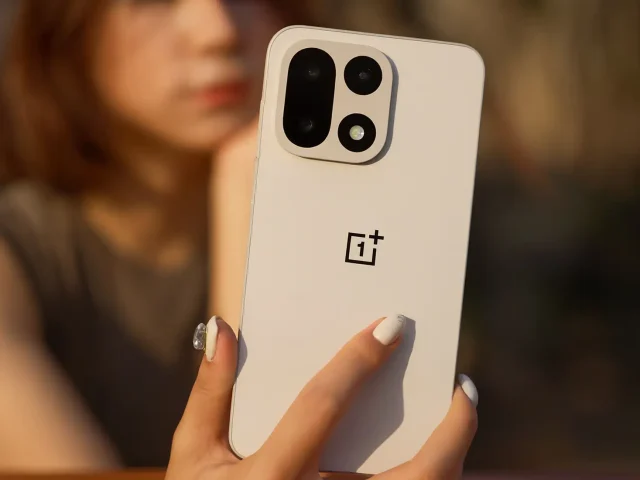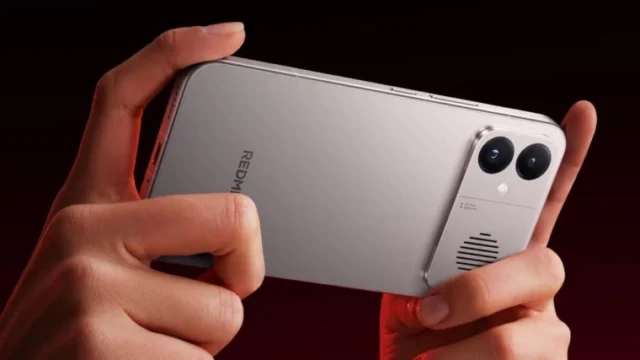
Xiaomi is preparing another major smartphone launch, and one of the most closely watched devices appears to be the Redmi K90 Max. Based on the details revealed so far, this upcoming model is clearly being shaped as a serious gaming phone rather than just a standard flagship with a fast processor. The company is putting special emphasis on sustained performance, thermal control, display smoothness, and long-session comfort, which suggests that the Redmi K90 Max is designed for users who expect more than short bursts of speed.
That distinction matters in the gaming segment. Many smartphones look powerful on paper, but once demanding games run for an extended period, temperature becomes the limiting factor. Performance drops, frame pacing becomes less stable, and the overall experience can feel less refined. Xiaomi appears to be addressing that challenge directly with a combination of high-end silicon, a dedicated graphics solution, and active cooling. If the company can deliver on those promises, the Redmi K90 Max could become one of the more interesting gaming phones in its category.
A performance-focused phone built for longer gaming sessions
At the center of the Redmi K90 Max is the MediaTek Dimensity 9500, which is expected to serve as the phone’s main platform. Xiaomi is also pairing it with a dedicated D2 graphics chip, an approach that signals a more specialized gaming strategy. Rather than relying only on the main processor for every graphical and computational task, Xiaomi seems to be optimizing the device for smoother and more stable performance under heavy load.
For mobile gamers, sustained power is often more important than peak benchmark numbers. A phone may impress during short tests, but the real question is what happens after 20 or 30 minutes of continuous gameplay. That is where thermal efficiency, power delivery, and smart workload management begin to matter. If a device cannot control heat properly, even excellent hardware starts to lose its advantage. Xiaomi is clearly trying to avoid that outcome by designing the Redmi K90 Max around performance consistency rather than marketing-friendly headline speeds alone.
This is one of the reasons the device is attracting attention before launch. It is being presented not just as a fast smartphone, but as a machine built to maintain that speed during real gaming sessions.
Active cooling could be the defining feature
The most notable technical detail is Xiaomi’s decision to use active cooling. In the smartphone world, thermal management is one of the biggest factors separating an average gaming experience from a genuinely strong one. Modern chipsets are extremely capable, but their performance can only be sustained if the generated heat is removed efficiently. In thin smartphone bodies, that remains a major engineering challenge.
Most devices rely on passive cooling systems such as vapor chambers, graphite sheets, and advanced internal heat dissipation layouts. Those solutions can work well, but active cooling takes thermal control a step further. It can help the device hold higher performance levels for longer periods, reduce throttling, and keep the handset more comfortable during demanding use. For players who spend long sessions in competitive titles, that can make a meaningful difference.
Xiaomi has highlighted this point with a specific performance claim. According to the company, the Redmi K90 Max can maintain a stable 144 fps while running Honor of Kings, and at the same time keep the device temperature below 37 degrees Celsius. If that result reflects realistic gaming conditions, it would indicate a strong balance between speed and heat control. That is exactly where many high-powered phones still struggle. It is no longer enough to be fast for a few minutes. A proper gaming phone has to remain fast without becoming uncomfortably hot.
Why thermal stability matters more than raw power
In mobile gaming, the user does not feel processor architecture or chip branding directly. What they feel is consistency. That means stable frame rates, smooth touch response, predictable behavior during longer matches, and a phone that does not overheat in the hands. This is why thermal stability is often more valuable than an extra burst of raw power.
Once a phone begins to throttle, the gaming experience can deteriorate quickly. Animations may become less fluid, latency can feel more noticeable, and the device may start to lose the premium feel promised by its hardware. Xiaomi’s messaging around the Redmi K90 Max suggests that the company understands this problem well. Instead of talking only about specifications, it is also emphasizing how the phone behaves under stress.
That is a more mature way of positioning a gaming handset. Serious users do not only want a fast device. They want one that remains usable and responsive during the exact scenarios where weaker thermal designs begin to fail.
A high-refresh display made for fast action
The Redmi K90 Max is also expected to feature a 6.83-inch display with a 165 Hz refresh rate, which immediately places it in performance-phone territory. High refresh rates are not just cosmetic improvements. In supported games, they can produce noticeably smoother movement, lower perceived blur, and more immediate visual feedback. This becomes particularly valuable in fast-paced titles where timing, reaction speed, and motion tracking are important.
A 165 Hz panel gives Xiaomi strong marketing appeal, but it also has practical value. Even outside gaming, high-refresh displays tend to make the entire interface feel more fluid. Scrolling, animations, and transitions can appear more refined, which helps reinforce the sense that the device is premium and responsive.
The display is also said to use M10-based technology and may reach peak brightness levels of up to 3500 nits. That level of brightness matters because many people use their phones in bright environments where reflections and ambient light reduce visibility. A brighter screen can improve readability outdoors and help preserve contrast and clarity during daytime use. For users who game on the move, that is a real advantage rather than just a number on a specification sheet.
Display comfort is becoming part of the gaming equation
Xiaomi is not presenting the Redmi K90 Max as only a raw-performance machine. The company has also called attention to features such as DC dimming and a customized eye comfort mode intended to reduce blue light output. These additions may sound secondary compared to processor and display specifications, but they are relevant for the target audience.
Long gaming sessions can cause fatigue not just because of mental concentration, but also because of screen behavior. Brightness fluctuations, flicker characteristics, and blue-light intensity can all affect how comfortable a phone feels during extended use. By including features aimed at eye comfort, Xiaomi appears to be acknowledging that a gaming phone should support usability over time, not only speed during short sessions.
This matters because the best gaming phones are not simply the most aggressive in terms of hardware. They are the ones that combine performance, cooling, visual quality, responsiveness, and comfort into a more coherent overall experience. The Redmi K90 Max seems to be moving in that direction.
Xiaomi may be targeting a sweet spot in the market
Official pricing has not yet been announced, but expectations suggest that the Redmi K90 Max will be positioned below the Redmi K90 Pro Max. That could be a very important decision. The Redmi K90 Pro Max is currently said to start at 4,199 yuan, which is roughly equivalent to about 540 euros or 585 US dollars. That gives a useful reference point for estimating where the K90 Max could sit in the lineup.
If Xiaomi manages to keep the Redmi K90 Max below that level while retaining the most important gaming-focused features, the device could become especially attractive in the upper mid-range or affordable flagship segment. That is often where gaming phones create the strongest market impact. Buyers in this category are willing to pay for real performance advantages, but they also compare value very closely. A device that offers flagship-class gaming behavior without moving too far into premium pricing can become highly competitive.
This is where Xiaomi has often performed well in the past. The company has a long history of combining aggressive hardware with strong value positioning, and the Redmi K90 Max looks like it could follow that formula. If the final price is handled carefully, it may appeal not only to dedicated mobile gamers, but also to power users who want strong sustained performance for demanding everyday tasks.
More than a niche gaming phone
Gaming phones used to be a very narrow category. Many of them leaned heavily on flashy design, exaggerated visual identity, and features aimed at a small group of enthusiasts. That approach still exists, but the wider market has evolved. Today, more users want gaming-grade performance without necessarily wanting a phone that looks extreme or overly stylized.
The Redmi K90 Max may benefit from that shift. Its headline features suggest a device that can appeal to a broader group of buyers: gamers, heavy multitaskers, emulation users, performance enthusiasts, and anyone who values strong thermals and a fast display. In that sense, it may be more accurate to view this phone as a performance-oriented flagship alternative rather than a niche gaming-only product.
That broader positioning also makes the phone relevant beyond gaming itself. A powerful Xiaomi handset is not only useful for games, emulation and multitasking, but also for mobile photography, media editing and app-based accessories. Users who already live inside Xiaomi’s mobile ecosystem may also be interested in related devices such as the Xiaomi Portable Photo Printer 1S, which turns smartphone photos into small physical ZINK prints.
That broader appeal could be one of its biggest strengths. A phone that performs exceptionally well in gaming often also performs well in other sustained workloads. Video processing, demanding apps, long streaming sessions, and productivity tasks can all benefit from better heat handling and stable performance. Xiaomi may be using gaming as the most visible angle, but the practical value of the Redmi K90 Max may reach beyond that audience.
The launch could reveal how serious Xiaomi is about mobile gaming
Xiaomi is expected to unveil multiple new devices at its upcoming China launch event, and the Redmi K90 Max is likely to be one of the most discussed among performance-focused users. The reason is straightforward: the phone seems to address one of the biggest unresolved issues in modern smartphones. High performance is no longer rare. High performance that remains stable under pressure is much harder to achieve.
That is why the Redmi K90 Max is generating interest. Xiaomi is promising more than speed. It is promising control, endurance, and a better gaming experience over time. Whether those promises hold up will depend on independent testing, real-world thermal behavior, battery efficiency, and how well the device performs across multiple demanding titles.
Still, based on what has been revealed so far, Xiaomi appears to be taking the gaming smartphone category seriously. The Redmi K90 Max is shaping up as a device built around sustained frame rates, advanced cooling, a very fast display, and features that support comfort during longer sessions. If Xiaomi executes well, this phone could become one of the more compelling gaming-focused releases in its segment.
Image(s) used in this article are either AI-generated or sourced from royalty-free platforms like Pixabay or Pexels.
This article may contain affiliate links. If you purchase through these links, we may earn a commission at no extra cost to you.
Get the weekly RF & IT briefing
Radio guides, RF calculators, AI, Windows, Linux and satellite communication explainers. One useful email per week. No spam.