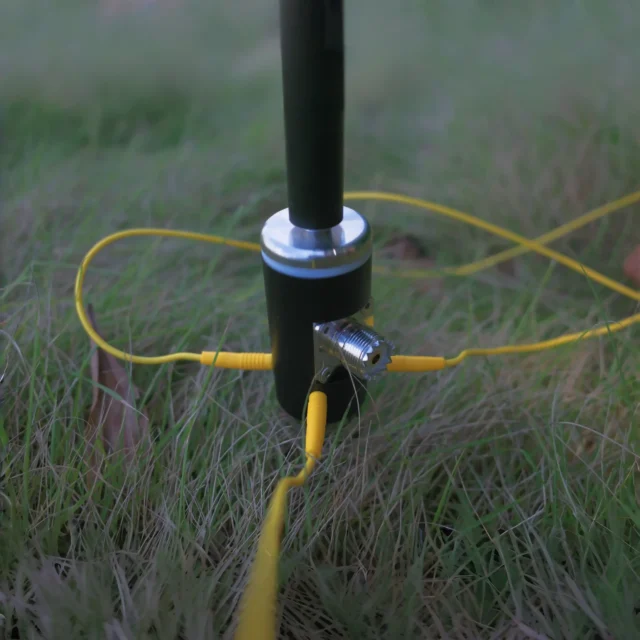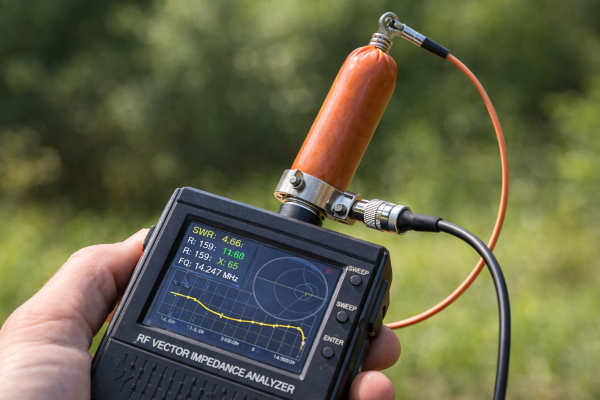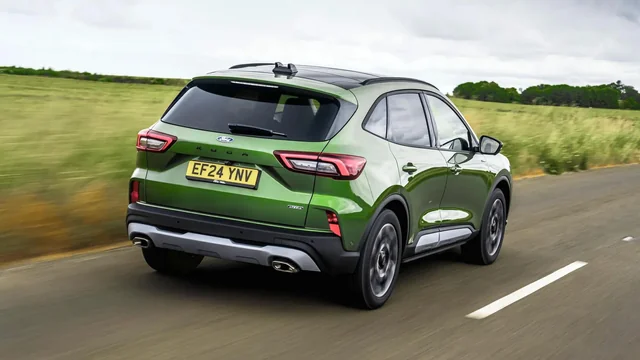
For decades, the car antenna was one of the easiest parts of a vehicle to recognize. It was visible, mechanical, and simple: a long metal mast mounted on the fender, roof, or pillar, designed mainly to pull in AM and FM radio. Today, that familiar rod has largely disappeared. In its place, modern vehicles use compact shark-fin modules, hidden glass antennas, embedded cellular arrays, GNSS receivers, Wi-Fi elements, and in some cases dedicated antennas for V2X communication. What looks like a small styling detail on the roof is now often a multi-band RF system that supports entertainment, navigation, safety, telematics, and software-defined vehicle services.
The evolution of the car antenna mirrors the evolution of the car itself. Early vehicles needed little more than a basic radio receiver. Modern cars behave more like rolling connected platforms, constantly exchanging data with satellites, cellular networks, roadside infrastructure, cloud services, and nearby devices. As those needs expanded, antenna design had to move beyond raw reception performance in a single band and toward integration, isolation, packaging efficiency, aerodynamics, durability, and multi-service capability.
The earliest era of the car antenna
Car radio history reaches back to the early decades of the twentieth century, and by the 1920s and 1930s in-vehicle radio was starting to become a meaningful part of automotive design. At that stage, the antenna’s role was straightforward: receive broadcast radio as reliably as possible in a harsh electrical and mechanical environment. The dominant requirement was broadcast reception, especially AM at first, followed later by FM.
Those first generations of automotive antennas were not elegant by modern standards, but they were easy to understand. The vehicle needed a conductor of practical length, mounted where it could intercept incoming radio waves with minimal shielding from the metal body. This naturally led to external mast-type solutions. The long vertical rod became common because it was relatively effective, relatively cheap, and compatible with the frequencies used in broadcast reception.
In engineering terms, the old rod antenna had one huge advantage: physical length. Antenna performance is tied to electrical size, and a longer exposed element can make it easier to obtain useful efficiency in lower-frequency bands. For AM and FM reception, a physically longer antenna often offered practical sensitivity benefits, especially in weak-signal conditions. The tradeoff was obvious even back then: the more effective the external element, the more vulnerable it became to wind load, vandalism, corrosion, mechanical damage, and styling objections.
The age of the classic whip antenna
By the mid-century period, the whip antenna had become the visual shorthand for an equipped, modern car. Mounted on the fender, quarter panel, A-pillar, or roof, it became part of automotive identity. It was not there for appearance alone. It worked well enough, it was easy to service, and it fit the technology stack of the time, which was still centered on terrestrial radio reception.
The whip antenna also matched the realities of analog radio. Drivers expected continuous reception while traveling across varying terrain, through cities, and far from urban broadcast infrastructure. A larger external radiator could help maintain usable signal levels. For this reason, many older cars, especially those intended for large geographic markets, carried relatively long mast antennas that would look oversized by today’s design language.
But the whip antenna was not perfect. It created aerodynamic drag, generated wind noise, complicated car washing, and could be bent or snapped. Retractable and telescopic versions appeared to address some of these issues, and power-operated antennas became popular in certain eras. Even so, the fundamental concept remained the same: one visible antenna, one primary job. Receive radio.
The move toward integration and hidden antennas
As automotive design became more refined, manufacturers started looking for ways to reduce the visual clutter created by external masts. This led to a major shift: using other parts of the vehicle as part of the antenna system. Rear-window grid structures, windshield-integrated traces, and hidden conductive elements allowed engineers to preserve functionality while reducing the number of protruding external components. SAE’s historical retrospective specifically notes the evolution from early simple wire concepts to solutions such as heated rear screen or backlite antennas.
This stage was important because it changed the philosophy of automotive antenna design. Instead of treating the antenna as a separate add-on part, engineers began integrating RF functionality into the vehicle architecture. Glass antennas became especially attractive because they were protected from damage, could be hidden from view, and reduced styling compromises. The downside was that these systems were often more sensitive to installation details, grounding, amplifier quality, and surrounding vehicle structure.
Active electronics also started to matter more. Once antenna elements became shorter, more concealed, or more compromised by packaging, designers increasingly used amplifier stages to compensate for lower passive efficiency. This was useful, but it did not magically replace good antenna geometry. An amplifier can help overcome downstream losses and improve system sensitivity in some cases, but it does not create signal quality out of nothing. In weak or noisy environments, the difference between a well-sized external radiator and a compact integrated solution could still be noticeable. This basic compromise remains relevant today.
Why the shark-fin antenna appeared
The shark-fin antenna emerged because the automotive RF problem changed. Cars no longer needed only AM and FM. They needed satellite positioning, cellular telematics, digital radio, remote services, emergency call capability, Bluetooth, Wi-Fi, and eventually more advanced connected vehicle functions. A simple whip was no longer the right answer. The industry needed a weatherproof roof module that could house multiple radiators and associated electronics in a compact, aerodynamically acceptable enclosure.
This is why the shark-fin shape became so widespread. It is not merely a styling gimmick. It is a packaging solution. Under that molded housing there may be multiple independent antenna structures, feed networks, low-noise amplifiers, filters, and several coaxial connections running to different vehicle subsystems. Current automotive antenna suppliers explicitly describe shark-fin modules that support combinations such as AM/FM, DAB, GPS/GNSS, GSM, 4G, 5G, V2X, and Wi-Fi.
The roof location is significant. In many vehicles it offers a relatively clear view of the sky for GNSS, reasonable omnidirectional behavior for terrestrial communication, and enough metal surface below to act as part of the antenna environment. The roof also provides a practical central mounting position for multi-service modules while keeping cable runs manageable.
What modern car antennas actually do
A modern car antenna no longer exists for one radio band. In many vehicles, the antenna system is a distributed network. One module may handle broadcast and GNSS. Another may support telematics and cellular MIMO. Glass elements may handle keyless entry or supplemental reception. Additional antennas can be hidden in mirrors, bumpers, spoilers, or inside the cabin depending on the system architecture.
The service list keeps growing. Common functions include:
AM/FM broadcast radio for conventional listening.
DAB or other digital broadcast services in markets where they are used.
GNSS for navigation, fleet tracking, timing, and location-aware services.
4G and 5G cellular for telematics, remote diagnostics, over-the-air updates, and in-car connectivity.
Wi-Fi and Bluetooth for device pairing, hotspot functions, and local wireless links.
eCall and safety-related telematics.
V2X for communication with other vehicles or infrastructure in connected transportation systems.
At that point, the antenna system stops being a passive afterthought. It becomes part of the digital backbone of the vehicle. A failure or design weakness in the antenna path can degrade navigation accuracy, reduce mobile data throughput, weaken emergency connectivity, or limit the performance of connected services. This is one reason antenna suppliers now market complete automotive-grade multi-band platforms rather than simple “car radio antennas.”
The shift from gain to system engineering
Many people still evaluate antennas using one simplistic question: does the new one have more or less gain than the old one? In older vehicles, that question made sense because the use case was narrow. In a modern vehicle, it is incomplete.
A shark-fin module may indeed be less efficient than a long external whip in one specific broadcast band, especially if the older mast had more effective physical length. But that comparison misses the larger system objective. The modern antenna assembly must support multiple services, coexistence between closely packed elements, environmental sealing, low drag, low noise, mechanical robustness, and increasingly strict EMC behavior.
This is why modern car antennas are often judged less by a single peak-gain number and more by total system performance: radiation behavior over several bands, mutual coupling, isolation, amplifier noise figure, matching inside a real vehicle body, cable loss, and performance under actual operating conditions. 5GAA’s vehicular antenna methodology reflects this reality by emphasizing unified measurement procedures for permanently mounted vehicle antennas as connected and V2V-capable vehicles become more important.
Diversity, MIMO, and the connected car
One of the biggest technical changes in automotive antennas is the move to diversity and MIMO. Traditional car radio did not need a complex multi-antenna data architecture. Modern wireless systems do.
MIMO, or multiple-input multiple-output, uses multiple antenna elements to improve wireless link performance, capacity, and reliability. In practice, this means connected vehicles benefit from more than one properly engineered antenna path for cellular and Wi-Fi communication. The challenge is that putting several antennas close together on a vehicle can cause mutual coupling and correlation problems. This is why modern automotive antenna design puts such strong emphasis on isolation, pattern diversity, polarization diversity, and careful packaging.
This is also why some newer vehicles appear to have two roof modules or unusually complex rooftop hardware. In some cases, one visible module is handling infotainment and GNSS, while another supports telematics, high-order MIMO, or a separate connected service domain. In other cases, suppliers integrate many antenna ports into a single radome. Research and industry references both show how far this has gone, including multi-port diversity antenna concepts and roof modules designed specifically for cooperative connected driving.
The role of aerodynamics, styling, and durability
The evolution of the car antenna is not only an RF story. It is also an industrial design and reliability story.
External whip antennas are mechanically exposed. They can be bent, stolen, broken in car washes, or degraded by weather and corrosion. They also create turbulence and wind noise. Compact roof modules reduce those problems while fitting the cleaner design language of modern vehicles. Shark-fin housings can also be sealed to meet demanding environmental requirements and are often marketed as automotive-grade, IP-rated solutions for transportation use.
That matters because modern antennas are expected to survive UV exposure, temperature cycling, moisture, vibration, chemicals, and years of continuous operation. A vehicle antenna is no longer just a piece of spring steel. It is a weather-hardened RF subsystem. This shift has pushed antenna design closer to the broader world of automotive electronics engineering.
Why old rod antennas still have a technical reputation
There is a reason older enthusiasts sometimes claim that classic mast antennas “worked better.” In a narrow sense, they often did. A longer exposed element can provide more effective reception for traditional radio services, especially in fringe coverage areas. That observation is not nostalgia alone. It reflects real antenna physics.
What has changed is the definition of success. The old mast antenna could be very good at one task and poor at many others. The modern shark-fin module may be slightly weaker at that one legacy task while being far more useful overall. It supports navigation, mobile broadband, connected infotainment, telematics, emergency services, and future-ready vehicle communications in one integrated housing. For the average driver in a digitally connected car, that tradeoff makes sense.
The next stage: V2X, UWB, and software-defined vehicles
The next chapter of automotive antenna evolution is already underway. Connected driving systems are increasing the importance of vehicular communication testing, standardized evaluation methods, and new frequency-domain design challenges. 5GAA highlights the rising demand for connected vehicles and the deployment of vehicle-to-vehicle communication as key reasons why vehicular antenna methodology matters more than before.
At the same time, research and industry development show continued work on automotive antennas for V2X, 5G sub-6 GHz, GNSS, Wi-Fi, and ultra-wideband applications. UWB is gaining relevance in automotive use cases such as localization and occupant-related sensing, while C-V2X deployment paths continue to shape how connected vehicles are packaged and tested.
This means tomorrow’s vehicle antenna system may become even less visible while handling even more tasks. Some functions will remain in roof modules because roof placement is advantageous. Others may spread through the vehicle structure in a more distributed architecture. Glass, body panels, trim pieces, and dedicated RF windows may all play a larger role. The visible antenna may keep shrinking while the invisible antenna system becomes more capable and more complex.
Why the evolution matters
The story of the car antenna is really the story of how the automobile changed from a mostly mechanical machine into a connected electronic platform. The old metal rod represented a world where the car mainly received one-way broadcast content. The modern antenna ecosystem belongs to a world where the car receives, transmits, authenticates, locates, updates, synchronizes, and cooperates.
Seen that way, the disappearance of the mast antenna was not just a styling trend. It was the visible sign of a deeper engineering transition. Car antennas evolved from single-purpose external appendages into integrated multi-service communication systems. They became smaller to the eye, but much larger in technical importance.
For drivers, the antenna has become less noticeable. For vehicle engineers, it has become far more critical. That is the central paradox of the modern car antenna: the more advanced it becomes, the less obvious it looks.
Image(s) used in this article are either AI-generated or sourced from royalty-free platforms like Pixabay or Pexels.
This article may contain affiliate links. If you purchase through these links, we may earn a commission at no extra cost to you.
Get the weekly RF & IT briefing
Radio guides, RF calculators, AI, Windows, Linux and satellite communication explainers. One useful email per week. No spam.